
IRGC Warns US Military Ships Against Violating Ceasefire in Strait of Hormuz
Key Takeaways
- IRGC warns approaching vessels will violate ceasefire and will be met with severe force.
- Two-week US-Iran ceasefire accepted; Iran's security council confirms.
- Ceasefire described as fragile amid ongoing Hormuz standoff and naval tensions.
IRGC Warns Against Military Transit
Iran's IRGC warned any military vessels transiting the Strait of Hormuz would be deemed a violation of the ceasefire.
The IRGC stated the strait remains open for civilian vessels under specific regulations.

The warning came after US Central Command claimed two American warships transited the strait.
Iran denied any American military vessels had transited.
President Trump announced American naval forces would impose a full naval blockade.
Conflicting Narratives and Military Posturing
The US Navy crossed the Strait of Hormuz with two destroyers, turning on their AIS.
Central Command said they were establishing a new passage for the maritime industry.

The IRGC challenged the destroyers, issuing a radio warning: This is the last warning.
Iranian media said the destroyers turned around after being confronted by the IRGC.
The IRGC said any attempt by military ships to cross would be met with a firm and forceful response.
Strategic and Economic Stakes
The Strait of Hormuz handles roughly 20 percent of global seaborne oil trade.
Its disruption pushed global oil prices up by 40 to 50 percent.
Iran had effectively limited commercial access during the 40-day war.
The IRGC insisted the strait remains open under smart control and management.
The US military continued to send more combat power to the region.
More on Iran
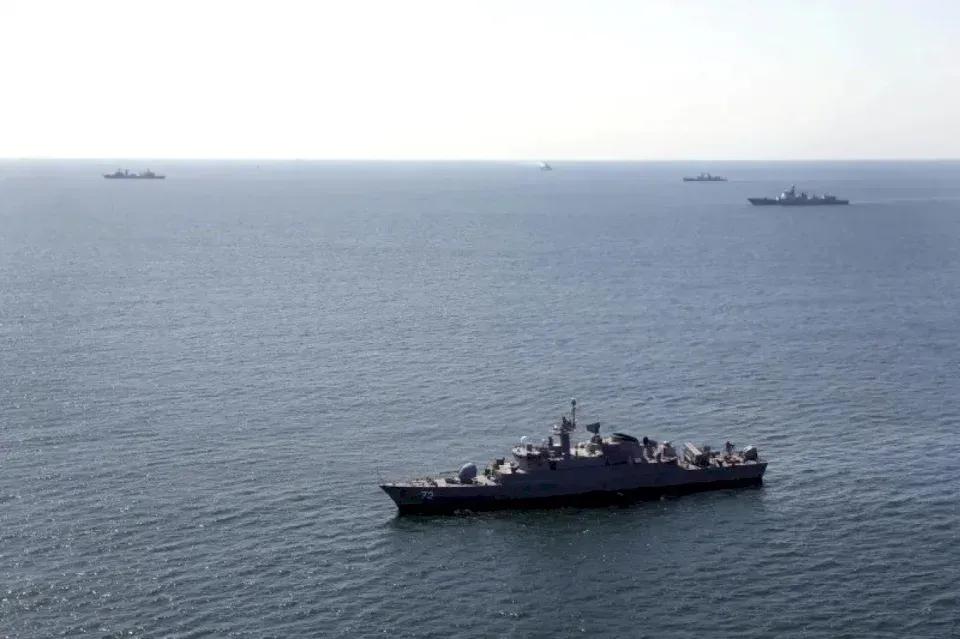
US Navy Begins Naval Blockade of Iranian Ports in Strait of Hormuz
22 sources compared

Iran Rejects US Demand To Halt Uranium Enrichment In Failed Islamabad Talks
18 sources compared

Trump Attacks Pope Leo XIV Over Iran War Criticism, Claims Pope Owes Position To Him
43 sources compared

Turkey Accuses Netanyahu of Seeking to Declare It Israel’s New Enemy
13 sources compared