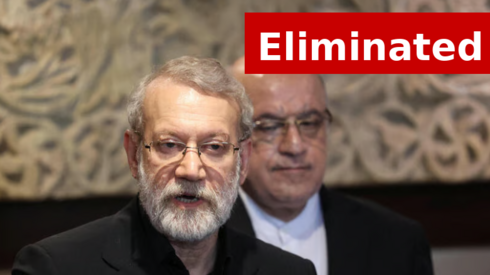
Israel kills Iran's secretary of the Supreme National Security Council Ali Larijani in Tehran strike
Key Takeaways
- Israel says Ali Larijani, SNSC secretary, and Basij commander Gholamreza Soleimani were killed in Tehran.
- Iran has not publicly confirmed the deaths.
- Outlets report two senior Iranian security officials killed in overnight strikes.
Assassination Claims
Israel has claimed responsibility for the killing of Ali Larijani, secretary of Iran's Supreme National Security Council, in an overnight airstrike in Tehran.
“Israel has claimed to have killed Ali Larijani, secretary of Iran’s Supreme National Security Council, and the commander of the internal Basij militia, Gholamreza Soleimani, with no confirmation or denial by Iran so far”
Israeli Defense Minister Israel Katz confirmed the deaths of both Larijani and Gholamreza Soleimani, commander of Iran's Basij paramilitary force.

Katz stated they were 'eliminated last night' and have joined Khamenei 'in the depths of hell.'
The Israeli military claimed the strikes were based on intelligence and targeted specific locations.
The IDF announced it had eliminated Soleimani in a 'precise strike in Tehran' on Monday.
Prime Minister Benjamin Netanyahu's office released a photo of the premier on the phone with the caption: 'Prime Minister Benjamin Netanyahu orders the elimination of senior figures in the Iranian regime.'
However, these claims have not been independently verified, and Iranian authorities have not immediately confirmed either death.
Target Significance
Ali Larijani represented one of Iran's most significant political figures and would be the highest-profile assassination since the killing of Iran's supreme leader Ayatollah Ali Khamenei on February 28.
The 67-year-old former parliamentary speaker had been appointed as secretary of Iran's Supreme National Security Council in August 2025.
He had served as a close adviser to the late Khamenei.
Larijani was known for his role in Iran's nuclear negotiations with the West.
He was initially considered a pragmatic figure within the Iranian establishment, though his stance had hardened in recent months as tensions escalated.
The Israeli military described the Basij forces under Soleimani's command as having 'led the main repression operations' during recent mass protests in Iran.
The volunteer force was used to suppress demonstrations and employ 'severe violence, widespread arrests, and the use of force against civilian demonstrators.'
Iranian Response
Iranian authorities have responded to the Israeli claims with defiance, publishing a handwritten note by Larijani commemorating Iranian sailors killed in a US attack.
“Paul Adams Diplomatic correspondent A statement from Ali Larijani, posted by Iranian media outlets earlier this morning, seems to be nothing more than a message written to mark the funeral of Iranian sailors killed almost two weeks ago”
The note was posted on Larijani's social media pages, though it was unclear whether it was intended as proof of his life or merely a pre-planned message.
Iranian state media indicated that 'a message from Larijani's office would be published soon,' suggesting the regime may be preparing an official response.
The killings occur amid escalating regional violence as Iran continues its missile and drone attacks against Gulf Arab neighbors and Israel.
These attacks are pushing energy prices higher and disrupting international shipping through the Strait of Hormuz.
The UAE briefly shut its airspace due to incoming threats, and Dubai experienced flight disruptions for the second consecutive day.
This comes as the US-Israeli war on Iran enters its third week, with reports indicating at least 2,000 people have been killed and no end to the conflict in sight.
Strategic Impact
The targeted killings represent a significant strategic escalation in the conflict, with Israel systematically targeting Iran's leadership structure since the February 28 offensive began.
The elimination of Larijani and Soleimani further depletes Iran's command and control capabilities at a time when the Islamic Republic faces its greatest test in recent decades.

The Basij, which Soleimani commanded for the past six years, plays a crucial role in Iran's internal security apparatus and has been used to suppress protests and maintain theocratic control.
The killings come amid heightened tensions with the US, which had offered rewards of up to $10m for information on senior Iranian military and intelligence officials, including Larijani.
The International Committee of the Red Cross has described the 'heavy loss of life in Iran as alarming,' with families 'gathering for funerals instead of festivities' as the war continues its devastating humanitarian toll.
The conflict shows no signs of abating, with both sides launching new attacks and regional powers facing increasing economic disruptions as oil prices surge and shipping lanes remain threatened.
More on Iran

Joe Kent resigns as NCTC director after Israel pressured U.S. into Iran war
10 sources compared

Israel Kills Iran's Basij Commander Gholamreza Soleimani in Overnight Strike
27 sources compared

President Donald Trump Furious as Global Allies Refuse to Help Secure Strait of Hormuz
16 sources compared

Israel Kills Ali Larijani, Basij Commander Gholamreza Soleimani in Overnight Strikes
11 sources compared