Lebanon · 05 May, 2026 · 2 min read
Israel Strikes Hezbollah Infrastructure in Southern Beirut as Germany Backs Lebanon Operation
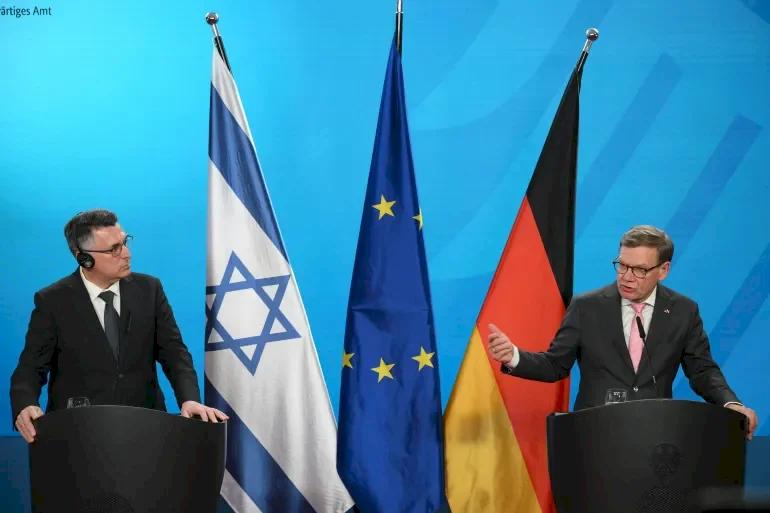
German foreign minister endorses Israeli invasion of southern Lebanon to counter Hezbollah. Israeli airstrikes across Lebanon escalate as part of the southern Lebanon operation.
Whether Israel’s Lebanon actions are framed as security necessity vs. escalation risk.
6 of 7 outlets skipped it: CMA CGM San Antonio was attacked in Hormuz Strait.
17outlets compared
Same story, two versions
tap a side to read it in full
Les Echos
““urged his counterpart to preserve Lebanon’s territorial integrity and to refrain from a ground offensive.””Read the original ↗
Changes reader interpretation: defensive rationale versus warnings against widening war.
Beirut strikes and toll
Israel’s military operations in Lebanon continued as heavy gunfire erupted in the southern suburbs of Beirut shortly after a warning from the Israeli army, and the Israeli army began striking Hezbollah infrastructure in the southern Beirut suburb. The Les Echos live updates said the death toll from Israeli strikes in Lebanon rose to 123 dead, citing the Lebanese Ministry of Health, and added that the ministry reported 683 injured since the start of the war on Monday between Israel and Lebanon. LIn Berlin, Germany’s foreign minister Johann Wadephul offered qualified support for Israel’s military operations in southern Lebanon while warning that “Lebanon must not be allowed to become a theatre of war where it is the civilians who pay the price.” The same AFP report cited by Kyïv Post also said Israel declared a 10-kilometer (six-mile) exclusion zone along the border, an area off-limits to residents and the media.
“The death toll from Israeli strikes in Lebanon rises to 123 dead according to the Lebanese Ministry of Health”
Diplomatic backing and limits
Germany’s foreign minister Johann Wadephul told Israeli Foreign Minister Gideon Saar in Berlin that close alliances do not preclude direct disagreements, while endorsing Israel’s security rationale for operations in southern Lebanon. Saar defended the operations by arguing that Israel must dismantle Hezbollah and other militant groups that have carried out attacks against Israeli territory, and he said he assured Wadephul that Israel has “no territorial ambitions in Lebanon.” Wadephul, while calling the operation “necessary” and saying Israel had the right to defend itself, also warned that a generation growing up amid destruction would not improve Israel’s long-term security. In parallel, Les Echos reported that Emmanuel Macron urged Benjamin Netanyahu to preserve Lebanon’s territorial integrity and to refrain from a ground offensive, framing the aim as preventing Lebanon from being drawn back into war.L
After UNIFIL, what next
Beyond the immediate fighting, L’Orient-Le Jour reported that Rome is preparing to maintain a military presence in southern Lebanon after UNIFIL withdrawal, with the Italian Minister of Defense Guido Crosetto telling President Joseph Aoun that Italy wishes to “maintain its forces south of the Litani River” after UNIFIL’s withdrawal. The article said UNIFIL has been deployed in the south since 1978 and must begin its withdrawal on December 31, 2026 for a complete departure by the end of 2027, while Rome’s stated aim is to “support the Lebanese army in carrying out its missions in the South.” It also quoted Aoun welcoming Italy and other European countries in any force capable of replacing UNIFIL after its withdrawal, “after Israeli forces withdraw from the occupied hills.” With the conflict still ongoing, Les Echos said the Israeli army continues strikes in Lebanon and that the Lebanese Ministry of Health reported 123 dead and 683 injured since the start of the war on Monday between Israel and Lebanon.L
“maintain its forces south of the Litani River”