
Israel Threatens Lebanon With Strikes on National Infrastructure as Ground Invasion Looms
Key Takeaways
- An Israeli ground invasion of Lebanon's buffer zone is likely within hours.
- Israel plans strikes on Lebanon's infrastructure as raids widen across the country.
- Israeli officials threaten Hezbollah targets in Beirut and its southern suburbs.
Escalation and threats
Israel threatened Lebanon with strikes on national infrastructure and signaled that a ground invasion of a buffer zone could begin “in the coming hours,” as military tension on the Lebanese front rapidly escalated.
Al-Nahar reported that Western diplomatic circles told Lebanese parties that an Israeli ground invasion of the buffer zone is likely to begin “in the coming hours,” while it also said the scope of Israeli raids widened across several areas of the country, “especially the southern suburb of Beirut.”
Al-Nahar added that Channel 12 reported Israel sent a direct threat to Lebanon through Western countries with the United States as mediator, warning it may target national infrastructure if the Lebanese state does not curb Hezbollah operations.
The message, as quoted by Al-Nahar, said: “the responsibility lies with the state of Lebanon,” adding: “if you do not rein in Hezbollah we will attack national infrastructure.”
The same Al-Nahar report said Israeli military sources acknowledged that the recent attacks represent the “first coordinated strike between Hezbollah and Iran at the same time,” after Hezbollah announced the launch of operations called the Devouring Storm and carried out “wide rocket barrages toward northern Israel.”
It also described Israeli army spokesman Avichai Adraí hardening his tone, saying that “the battlefield will prove that the strike is twofold and that what is coming will be greater,” while Israeli media quoted a security official saying the army will operate across Lebanon “from south to north” and that “all targets are now legitimate.”
Hezbollah operations and strikes
Hezbollah announced it launched “Destructive Sweep Operations” against Israel, as Israeli aircraft carried out airstrikes on southern Beirut and other areas.
The التلفزيون العربي report said Hezbollah issued a brief statement reading: “The Islamic Resistance announces the launch of Destructive Sweep Operations,” and it framed the announcement as part of “Israeli aggression against Lebanon” that “has claimed more than 560 martyrs.”

Shortly after Hezbollah’s statement, the same report said Israeli aircraft conducted “several violent airstrikes on the southern suburbs of Beirut,” with Arab TV correspondent in Baabda, Ahmed Hussein, saying the strikes targeted Hadath and Burj al-Barajneh.
The National News Agency reported “two martyrs and two wounded” in an Israeli airstrike on the town of Deir Antar in the Sidon District of southern Lebanon, according to التلفزيون العربي.
The Israeli army announced that the Air Force is striking “the last rocket-launch platforms from Lebanon,” and it claimed that “several residential towers today had been hit that had been used by Hezbollah,” adding that “eliminating the rocket threats may take time.”
The report further said Israel’s Army Radio noted that the number of rockets fired by Hezbollah rose to 100 in the latest shelling of the north, and it quoted the Israeli Broadcasting Authority saying Hezbollah fired “dozens of rockets” in the latest batch from several areas in Lebanon.
It also said Channel 12 reported Netanyahu is holding security consultations and that the next 24 hours will determine the shape of the war’s continuation in Lebanon.
Evacuation calls and ministerial threats
As the fighting intensified, an Israeli far-right minister threatened Beirut with devastation and Israel’s army called for evacuation of the southern suburb.
La Libre.be reported that Bezalel Smotrich, Israel’s Finance Minister, said on his Telegram account: “Very soon, Dahiyeh (Beirut's southern suburb) will resemble Khan Younis,” referencing the large city in southern Gaza devastated by the war triggered by Hamas on October 7, 2023.
La Libre.be also reported that the Israeli army called on residents of the entire southern suburb of Beirut to evacuate “immediately” for their survival.
The same La Libre.be account said Israel attacked Iran jointly with Washington on Saturday and then launched a massive bombing campaign on Lebanon “in the night from Sunday to Monday,” targeting facilities and positions of Hezbollah after the group opened fire on Israeli territory to “avenge” the death of the Iranian supreme leader, Ali Khamenei, killed Saturday in a strike in Tehran.
Smotrich’s message, as quoted by La Libre.be, said: “Hezbollah has made a mistake and it will pay for it dearly. We are striking the head of the octopus in Iran and at the same time we will cut off its Hezbollah tentacle,” and it added: “You wanted to bring us hell, you have drawn it upon yourselves,” in a video attached to his message.
The La Libre.be report also tied the threats to the broader Israeli campaign, describing the bombing as aimed at Hezbollah facilities and positions.
Together, the evacuation call and Smotrich’s Telegram remarks underscored how Israeli officials were linking military action to a threatened outcome for Dahiyeh.
Negotiations and Beirut targets
While Israeli officials threatened further escalation, they also framed U.S.-mediated talks as ongoing but ineffective, and they discussed striking Hezbollah leadership in Beirut if an opportunity arises.
Naharnet reported that Israel intends to intensify its attacks on Hezbollah, citing Israel’s Yedioth Ahronoth newspaper and an Israeli security official who insisted that “contrary to the impression” Israel’s hands are tied, “Hezbollah will be hit in places it did not think” Israel would reach.
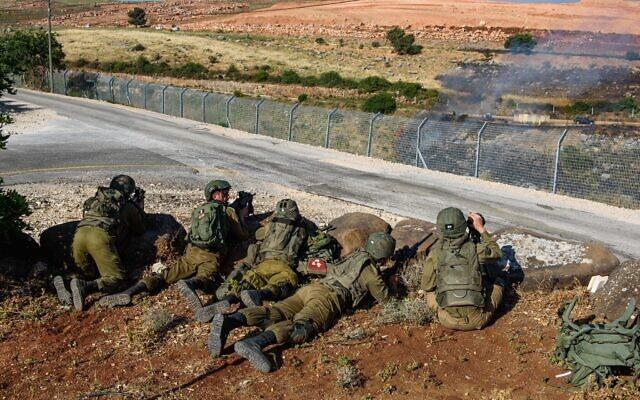
The same Israeli security official told Yedioth Ahronoth that “The Americans may be bothered when we strike in Beirut, but they are less bothered in southern Lebanon. Hezbollah will feel that soon. And if there is an operational opportunity, we will hit its senior officials in Beirut as well,” and Naharnet noted that Israel uses the term Beirut to refer to both the capital and its southern suburbs.
Naharnet said Israel and Lebanon are continuing U.S.-mediated talks, but Israeli officials believe the process is going nowhere, quoting an Israeli official: “There is nothing real there,” and adding that “The Lebanese government does not want to and cannot disarm Hezbollah. But the talks continue in order to ‘drive Hezbollah crazy,’” the official told the newspaper.
The report also said Lebanese reports expected a third meeting this week, on Wednesday or Thursday, in Washington between Israeli Ambassador Yechiel Leiter and his Lebanese counterpart, Nada Hamadeh Moawad, while Israel had not confirmed the report.
It further stated that according to an Israeli official, the Israeli army has thinned out its forces in southern Lebanon, where two divisions are now operating—one on defense and one on offense.
Naharnet closed with another warning from an Israeli official: “This situation will not last much longer. Hezbollah will pay a heavy price for ceasefire violations. For now, we are giving negotiations a chance.”
What comes next
Across the reports, the immediate future was framed around whether Israel would expand operations beyond current targets and whether Hezbollah’s actions would trigger further escalation.
Al-Nahar said Israeli threats indicate operations will not stop at the Litani River, and it described continued raids on the southern Beirut suburb targeting al-Mushrifiyeh, al-Ruwais, Saint Therese, and the American neighborhood near the Lebanese army checkpoint.

It also reported that Israeli media said sirens sounded in the settlements of Avivim and Yiron after a drone attack launched from Lebanon, while Hezbollah announced it targeted the headquarters of the Israeli Army’s Northern Command and the Ayin Zietim base with rocket volleys.
In the same Al-Nahar report, it described diplomatic developments including a trilateral call between President Joseph Aoun, Syrian President Ahmad al-Sharā’, and French President Emmanuel Macron, in which they discussed the current situation in Lebanon and the region.
The التلفزيون العربي report added that Channel 12 said “the next 24 hours will determine the shape of the war’s continuation in Lebanon,” and it quoted an Israeli official saying “The direction is toward expanding the operation in Lebanon, and I won’t go into detail about whether that includes a ground operation.”
It also said Channel 15 noted an Israeli official saying Israel is studying directing strikes against infrastructure tied to the Lebanese government.
Meanwhile, the Ministry of Education in Lebanon announced there is “no decision to close schools tomorrow,” leaving it to educational institutions to adopt remote learning according to the circumstances, while some private schools closed their doors as a precaution.
More on Lebanon
Israeli Forces Clash With Hezbollah in Southern Lebanon, Wounding Two IDF Soldiers
10 sources compared
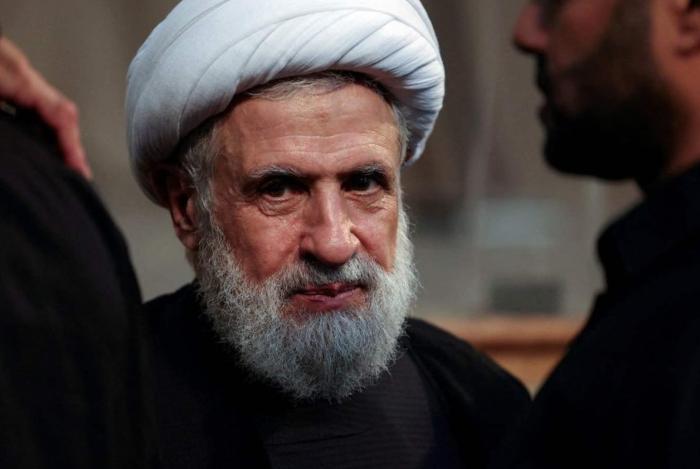
Hezbollah Secretary-General Naim Qassem Says No Ceasefire in Lebanon, Cites Israeli-American Aggression
15 sources compared

Hezbollah Vows to Thwart Lebanon-Israel Talks as Rockets and Drones Hit Israeli Troops
15 sources compared
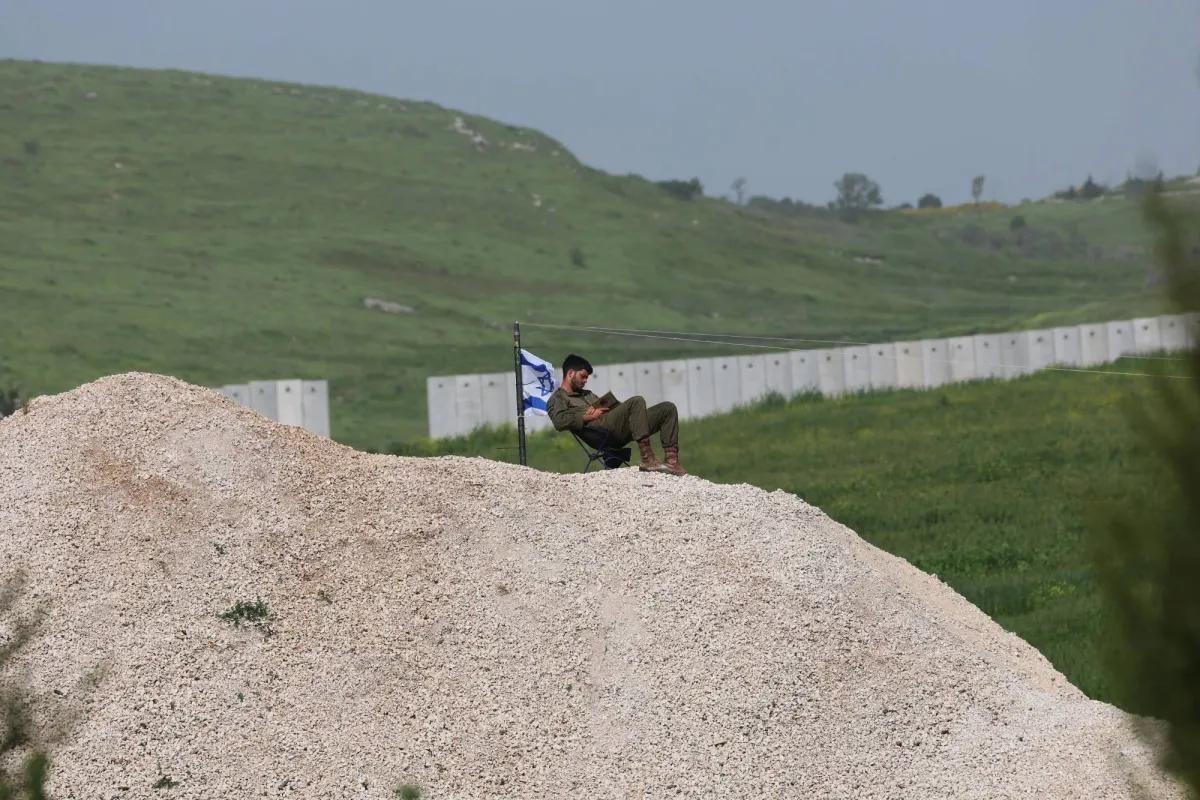
Israel Applies the Gaza Model in Southern Lebanon, Razes Towns and Villages Near Bint Jbeil
17 sources compared