
Israeli Air Strike Kills Azzam Al-Hayya as Israel-Hamas Ceasefire Talks Stall
Key Takeaways
- Israeli air strike in Gaza City kills Azzam al-Hayya, son of Hamas negotiator Khalil al-Hayya.
- Ceasefire talks between Israel and Hamas have stalled, risking renewed Gaza conflict.
- Israeli media report preparing to resume fighting as talks stall.
Strike hits Gaza talks
Ceasefire talks between Israel and Hamas stalled, and Gaza risks sliding back into war as an Israeli air strike killed Azzam al-Hayya, the son of Hamas leader and chief negotiator Khalil al-Hayya, in Gaza City while Hamas leaders met in Cairo.
The BBC reported that Palestinian sources confirmed to it that the two sides had reached a deadlock in negotiations, and Israeli media reports suggested Israel is preparing to resume fighting in the Gaza Strip due to the blockade and Hamas's refusal to give up its weapons.

Michael Eisenberg, an adviser to the Israeli prime minister, told the BBC that "Hamas would not disarm" and that "all options are on the table right now," while Israel insists Hamas's approach to disarmament is in breach of the ceasefire deal that came into effect on 10 October.
Hamas, for its part, said Israel is violating the agreement by failing to fulfill its humanitarian commitments and continuing deadly attacks, and on Wednesday a Hamas statement called on the “US administration and the guarantor states of the Sharm el-Sheikh [ceasefire] agreement” to “move immediately” to stop “Israeli aggression against the innocent people in Gaza.”
Deadlock over disarmament
The BBC said the deadlock centers on Hamas disarmament and Israel’s military presence, with two Palestinian officials familiar with recent negotiations between Hamas leaders and the US-led Board of Peace in Cairo telling it that Israel was insisting on moving to the second phase of President Trump's 20-point plan before completing obligations of the first phase.
Those officials said Hamas demands an end to Israeli shelling, incursions and other military operations in Gaza, as well as an increase in the amount of aid, the entry of temporary housing units and heavy lifting equipment to clear rubble, and an increase in the number of Palestinian patients and travellers allowed to exit via Egypt's Rafah Crossing.
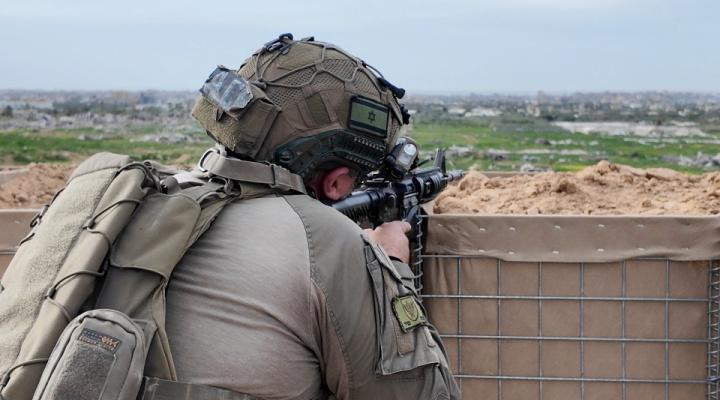
The BBC also reported that Israel says it restricts which goods are allowed in and out of Gaza for security reasons, while Hamas continues to refer to the terms of the document it signed with Israel in Sharm el-Sheikh in October focusing on the first stage of the ceasefire.
In the same BBC report, Michael Eisenberg argued that "There is no phase one and phase two, that is an invention of Hamas," and said Hamas must disarm, demilitarise, and deradicalise as the future of Gaza according to the 20-point plan.
Fear of renewed war
As fears of renewed war grew, the BBC reported that at least 846 people – including many women and children – have been killed in Gaza since the ceasefire began, according to the Hamas-run health ministry, while Israel says five of its soldiers have been killed in the same period.
“- Published Ceasefire talks between Israel and Hamas have stalled, and Gaza risks sliding back into war”
The BBC also said most of Gaza’s more than two million residents are displaced and that people are increasingly fearful that full-scale war could resume, quoting Samah, a displaced mother in Gaza City, saying, "Honestly, I say enough war. We hope that the war doesn't resume."
In the same BBC account, Abu Firas al-Jidi accused Israel of "intransigence" and suggested that while the world was focused on the wars in Iran and Lebanon, there was "a serious risk that Gaza may slide back into fighting."
The BBC further reported that this week Mladenov said there was "no daylight" between the Board of Peace and Israel regarding security concerns, and that he stressed donors would not fund Gaza's reconstruction if armed groups did not decommission their weapons.
More on Gaza Genocide

Israel Deports Gaza Flotilla Activists Saif Abu Keshek and Thiago Ávila After Detention
12 sources compared
Israel Deports Gaza Flotilla Activists Saif Abu Keshek And Thiago Ávila
14 sources compared
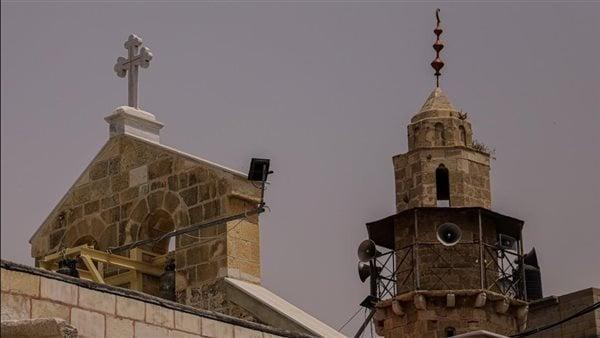
Israeli Policies Threaten Gaza Christians, Palestinian Delegation Warns EU
10 sources compared

Israel Deports Saif Abu Keshek And Thiago Ávila After Abducting Them On Global Sumud Flotilla
16 sources compared