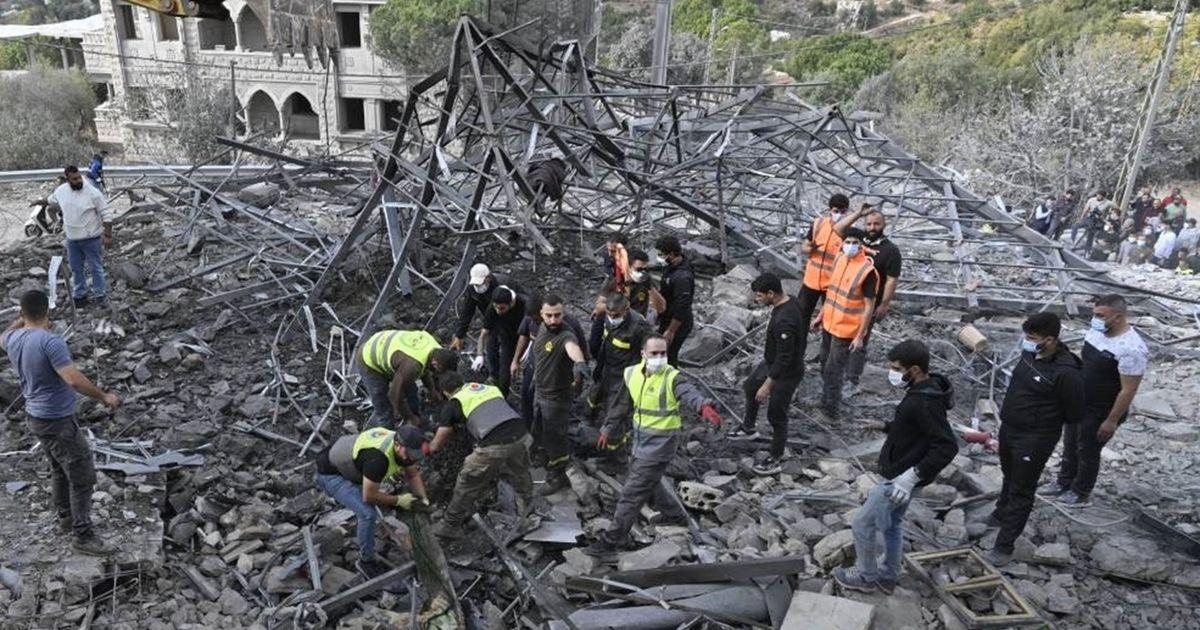
Israeli Airstrikes Kill At Least 40 In Southern Lebanon As Netanyahu Expands Buffer Zone
Key Takeaways
- Buffer zone expanded along Lebanon border; evacuation orders issued for ten villages.
- Ceasefire extension; fighting persists in southern Lebanon.
- Hezbollah rejects buffer-zone goal; vows to prevent it and strengthens resistance capabilities.
Ceasefire, but strikes continue
Israel and Lebanon agreed to a ceasefire three weeks ago, but the violence has continued, with Israeli airstrikes killing at least 40 people in recent days and the military issuing evacuation orders for residents of ten villages and towns in southern Lebanon.
“The Islamic Resistance continued on Monday dealing major blows to the Zionist enemy in response to the ceasefire violations, inflicting more losses upon the occupation troops”
The Conversation reports that Israel has established a security buffer zone in those areas, and that Prime Minister Benjamin Netanyahu said the zone is needed to protect Israel from future attacks by the Hezbollah militant group.
Netanyahu described the buffer zone as “much stronger, more intense, more continuous, and more solid than we had previously”.
The Conversation also says Israel is hitting Hezbollah “as hard as it can to deplete its capabilities” and force it out of its southern Lebanon stronghold, describing the strategy as “mowing the grass”.
In parallel, Le Figaro reports that residents are fleeing a buffer zone that has become uninhabitable, quoting “The country must be treated like Gaza” as the framing used for southern Lebanon.
Le Figaro places the buffer zone off-limits and says it was established by the Israeli state on April 19, while describing the sheltering of Dalal Samhat in a Saida municipality building since March 6.
The same Le Figaro account says that when the truce was announced on April 16, Dalal Samhat “would have liked to return home to Bint Jbeil,” but she remained displaced as destruction continued around her.
Buffer zone and the “Gaza playbook”
The Conversation frames the current push for a security buffer zone as a continuation of tactics used after a fragile ceasefire agreed to last October, saying critics contend Israel is adopting the “Gaza playbook” in the buffer zone.
It describes Israel’s approach as aiming to make the buffer zone uninhabitable for residents, and it links that goal to a late-March statement by Israeli Defence Minister Israel Katz.
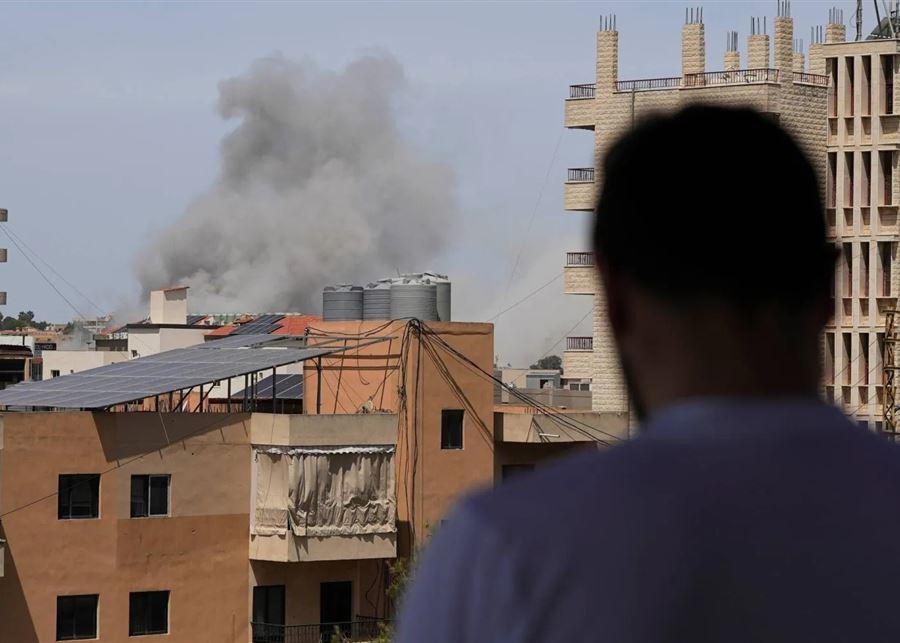
The Conversation says Katz declared: “All houses in villages near the Lebanese border will be destroyed, in accordance with the model used in Rafah and Beit Hanoun in Gaza, in order to permanently remove the threats near the border to northern residents.”
It adds that Israel has destroyed all the bridges across the Litani River, effectively isolating southern Lebanon from the rest of the country, and that it is “systematically destroying or severely damaging towns, villages and infrastructure in the region.”
The Conversation also provides a broader casualty and displacement tally, saying that since the latest conflict with Hezbollah began in early March, Israel’s attacks have killed more than 2,600 Lebanese and displaced another 1.2 million from their homes.
In a separate analysis, Asharq Al-Awsat’s Sobhi Amhaz says Israeli statements about war aims in southern Lebanon are accompanied by military measures that “all point toward a long war,” and it argues Israel seeks to effect a demographic change and erase villages.
Asharq Al-Awsat reports that discussions in Israel about expanding beyond the Litani are tied to American constraints, and it says Israeli fire expanded to villages in the Nabatieh and Tyre districts, “more than 30 kilometers from the border.”
The same Asharq Al-Awsat piece quotes retired Brig. Gen. Said Qazah warning that Israeli withdrawal from the buffer zone defined by the “Yellow Line” “will not happen easily, or unilaterally,” and says it is likely linked to “clear security understandings.”
Drones and daily breaches
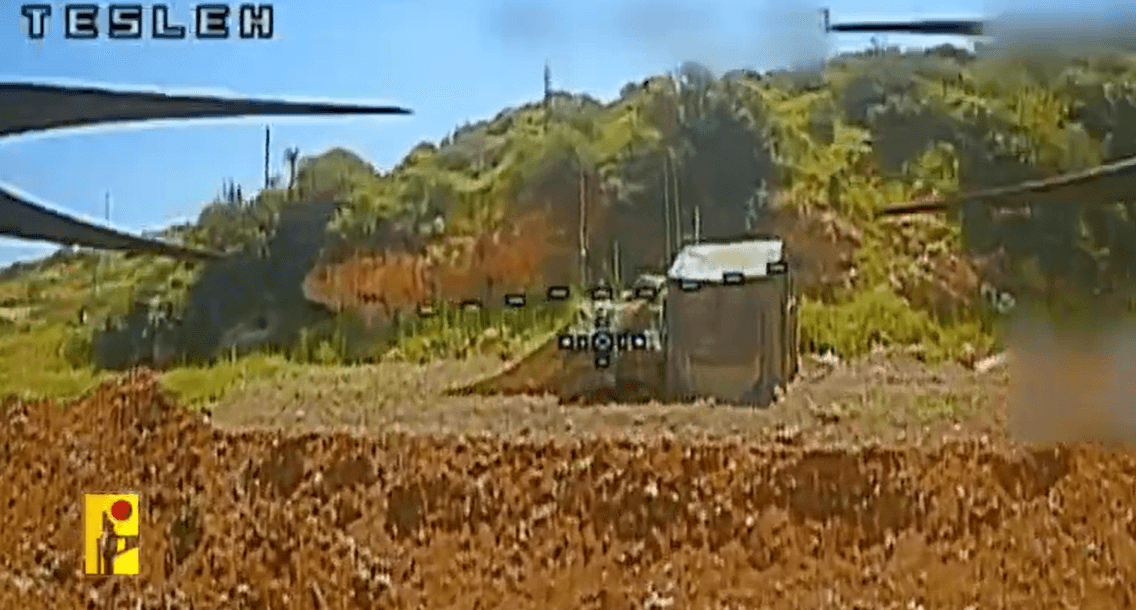
As fighting continues around the buffer zone, Al Jazeera net describes a shift in Hezbollah’s combat methods, saying South Lebanon is witnessing “a notable development in combat methods” as Hezbollah increases its use of small drones powered by fiber-optic technology.
“"The country must be treated like Gaza": in southern Lebanon, residents flee a buffer zone that has become uninhabitable”
The report explains that these drones are “small aircraft costing only a few hundred dollars each,” and it says they are connected by a thin fiber-optic tether that trails behind them during flight, allowing the operator to control them directly without relying on wireless signals.
It adds that the drones fall under the 'FPV' category, “First-Person View,” and that they are guided by a mounted camera transmitting the image in real time to the operator, enabling precise control up to the moment of impact.
The report says the absence of wireless transmission makes them immune to traditional jamming systems, and it describes their ability to fly at low altitude and evade terrain, making them difficult to detect by radars or intercept in a timely manner.
It also states that the lightness of the fiber-optic tether enables the drone to fly distances ranging from 5 to 20 kilometers without significantly affecting its performance, and that launch equipment is not complex and can be operated by a single person.
The report says these drones were used in recent weeks to target Israeli military sites and vehicles in several areas in southern Lebanon, and it notes that operations were accompanied by reports of casualties among Israeli soldiers.
It further links the drone development to the viability of the buffer zone that Israel seeks to impose south of the Litani River, saying the drones “could reduce the effectiveness of this strategy.”
The same Al Jazeera net account says that on April 17 “a 10-day ceasefire began, then it was extended to May 17,” but that Israel continues daily to breach it through air and artillery bombardments that have killed and wounded dozens of Lebanese civilians, along with widespread destruction of homes in dozens of southern Lebanese villages.
Hezbollah attacks and claims
Al-Manar TV Lebanon presents Hezbollah’s response to ceasefire violations as a series of “Islamic Resistance Attacks” that it says “Shatter Israeli Dream of Establishing Buffer Zone in South Lebanon.”
The outlet attributes the attacks to Hezbollah Secretary General Sheikh Naim Qassem, stating that he affirmed that “the Zionist enemy will never be able to establish a buffer zone in South Lebanon.”

It then describes multiple operational statements with specific times and dates, including a rocket barrage at 12:10 on Monday 04-05-2026 targeting a gathering of “Israeli” enemy army vehicles and soldiers in the vicinity of the water tank [reservoir] in Al-Qantara town.
Al-Manar TV Lebanon says that at 14:30 on Sunday 03-05-2026, Hezbollah targeted a newly established command post of the Israeli enemy army in the town of Al-Bayyada with bombs dropped from a glider, and it claims “accurately hitting the target.”
The outlet also describes a close-range clash at 12:30 on Monday 04-05-2026 in the Khallet Al-Raj area north of Deir Seryan town toward Zawtar Al-Sharqiya town, saying Islamic Resistance fighters opened fire and engaged in “a violent close-range clash from blank-point distance” and achieved “confirmed casualties among its ranks.”
It further says that after the enemy initiated heavy fire cover to evacuate its force and casualties, Hezbollah’s artillery targeted the evacuation force with artillery shells and “appropriate rocket weapons,” and that anti-aircraft machine guns intervened to prevent enemy helicopters from maneuvering and landing near the scene.
Al-Manar TV Lebanon adds that the enemy was forced to evacuate casualties by land toward the Misgav Am settlement, from where they were airlifted into the occupied Palestinian interior.
The outlet also claims additional strikes, including a rocket barrage at 17:30 on Monday 04-05-2026 in Al-Bayyada town and a swarm of loitering drones targeting an artillery bunker in Rab Thalathin town at 20:30 on Monday 04-05-2026.
Competing narratives on escalation
While Hezbollah and Israeli officials both frame the buffer zone through their own strategic logic, the sources also diverge on what the ceasefire and battlefield restrictions are producing.
“South Lebanon is witnessing a notable development in combat methods as Hezbollah increases its use of small drones powered by fiber-optic technology, in a battlefield shift that reflects a move toward cheaper tools that are, on the one hand, simpler in cost and, on the other hand, more capable in terms of maneuverability and concealment, posing growing challenges to traditional Israeli defense systems”
The Arabic21 article says the last round of clashes in southern Lebanon ended with restrictions on the movements of the Israeli occupation army, with its activity confined to specific southern areas, while sporadic attacks continue inside the fighting zone.

It reports that Israel Hayom confirmed that the last round ended with “opposite results,” describing three Israeli “strategic gains” granted to Hezbollah’s side, including “field restrictions imposed by the ceasefire on movements of the Israeli army.”
The article says Israeli forces “no longer enjoy freedom of action as before,” and it claims they are prevented from reaching strategic interior areas, “most notably Beirut's southern suburb.”
It also describes a “limited conflict” within the buffer zone south of Lebanon, saying Hezbollah could rely on guerrilla warfare and carry out “sporadic attacks, including the use of drones against Israeli forces,” while Israel is constrained from targeting Hezbollah leadership in Beirut.
In contrast, The Conversation emphasizes Israel’s stated aim to “deplete its capabilities and force it out of its southern Lebanon stronghold,” and it says Israel calls the strategy “mowing the grass.”
Asharq Al-Awsat’s analysis adds that Israeli withdrawal from the “Yellow Line” will not happen easily and that Israel will not relinquish the area without compensation, seeking leverage against the Lebanese government and pressing for a final agreement with the Lebanese state and for Hezbollah to surrender its weapons.
The same Asharq Al-Awsat piece argues that what is happening inside the Yellow Line is not only about destruction, but includes fixing a “yellow zone” beyond land to the sea opposite Naqoura, undermining the 2022 maritime demarcation agreement, and enabling drilling without honoring the agreement.
What comes next
Across the reporting, the stakes are presented as both immediate and long-term, with multiple sources describing a trajectory toward further escalation or prolonged conflict.
The Conversation warns that Netanyahu is in danger of overreaching in his claims to be able to defeat Hezbollah, saying the Israeli public expects him to deliver on his promise and finally rid them of the threat forever.
It reports that a recent poll conducted by the Israel Democracy Institute found “80% of respondents supported continuing the fight against Hezbollah irrespective of any possible peace deal between the US and Iran,” and it says this could create tensions with the Trump administration.
The Conversation also says Netanyahu faces a second reality: the potential that US President Donald Trump will agree to a permanent ceasefire with Iran that forces Israel to cease its hostilities against Hezbollah, and it adds that Iran is demanding that any ceasefire it reaches with the US include Hezbollah.
In the Arabic21 account, the outlet describes a “war of attrition” in which Israeli forces suffer near-daily losses while Hezbollah benefits from the combat pattern to strengthen its position and reorganize its ranks, “especially under increasing American pressure to halt the ceasefire.”
Asharq Al-Awsat’s analysis similarly warns that the on-the-ground situation is likely to escalate further, saying “any security incident, even a limited one, could reignite the front,” and it argues that the duration of Israeli troops’ stay in the buffer zone will remain contingent on political and security understandings.
The same analysis says any direct negotiating path between Lebanon and Israel could meet with a military escalation that would undermine it, and it warns that the next confrontation is “only a matter of time.”
Le Figaro underscores the human cost of the buffer zone by describing the sheltering of Dalal Samhat since March 6 and the destruction around her home in Bint Jbeil, while also noting that the buffer zone is strictly off-limits.
More on Lebanon
Israeli Forces Clash With Hezbollah in Southern Lebanon, Wounding Two IDF Soldiers
10 sources compared
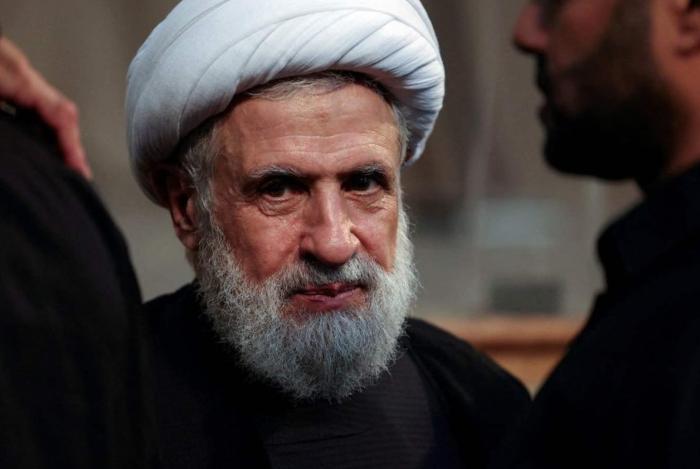
Hezbollah Secretary-General Naim Qassem Says No Ceasefire in Lebanon, Cites Israeli-American Aggression
15 sources compared

Hezbollah Vows to Thwart Lebanon-Israel Talks as Rockets and Drones Hit Israeli Troops
15 sources compared
Israel Applies the Gaza Model in Southern Lebanon, Razes Towns and Villages Near Bint Jbeil
17 sources compared