Israeli Drone Attacks Kill At Least 15 Across Lebanon, Including Eight On Highway
Key Takeaways
- Israeli drone strikes hit three vehicles on a coastal highway near Jiyeh, Barja, Saadiyat.
- Eight children are among the fatalities.
- Reported tolls vary by outlet, ranging from 12 to 29.
Deaths, drones, and talks
At least 15 people were killed in Israeli attacks across Lebanon, according to Lebanon’s National News Agency, including eight people killed in three Israeli drone attacks on a key highway linking Beirut to southern Lebanon.
“At least 15 people have been killed in Israeli attacks across Lebanon, according to the National News Agency, including eight people – two of them children – killed in three Israeli drone attacks on a key highway linking Beirut to southern Lebanon”
The attacks on Wednesday were reported in the Jiyeh area, about 20km (12 miles) south of the Lebanese capital, where a photograph shared by the National News Agency showed bombed cars with exteriors charred and torn apart.

Al Jazeera’s Zeina Khodr, reporting from Tyre in southern Lebanon, said the “conflict is only escalating,” adding that it is “taking a high toll on the civilians who live in these areas.”
Lebanon and Israel are expected to hold a new round of direct negotiations in Washington on Thursday, brokered by the United States, while Hezbollah says it opposes the negotiations in the US.
On Wednesday morning, the Israeli military issued forced displacement orders for residents of Meiss el-Jabal, Yanouh, Burj Shemali, Hula, Debl and Aabbasiyyeh, warning it would act “forcefully” against the six southern Lebanese villages.
Ceasefire, destruction, and warnings
With the truce that came into effect April 16, NBC News reported that the Israeli military “leveled whole areas of towns and villages in southern Lebanon” as it pressed on with plans to establish control in the area.
Bilal Saab, an associate fellow at the international think tank Chatham House, said the truce was “only a ceasefire in name,” and argued Israel was using the terms to “systematically dismantle towns and villages and other facilities, including mosques, schools.”

In the same period, the Israeli Prime Minister Benjamin Netanyahu told CBS News’ “60 Minutes” on Sunday, “We want to get rid of that danger to our communities, to our cities.”
The NBC News report said Netanyahu also described Israel’s forces remaining “in an expanded security zone” stretching around 6 miles into southern Lebanon, and that the U.S. is expected to mediate fresh talks on Thursday and Friday.
Hezbollah, which has not been party to the negotiations, vowed to act “in defense of Lebanon and its people,” in response to what NBC News described as Israeli ceasefire violations and aggression against civilians.
Humanitarian strain and displacement
Al Jazeera reported that after the forced displacement orders in the past week, one of the few remaining hospitals in the area was in the displacement zone, with Khodr saying, “There are only three left in the whole district of Tyre.”
Khodr added that “At least 100,000 people still live here,” and said injured people were dying because the road to reach hospitals was a long journey and people still lived in villages further south.
The same Al Jazeera report said Lebanon’s Ministry of Public Health reported on Wednesday that at least 512 people have been killed during the truce, bringing the total death toll since the Israeli invasion and bombardment began on March 2 to 2,896.
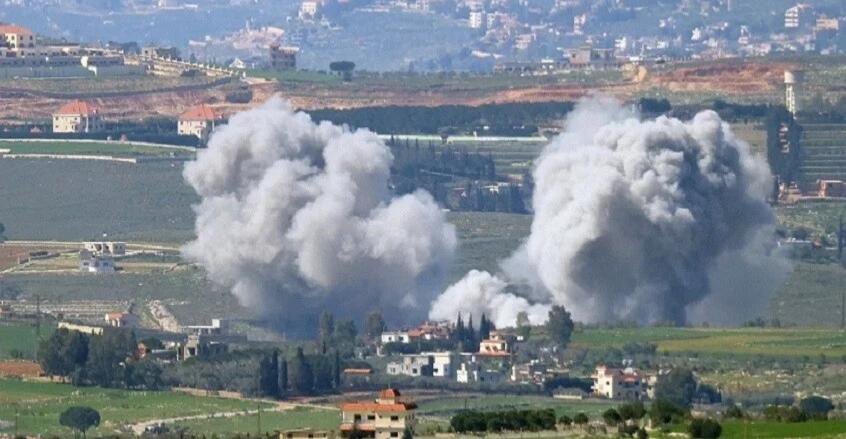
France 24 reported that Lebanon’s health ministry said 22 people including eight children were killed on Wednesday as Israel intensified strikes, and that Israeli airstrikes had pounded around 40 locations in Lebanon’s south and east.
France 24 also said the head of Lebanon’s National Council for Scientific Research (CNRS), Chadi Abdallah, stated that more than 10,000 homes had been damaged or destroyed since the truce began.
More on Lebanon

Lebanon Accuses Iran of Vienna Convention Violations, Cites Revolutionary Guard Actions
12 sources compared
Israeli Drone Strikes Kill 22 People, Including Eight Children, In Southern Lebanon
17 sources compared
Israeli Air Strike Kills Nine in Saksakiyeh, Lebanon, While Targeting Hezbollah Members
11 sources compared
Hezbollah Launches Fiber-Optic Drone Swarm Attacks On North Israel, IDF Intercepts Some
13 sources compared