Other11 April, 20262 min read
Israeli Forces Militarize Jerusalem, Restrict Access During Holy Saturday at Holy Sepulchre
This article is an automated aggregation of coverage from news outlets. Our editorials offer in-depth analysis curated by the NewsCord team.
Israeli forces militarized Jerusalem, deploying checkpoints around the Old City and Damascus Gate. Access to the Church of the Holy Sepulchre was restricted during Holy Saturday.
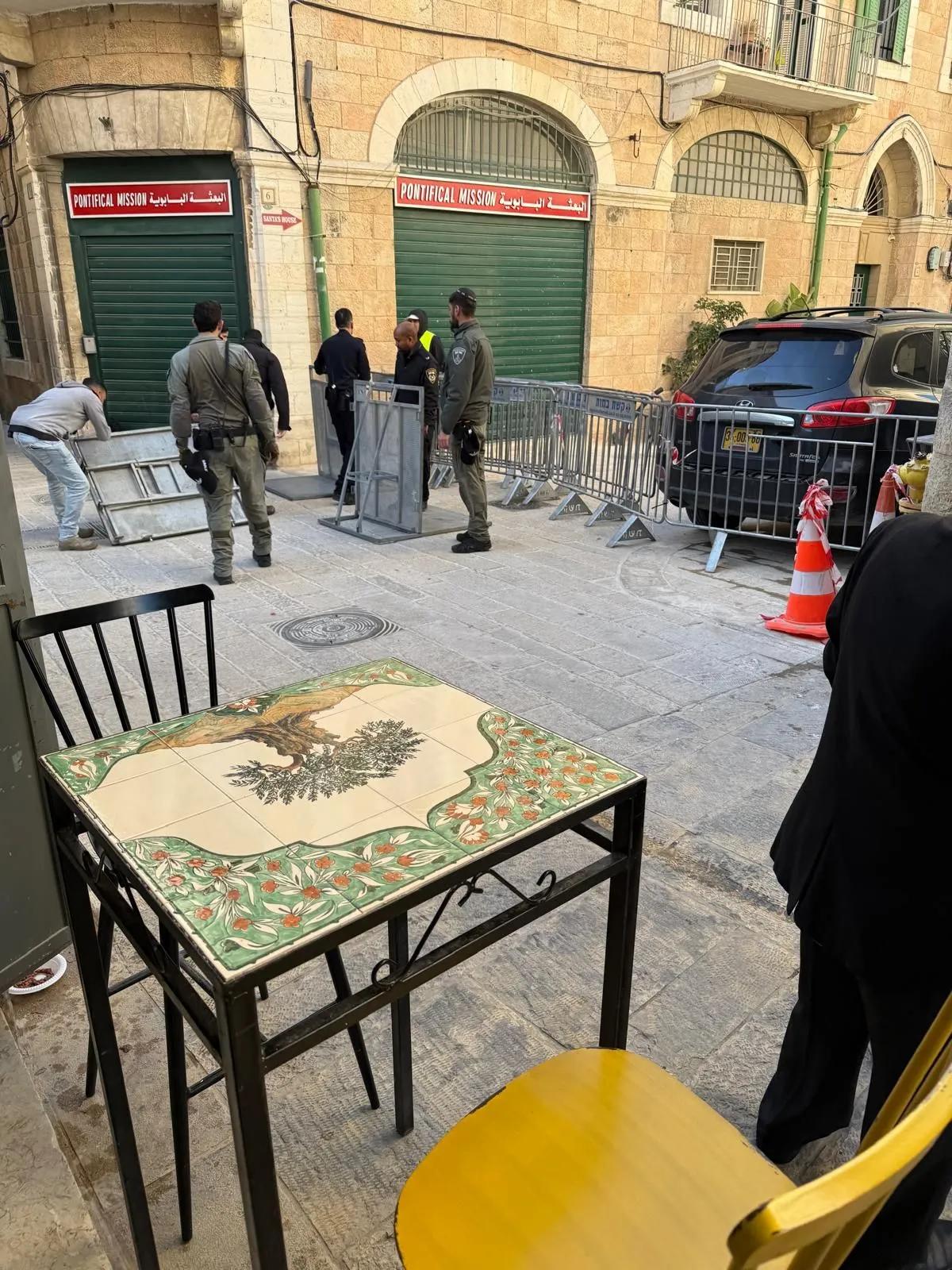
Jerusalem Military Lockdown
Israeli occupation forces transformed Jerusalem into a military zone on April 11, 2026, deploying numerous checkpoints around the Old City and Damascus Gate. The Greek Orthodox Patriarchate had called on Christians to participate in the celebration, which embodies the message of their forefathers and preserves the spirit of the Holy City. Israeli forces set up checkpoints on roads leading to the Church, limiting access and checking IDs of some young men, preventing them from entering.
The Church had been closed for 40 days prior, with Israeli authorities citing security concerns linked to the U.S.-Israeli war on Iran. A letter from the Greek Orthodox architect requested limiting the number of visitors to 1,800 inside the building and 200 in the courtyard. The Churches of Jerusalem condemned the Israeli government's restrictions as authoritarian, vowing not to comply.

Access and Restrictions
The Israeli military measures obstructed worshippers' access to the Church of the Holy Sepulchre. Several young men were barred after ID checks. The maximum number of visitors was limited to 1,800 inside the church and 200 in the courtyard.
The restrictions came after the cancellation of hundreds of permits for Palestinian Christians from Gaza. The Jerusalem Islamic-Christian Support Commission condemned the sudden cancellation as an affront to freedom of worship. The restrictions were a necessary safety requirement implemented by an engineer to avoid a potentially deadly stampede.
Historical and Political Context
The closure of the Church of the Holy Sepulchre and Al-Aqsa Mosque for 40 days was unprecedented. The closure prevented Christians from holding Palm Sunday Mass for the first time in centuries. Israeli Prime Minister Netanyahu said there was no malicious intent.
The Middle East Eye documented rising attacks on Christian sites in recent years. The Greek Orthodox Patriarchate's statement emphasized the light of Holy Saturday as a sign of unwavering faith. The statement expressed hope for peace and justice to prevail throughout the world.