Israeli Judicial Office Refuses to Recommend Pardoning Netanyahu Unless He Resigns, Confesses or Gets Convicted
Key Takeaways
- Israeli legal office says pardon Netanyahu only if he resigns, confesses, or is convicted
- Decision rebuffs pressure from President Donald Trump to pardon Netanyahu
- Netanyahu faces a long-running trial on corruption charges
Pardons department refusal
Israel’s Justice Ministry pardons department has declined to recommend pardoning Prime Minister Benjamin Netanyahu unless he admits guilt, resigns, or is convicted, saying that as long as he maintains his innocence it would be inappropriate to rule on a pardon.
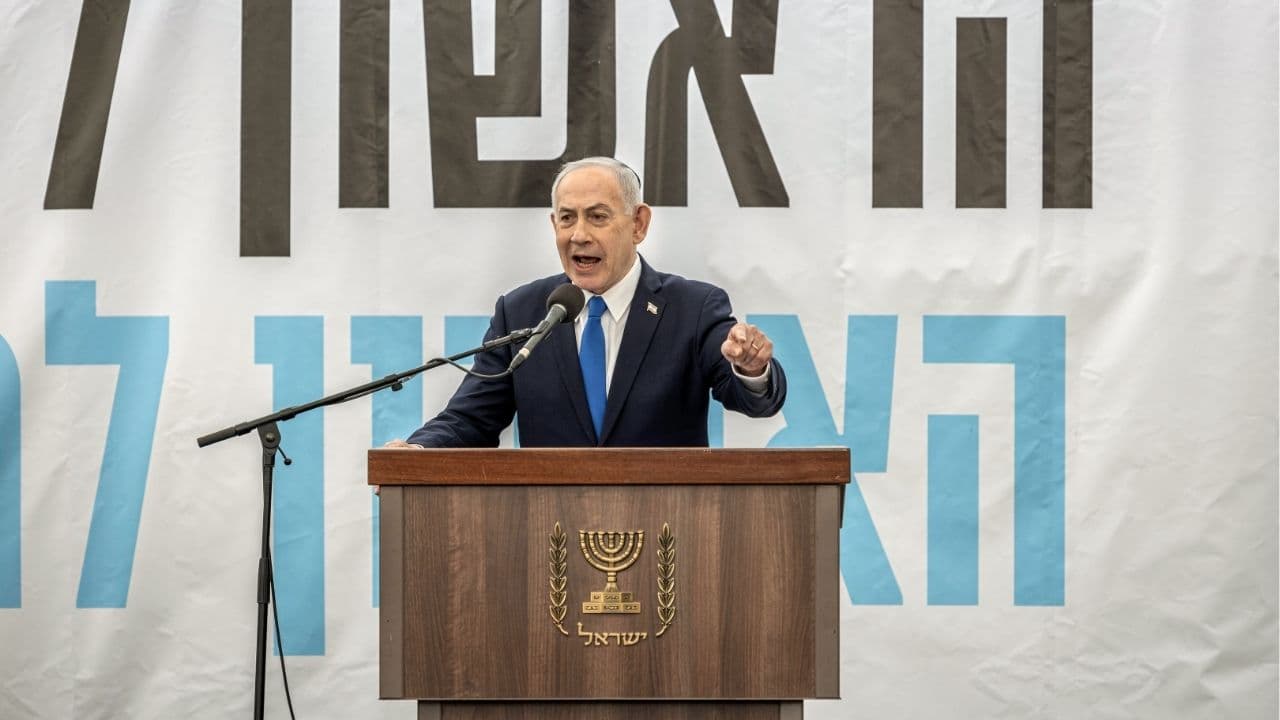
“Prime Minister Benjamin Netanyahu of Israel delivers a speech at the funeral of an Israeli hostage, in Meitar, Israel, Jan”
The office described the request as unprecedented and lacking a legal basis, noting that only once before had a pardon been granted prior to conviction—and in that earlier case the recipients had confessed and resigned.
The opinion was dated Monday and was posted on social media by a government minister.
Netanyahu's arguments
Netanyahu, indicted in 2019 on charges of bribery, fraud and breach of trust, has argued that a short-circuited pardon would allow him to focus on state affairs rather than a protracted trial; he has also repeatedly claimed that police and prosecutors conspired to drive him from power.
The Justice Ministry’s assessment rejects that framing for the pardon process, insisting legal standards and precedent must guide any decision and that the pardon procedure cannot bypass the normal criminal process while he insists on innocence.
Herzog and Trump pressure
President Isaac Herzog has refused to be rushed by external pressure, insisting he will wait for the Justice Ministry’s formal recommendation before deciding on any pardon; the president is not required to follow the ministry’s advice, but Herzog emphasised independence from both domestic and international influence.
“Prime Minister Benjamin Netanyahu of Israel delivers a speech at the funeral of an Israeli hostage, in Meitar, Israel, Jan”
President Donald Trump has publicly applied heavy pressure, denouncing Herzog in an Axios interview with profane language and urging a pardon for Netanyahu, which Israeli legal officials explicitly rejected as not meeting legal standards.
Legal implications
The Justice Ministry framed the legal issue as unsettled territory, using stark language to warn that the pardon route offered to Netanyahu would be 'in a legal field that has not yet been plowed.'
By invoking precedent and demanding either admission, resignation, or conviction, the ministry signalled a high bar that preserves procedural norms and resists political shortcuts; the decision closes one avenue for Netanyahu to avoid a drawn-out trial while he publicly maintains innocence.
Political stakes
The dispute over the pardon request highlights the fraught intersection of law and politics in Israel: Netanyahu’s lobbying and international pressure collided with a legal body asserting limits on executive clemency before conviction, a stance that revives questions about rule of law, precedent, and political accountability as the country confronts leadership under indictment.
“Prime Minister Benjamin Netanyahu of Israel delivers a speech at the funeral of an Israeli hostage, in Meitar, Israel, Jan”
The ministry’s refusal to recommend a pardon without the listed conditions leaves the legal process to play out through courts and political channels rather than being short-circuited by a pre-emptive clemency.
More on Gaza Genocide

Israel Drops Charges Against Five Soldiers Accused Of Sexually Assaulting Palestinian Detainee
23 sources compared

Israeli Reservist Soldier Kills Palestinian Man in Occupied West Bank as Israel Intensifies Military Presence
15 sources compared
Wealthy Flee Gulf as Private Jet Charters Surge to $350,000, Riyadh Becomes Evacuation Hub
26 sources compared
U.S. and Israel Assassinate Iranian Supreme Leader Ayatollah Ali Khamenei, President Donald Trump Says
137 sources compared