
Japan’s Cabinet Under Prime Minister Sanae Takaichi Lifts Ban on Lethal Weapons Exports
Key Takeaways
- Sanae Takaichi's cabinet approved lifting the ban on lethal weapons exports.
- Move to boost arms industry and deepen defense partnerships with allies.
- Exports could include fighter jets, missiles, and warships.
Policy Overhaul
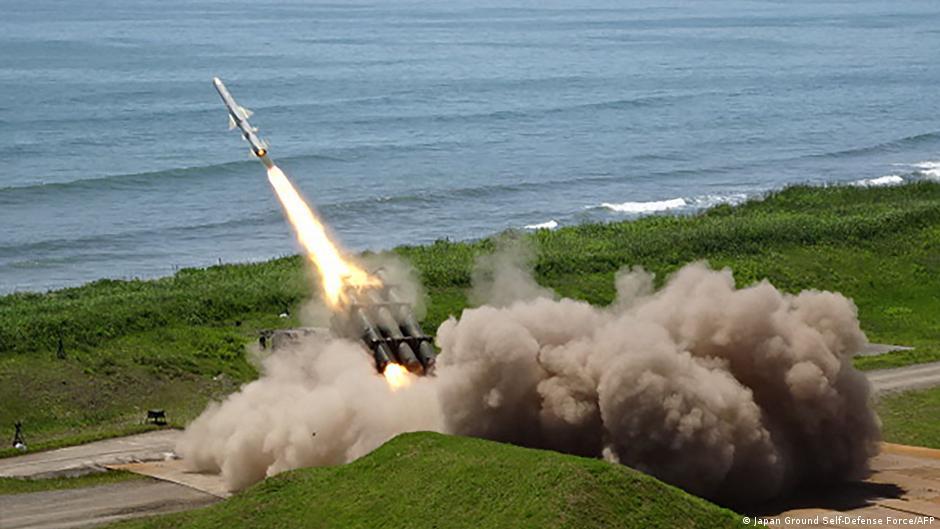
Japan’s cabinet of Prime Minister Sanae Takaichi has lifted a ban on exporting lethal weapons, including fighter jets, in a major shift to Japan’s pacifist post-World War II stance, according to Al Jazeera.
“The cabinet of Japanese Prime Minister Sanae Takaichi has lifted a ban on exporting lethal weapons, including fighter jets, in a major shift to Japan’s pacifist post-World War II constitution”
In a post on X announcing the changes on Tuesday, Takaichi said, “With this amendment, transfers of all defence equipment will in principle become possible,” and added that “recipients will be limited to countries that commit to use in accordance with the UN Charter,” as Al Jazeera reported.

The Anadolu Ajansı report says the Cabinet approved changes that scrap a previous system restricted to five categories of nonlethal equipment and replaces it with a framework dividing defense exports into “weapons” and “non-weapons,” citing Japan Times.
Anadolu Ajansı also reports that decisions on exporting lethal weapons will be reviewed by Japan’s National Security Council and limited to countries with existing defense cooperation agreements with Tokyo, currently numbering 17.
NPR describes the approval as scrapping a ban on lethal weapons exports and says it clears “a final set of hurdles” for Japan’s postwar arms sales, including “a next-generation fighter jet and combat drones.”
The DW report similarly says Japan approved “a major overhaul of defense export rules, ending long-standing restrictions on lethal weapons sales overseas and paving the way for exports of fighter jets, missiles and warships,” while quoting Takaichi: “No single country can now protect its own peace and security alone, and partner countries that support each other in terms of defense equipment are necessary.”
What Changes
Multiple outlets describe how Japan’s export rules are being restructured, including the removal of older limits and the creation of new categories.
Al Jazeera says previous rules introduced in 1967 and enacted in 1976 had limited Japanese military exports to non-lethal arms, such as those used for surveillance and mine sweeping, and it adds that Asahi reported Japan would still restrict exporting weapons to countries where fighting is currently taking place, with exemptions under “special circumstances.”

Anadolu Ajansı reports that the Cabinet replaced the previous system restricted to five categories of nonlethal equipment with a new framework dividing defense exports into “weapons” and “non-weapons,” and it says the former includes systems such as warships, tanks and missiles while the latter covers items like radar and protective gear.
NPR says the new guideline “scraps those limits and allows the export of equipment such as fighter jets, missiles and destroyers,” contrasting that with earlier exports such as “flak jackets, gas masks and civilian-use vehicles.”
The Times Argus/AP text says the new guidelines scrap the earlier limits and allow the export of equipment such as fighter jets, missiles and destroyers, while also stating that “In principle, Japan still will not export lethal weapons to countries that are at war.”
DW adds that the revised guidelines scrap earlier restrictions and allow all defense equipment to be approved, subject to government screening and controls on transfers to third countries.
Official Rationale
Japan’s government framed the change as a response to security conditions and as a way to support defense partners and industrial capacity.
“Japan's government has taken a major step by approving the lifting of its ban on lethal weapons exports, marking a significant deviation from its longstanding pacifist policy”
Al Jazeera quotes Takaichi saying, “In an increasingly severe security environment, no single country can now protect its own peace and security alone.”
NPR reports that Chief Cabinet Secretary Minoru Kihara told reporters, “The new policy would "ensure safety for Japan and further contribute to the peace and stability in the region and the international society as the security environment around our country rapidly changes,"” and it adds that “The government will strategically promote defense equipment transfer to create a security environment that is desirable for Japan and to build up the industrial base that can support fighting resilience.”
DW similarly quotes Takaichi saying, “Under the new system, we will strategically promote equipment transfers while making even more rigorous and cautious judgments on whether transfers are permissible.”
The Chosun Ilbo report says the government stated, “Expanding alliances and partnerships that operate common equipment and strengthening the defense industry are crucial for securing domestic production capabilities that support wartime operational capacity.”
It also quotes Takaichi on X: “Transferring defense equipment in response to international demand contributes to enhancing the defense capabilities of partner nations, deterring conflicts, and securing Japan’s security.”
Domestic and Regional Pushback
The policy shift has drawn criticism inside Japan and abroad, with outlets citing protests, public opinion, and statements by opposition figures.
Global Times reports that on April 19, 2026, “more than 30,000 people gather in front of the National Diet Building in Tokyo” to protest moves by the Sanae Takaichi government to lift restrictions on exporting lethal weapons and push for constitutional revision.
Global Times also reports that the revision has sparked opposition with some netizens warning it could turn Japan into a “merchant of death,” and it says a Chinese expert warned the move reflects an alarming trend toward further remilitarization in Japan.
It quotes Japanese Communist Party and House of Councillors member Taku Yamazoe on X saying, “this is incompatible with a peaceful nation based on Article 9 of the Constitution. We strongly protest and demand its withdrawal.”
It also quotes JCP Chair Kazuo Shii on X saying, “We must not allow Japan to be reduced to a 'merchant of death' that profits from weapons. We strongly protest this decision and demand its withdrawal. We will do everything in our power to restore the ban on arms exports,” and it quotes Tooru Miyamoto saying, “This will turn Japan into a country that supports illegal wars. Let's change the administration,”.
Al Jazeera reports that the changes come amid reports that Takaichi sent a ritual offering to the Yasukuni Shrine in Tokyo, which includes names of more than 1,000 convicted Japanese war criminals from World War II, including 14 found guilty of “Class A” crimes.
Alliances and Next Steps
Japan’s policy change is closely linked in the reporting to defense cooperation deals and to the expansion of eligible buyers.
“Japan on Tuesday approved a major overhaul of defense export rules, ending long-standing restrictions on lethal weapons sales overseas and paving the way for exports of fighter jets, missiles and warships”
Al Jazeera says Tokyo’s change comes soon after Japan and Australia signed a $7bn deal that will see Japan’s Mitsubishi Heavy Industries build the first three of 11 warships for the Australian navy, and it also says countries interested in buying Japanese-made weapons include Australia, New Zealand, the Philippines and Indonesia.
Anadolu Ajansı reports that last week Japan and Australia finalized a major defense agreement worth up to A$20 billion ($14.4 billion) to jointly develop a new fleet of advanced naval frigates, and it says the shift is expected to expand Japan’s official security assistance program.
NPR and NBC News both describe the Australian deal as Japan formalizing a deal last week to deliver the first three of a $6.5 billion fleet of Japanese-designed frigates for the Australian navy and jointly build eight others, and NPR quotes Australian Defense Minister Richard Marles saying, “The relaxation of these controls is going to be really important to developing the seamless defense industrial base,” after the signing ceremony with his Japanese counterpart, Shinjiro Koizumi.
Al Jazeera adds that at least 17 countries will be eligible to buy weapons manufactured in Japan under the changes, according to Japan’s Chunichi newspaper, and it says this list may be expanded if more countries enter into bilateral agreements with Japan.
Chosun Ilbo says the NSC will only notify the Diet in writing after making decisions and that no effective parliamentary oversight mechanism was introduced, while Global Times says the revision was widely reported amid concerns it could fuel conflicts and intensify regional arms races.
More on Asia

Japan Downgrades Tsunami Alert After 7.7 Quake Off Northern Coast
41 sources compared
Bangladesh Boat Capsize Kills Dozens, Leaves 250 Rohingya Missing In Andaman Sea
23 sources compared

Spanish PM Pedro Sanchez's Wife Begoña Gomez Charged With Corruption
10 sources compared

Iraq Parliament Elects Kurdish Politician Nizar Amedi As President After Deadlock
15 sources compared