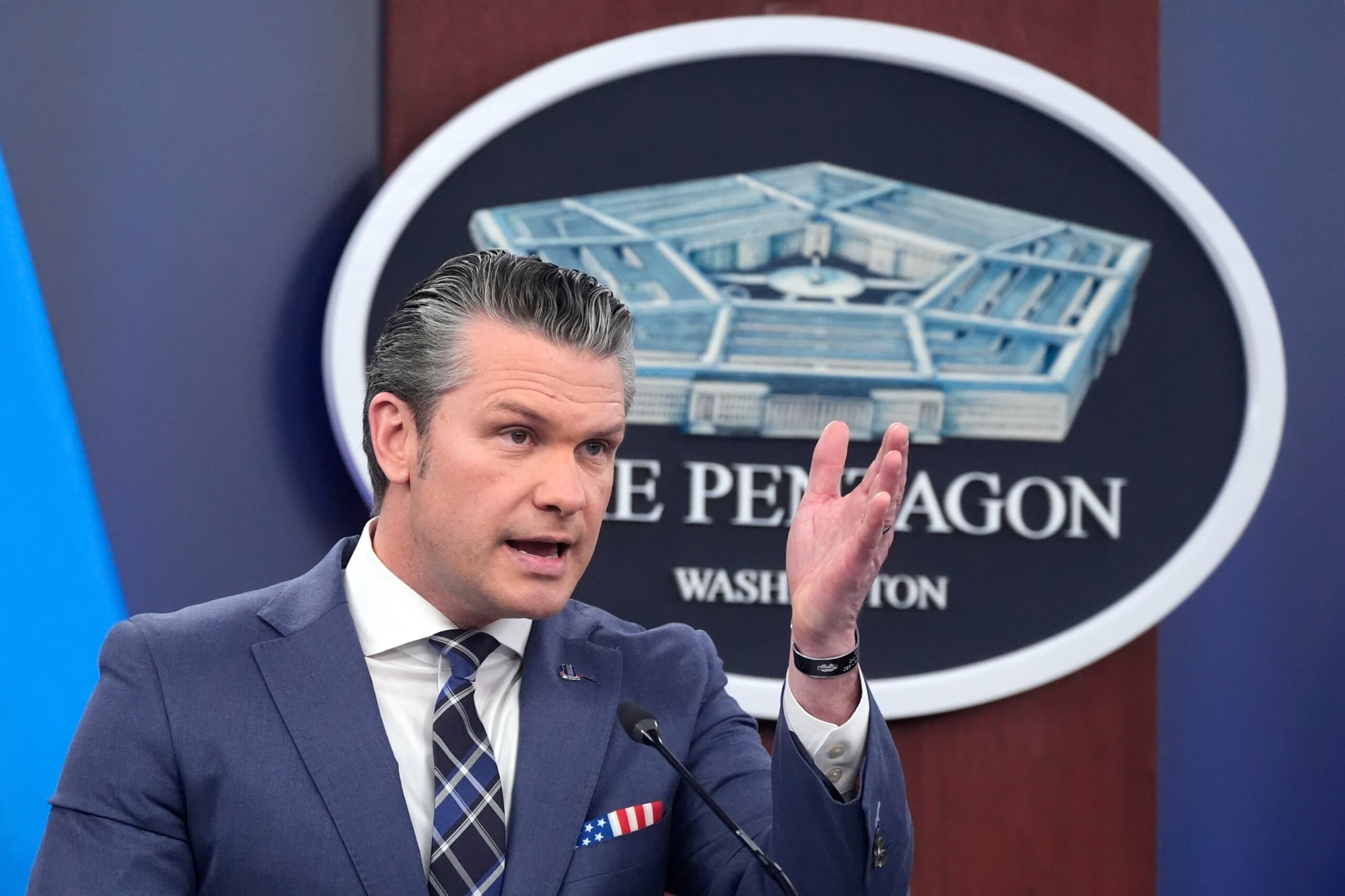
Judge Blocks Trump Administration from Enforcing Pentagon News Access Policy, Siding with New York Times
Key Takeaways
- Judge Paul Friedman blocked key provisions of the Pentagon press access policy.
- Ruling found the policy unconstitutional, violating First Amendment and due process protections.
- The New York Times lawsuit prompted the ruling; government plans to appeal.
Policy Blocked
A federal judge in Washington, D.C. has blocked the Trump administration from enforcing its controversial Pentagon press access policy, ruling in favor of The New York Times in a high-profile constitutional challenge.
““The goal of that process is to prevent those who pose a security risk from having broad access to American military headquarters,” government attorneys wrote”
U.S. District Judge Paul Friedman sided with the newspaper, determining that key portions of the new rules were unconstitutional and illegally restricted journalists' ability to cover the Defense Department.

The policy, introduced in October 2025 by Defense Secretary Pete Hegseth, prohibited journalists from soliciting information that the defense department didn't directly provide and threatened to revoke credentials of any outlet that didn't sign on.
Of the 56 news outlets in the Pentagon Press Association, only one agreed to sign the new policy, with major organizations including The New York Times, Washington Post, Wall Street Journal, Associated Press, Reuters, Bloomberg News and the Atlantic joining TV networks in refusing compliance.
Constitutional Ruling
Judge Friedman delivered a sweeping constitutional rebuke of the policy, finding it violated both the First Amendment's free press protections and the Fifth Amendment's due process guarantees.
In his 40-page ruling, Friedman wrote that 'Those who drafted the first amendment believed that the nation's security requires a free press and an informed people and that such security is endangered by governmental suppression of political speech.'

The judge emphasized that the policy was 'unreasonable' and constituted viewpoint discrimination, stating that the 'undisputed evidence' showed the policy was designed to 'weed out 'disfavored journalists' and replace them with those who are 'on board and willing to serve' the government.'
Friedman also ruled that the policy violated due process rights because it was 'vague' and provided 'no way for journalists to know how they may do their jobs without losing their credentials.'
Reactions
The ruling came amid broader tensions between the Trump administration and the press, with the Pentagon policy being one of several efforts by the administration to control media access to government information.
“The-CNN-Wire & 2026 Cable News Network, Inc”
Under the policy, the Pentagon assembled a new press corps consisting primarily of conservative outlets and pro-Trump media personalities after traditional journalists left rather than comply with the restrictions.
This included figures like Laura Loomer, Matt Gaetz, James O'Keefe, and Mike Lindell, who were issued press passes despite having backgrounds as activists and commentators rather than traditional journalists.
The Pentagon's response to the ruling was immediate, with spokesperson Sean Parnell posting on X that 'We disagree with the decision and are pursuing an immediate appeal.'
Meanwhile, press freedom advocates celebrated the decision, with the Freedom of the Press Foundation calling it a necessary rebuke of the administration's attempts to criminalize routine journalism.
Significance
The ruling has significant implications for press freedom during times of war and national security concerns, with Judge Friedman explicitly addressing the context of the United States' military engagements.
He wrote that 'especially in light of the country's recent incursion into Venezuela and its ongoing war with Iran, it is more important than ever that the public have access to information from a variety of perspectives about what its government is doing.'
This decision represents a major victory for independent journalism and comes as part of a pattern of legal challenges to Trump administration media policies.
The judge's opinion emphasized that the policy represented a 'sea change' in the Pentagon's relationship with journalists, noting that in the past, reporters did not have their credentials effectively revoked even when they published classified information like the Pentagon Papers during the Vietnam War.
The ruling also highlighted concerns about viewpoint discrimination, as the judge found that the policy targeted journalists based on their willingness to publish stories favorable to the administration rather than their political ideology.
Next Steps
Following the ruling, Judge Friedman ordered the Pentagon to reinstate the press credentials of seven New York Times journalists who had lost access under the policy.
“and replace them with news entities that are," Friedman wrote”
He also stated that his decision to vacate the challenged policy terms applies to 'all regulated parties,' giving the Pentagon a week to file a written report on its compliance with the order.

Despite this immediate action, the Pentagon's plans to appeal the decision suggest an ongoing legal battle over press access.
The Pentagon Press Association released a statement calling the ruling 'a great day for freedom of the press in the United States' and urged the immediate reinstatement of credentials for all its members.
Meanwhile, journalists from outlets that refused to consent to the new rules, including The Associated Press, have continued reporting on the military outside the Pentagon building, demonstrating that while physical access was restricted, the coverage of Defense Department activities has not ceased.
More on USA

Trump threatens to deploy ICE agents to US airports amid DHS funding standoff
46 sources compared

ICE Detainee Royer Perez-Jimenez Dies in Florida Detention Center; Officials Suspect Suicide
10 sources compared
Elon Musk Offers to Pay TSA Salaries During Partial Government Shutdown
50 sources compared

California lawmakers rename Cesar Chavez Day to Farmworkers Day amid sexual abuse allegations.
17 sources compared