Crime26 March, 20264 min read
Judge Jeffrey Karp Acquits Kelsey Fitzsimmons On Single Assault Count, Citing Reasonable Doubt
Judge Jeffrey Karp acquitted Kelsey Fitzsimmons of assault with a dangerous weapon. Fitzsimmons was shot by Officer Pat Noonan during restraining-order service at her home.
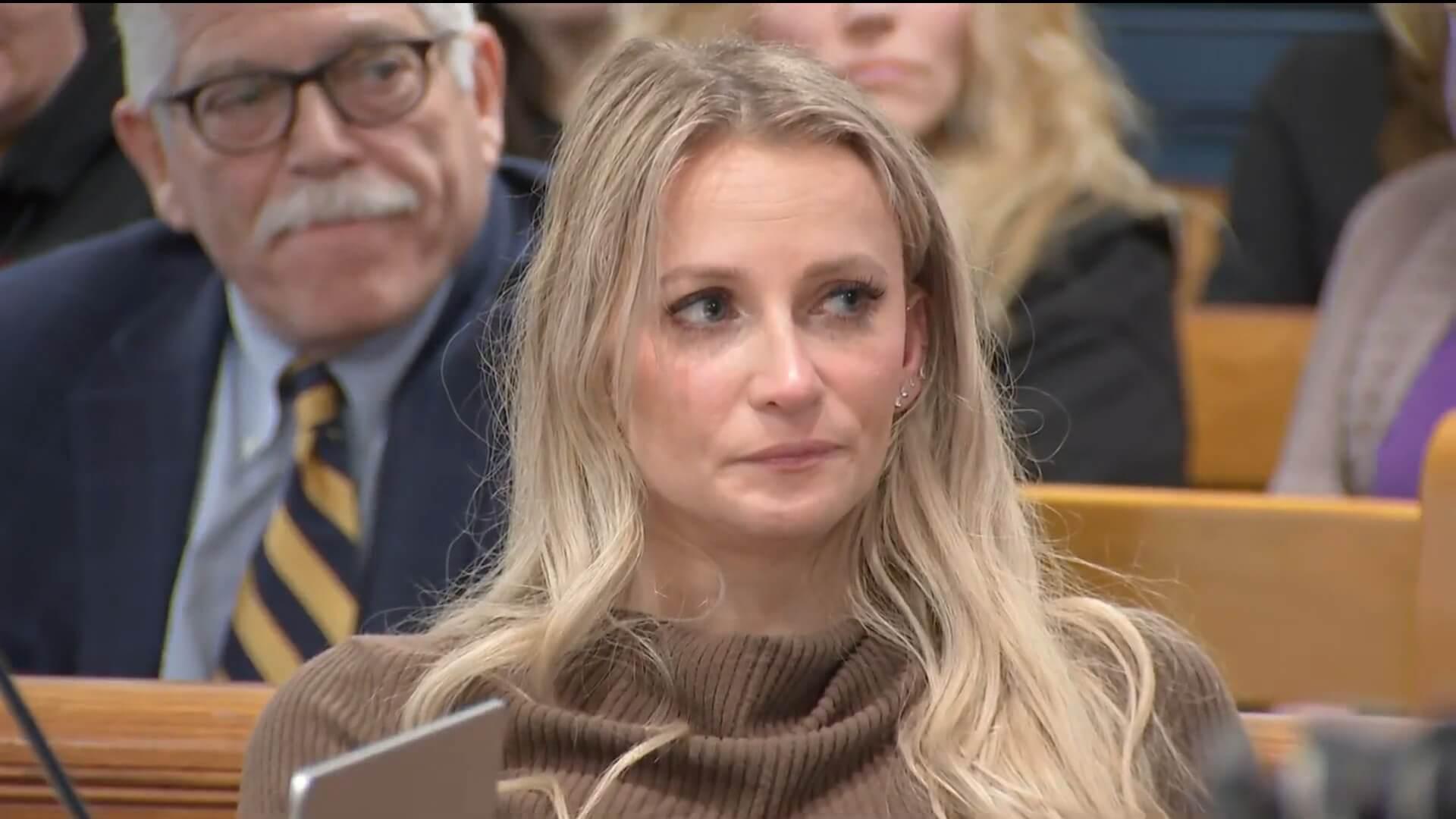
Bench-trial acquittal by Judge Karp
The single most important new development is Judge Jeffrey Karp’s bench-trial acquittal of Kelsey Fitzsimmons on a single count of assault with a dangerous weapon, marking a decisive turn in a case that had been shaped by competing narratives from police and prosecutors. He framed the ruling as a verdict reached due to reasonable doubt about what happened when North Andover officers arrived to serve a restraining order at Fitzsimmons’ home, noting that both she and Officer Patrick Noonan were credible witnesses in a cramped, high-pressure doorway moment. The decision came after a four-day process in which the judge explicitly highlighted the lack of body-worn camera footage as a missing piece that could have clarified the sequence of events.
“Judge Jeffrey Karp found North Andover police officer not guilty of assault with a dangerous weapon Thursday following a bench trial that lasted less than three days.”
Prosecutors had argued Fitzsimmons pointed the gun and fired, while the defense portrayed a life-altering crisis in which she aimed the weapon at herself. Essex DA Paul Tucker signaled disagreement with the verdict, saying the indictment was supported by credible testimony and physical evidence, underscoring the split between judicial reasoning and prosecutorial framing.
Two competing accounts and evidence
The second-order development is the stark divergence in the two core accounts of the incident: prosecutors framed Fitzsimmons as the aggressor who pointed and potentially fired at Noonan, while defense counsel portrayed her as a person in an acute crisis who pointed the gun at herself rather than at a fellow officer. The Commonwealth argued that Fitzsimmons fired toward Noonan but that there was no round in the chamber, and that the weapon’s behavior was mechanically inconsistent with her account. Fitzsimmons testified that she was suicidal and never aimed at Noonan, a position supported by her attorney’s insistence that she was overwhelmed by a mental-health crisis rather than intent to harm a colleague.
The absence of body cameras on that day further complicated the fact-pattern, a point the judge and several outlets repeatedly flagged as a potential missing indicator in evaluating credibility. Multiple outlets also noted the unusual credibility overlap between Noonan and Fitzsimmons, a point that fed into the judge’s conclusion of reasonable doubt.

Body cameras and policing policy
A consequential implication of the verdict is the renewed spotlight on body-worn cameras, a factor regularly cited by judges and coverage as a potential force-multiplier for truth-telling in police-involved domestic cases. The Globe and WBZ highlighted that the absence of body cameras may have hindered the prosecution’s ability to prove timing and intent beyond a reasonable doubt, a theme echoed by Court TV in noting there is no requirement for the judge to explain reasons in bench trials but also by local outlets that pointed to policy gaps in body-camera deployment. The case has fed into a broader debate about policing transparency, especially in restraint-order scenarios where split-second decisions can be misread without video.
“Perhaps the commonwealth could have easily met its burden had the officers had been wearing body cameras.”
Critics and some outlets argue that universal body-camera policies would reduce ambiguity in high-pressure encounters, while supporters caution that footage alone does not replace context or credibility. Taken together, the coverage suggests that technology gaps, rather than only human factors, shaped the legal narrative and the public’s take on accountability.
Aftermath for Fitzsimmons and family
The aftermath for Fitzsimmons herself is inseparable from the legal outcome: she spoke of relief at the not-guilty verdict, but the toll of months in jail and separation from her son remains a defining scar. Publicly, she described the moment as a hard-won breath of air, saying, “This is my first breath of fresh air and I feel like I can breathe again,” while acknowledging ongoing battles to reunite with her child and dog and to reclaim her life after a prolonged period of legal and personal upheaval. Media coverage across outlets emphasized the human cost of the ordeal, including Fitzsimmons’ comments about the difficulty of returning to work and regaining custody of her son.
The defense’s depiction of a mental-health crisis and the personal stakes around custody are central to how the verdict is interpreted in broader conversations about policing, gender, and trauma. Her stated intention to pursue custody and rebuild aspects of her life reflects how a courtroom decision can transform public narratives and personal futures in the West Asia–to–Massachusetts media frame.

Media framing and legal implications
Taken together, the coverage frames the Fitzsimmons case as a cautionary tale about the limits of media balance when a single, high-stakes incident becomes a test case for policing transparency, mental health considerations, and the mechanics of restraint-order enforcement. The not-guilty verdict is repeatedly described as a nuanced decision rather than a simple exoneration, with judges stressing reasonable doubt and the unsettled nature of the evidence, while prosecutors emphasize the strength of the indictment and the credibility of police testimony. Major Western outlets, including CBS News and The Boston Globe, stress that body-camera policy and the lack thereof loomed large in how the case evolved and why the result diverged from typical expectations in officer-on-officer shootings.
“Lawrence Superior Court Judge Jeffrey Karp found North Andover police officer not guilty of assault with a dangerous weapon.”
Non-Western or independent outlets in this dataset also underscore the human toll of being held for months, the emotional stakes surrounding child custody, and the broader implications for how restraint orders intersect with frontline policing. Overall, the narrative suggests a fragile balance between accountability to the public and fairness to individuals caught at the intersection of trauma, law, and duty.
