Britain · 02 May, 2026 · 8 min read
Keir Starmer Says UK Will Recognize Palestine in September If Israel Agrees to Ceasefire
UK to recognize the State of Palestine in September if Israel meets ceasefire and commitments. Starmer signals possible ban on some pro-Palestinian marches in Britain.
How many commitments the UK requires from Israel (and their specific content).
6 of 7 outlets skipped it: downing Street specified that “neither party will have a veto over recognition” based on actions/inaction..
NBC News was read line by line by the Watchdog: 3.7. See the score →
50outlets compared
Same story, two versions
tap a side to read it in full
Le HuffPost
“British Prime Minister Keir Starmer announced on Tuesday, July 29, that his country would recognize the State of Palestine by the time of the United Nations General Assembly in September, unless Israel took a series of commitments, including a ceasefire in the besieged Gaza Strip.”Read the original ↗
Courrier international
“The British government also reiterated its demands to Hamas, which must immediately release all hostages, disarm, sign a ceasefire, and accept not to play any role in Gaza's government.”Read the original ↗
Some coverage frames the recognition trigger mainly as Israel meeting commitments, while other coverage foregrounds parallel demands on Hamas—affecting how readers interpret the policy’s leverage and fairness.
Starmer’s conditional pledge
Britain’s Labour government, led by Prime Minister Keir Starmer, announced on Tuesday, July 29 that the United Kingdom would recognize the State of Palestine in September, but only if Israel met a set of conditions tied to the situation in Gaza and the West Bank.
“The United Kingdom will recognize the State of Palestine in September, unless Israel makes three commitments”
Le Monde reported that Downing Street said London would recognize the State of Palestine in September unless “the Israeli government takes substantive measures to end the appalling situation in Gaza,” and it listed three demands: “immediate authorization” for the UN to resume delivering humanitarian aid, a ceasefire, and “a clear affirmation” that there will be no annexations in the West Bank.
Radio France likewise said the United Kingdom would recognize the State of Palestine in September 2025, unless the Israeli government “accepts a ceasefire and commits to a lasting peace, to revive the prospect of a two-state solution,” and it added that this includes allowing the United Nations to again bring in humanitarian aid and assurances that the West Bank will not be annexed.
Courrier international described the same conditional framework, saying the UK would press ahead at the United Nations General Assembly in September in New York if Israel did not accept “a ceasefire,” commit to “a durable long-term peace leading to a two-state solution,” pledge not to annex the West Bank, and allow the United Nations to resume delivering aid.C
Le HuffPost said Starmer set the recognition timeline “by the time of the United Nations General Assembly in September,” unless Israel took commitments including a ceasefire in the besieged Gaza Strip.L
In the same announcement, Starmer also demanded Hamas release the remaining hostages and pursue total demilitarization, so it “plays no more key role” in the Palestinian territory, according to Le Monde and Le HuffPost.L
The announcement followed pressure after Emmanuel Macron’s Thursday move to recognize a Palestinian state at the UN General Assembly in September, which Le HuffPost described as making France the first G7 country to do so.L
Macron momentum and UK pressure
The British decision was presented as a response to both French action and domestic political momentum, with multiple outlets describing how pressure intensified in recent days after Emmanuel Macron’s Thursday announcement.
Le HuffPost said Starmer recalled his cabinet on an emergency basis Tuesday and framed the move as following France’s lead “in September, unless the Israeli government takes substantial steps to end the appalling situation in Gaza, agrees to a ceasefire, and commits to a lasting and long-term peace.”L
It also said Macron’s Thursday announcement made France the first G7 country to recognize a Palestinian state at the UN General Assembly in September.
Le Monde similarly described the pressure as intensifying after Macron’s announcement, and it quoted Starmer saying, “I have always said that we would recognize a Palestinian state as a contribution to a real peace process, at the moment when it would have the greatest impact for a two-state solution. Now that this solution is threatened, it is time to act,” after an emergency meeting of the British government.
Radio France added that Starmer “urgently summoned his government on Tuesday, July 29, 2025” under weeks of pressure from his majority, and it said the French foreign minister responded by urging, “Let us reopen the prospect of peace.”
Courrier international connected the UK’s conditional roadmap to a broader diplomatic context, saying it followed an agreement aimed at promoting a “lasting peace” in the region with Emmanuel Macron and German Chancellor Friedrich Merz over the weekend.
Le HuffPost also reported that during Emmanuel Macron’s state visit to the United Kingdom on July 10, Macron called on Keir Starmer for a joint recognition of Palestine, stressing “the need to unite our voices in Paris, London and everywhere else,” before deciding to make the announcement alone fifteen days later.L
Netanyahu and Starmer clash
The announcement triggered sharp criticism from Israel’s prime minister, Benjamin Netanyahu, who attacked the British move as rewarding terrorism and threatening Britain.
“Starmer rewards Hamas's monstrous terrorism and punishes its victims”
BFM reported that Netanyahu accused Starmer of “rewarding Hamas's monstrous terrorism and punishes its victims,” and it quoted Netanyahu arguing that “a jihadist state on Israel's border today will threaten Great Britain tomorrow.”
It also said Netanyahu warned that “Complacency toward jihadist terrorists is always a failure,” and it described his framing of the British decision as a response to domestic pressure.
Le HuffPost echoed Netanyahu’s reaction, saying Israel “rejected” Starmer’s announcement and quoting the Israeli Foreign Ministry statement that the British shift “constitutes a reward for Hamas and harms efforts to obtain a ceasefire in Gaza as well as a framework for the release of hostages.”
Le Monde added that Starmer spoke with Israeli Prime Minister Benjamin Netanyahu before the announcement, with a Downing Street spokesperson saying Starmer told Netanyahu that “the situation in Gaza was intolerable,” and that he urged Netanyahu “to take immediate steps to lift all restrictions on aid access.”
Courrier international described Netanyahu’s response as denouncing the British announcement as a “reward for Hamas's monstrous terrorism,” and it said Starmer justified the timing by pointing to the “intolerable situation” in Gaza and “the fear that “the very possibility of a two-state solution may be shrinking.”C
In the same set of reports, Starmer’s own language emphasized conditions and demilitarization, with Le HuffPost saying he demanded Hamas “release the remaining hostages as well as its total demilitarisation, so that it 'plays no further key role' in the Palestinian territory.”L
Hamas, Abbas, and the UN calculus
While Netanyahu attacked the UK’s conditional recognition, other reporting described how Britain framed its demands toward Hamas and how it engaged Palestinian leadership.
Le Monde said Starmer demanded Hamas release the remaining hostages and its total demilitarization so it “plays no more key role” in the Palestinian territory, and it said the Labour leader also spoke with the president of the Palestinian Authority, Mahmoud Abbas, who “welcomed” the announcement of recognition.

Le HuffPost similarly said Starmer demanded Hamas release the remaining hostages and total demilitarisation, and it added that Starmer asked Israel to “allow the United Nations to resume providing aid and commit to no annexations in the West Bank.”L
Courrier international described the UK’s demands to Hamas as requiring that it “immediately release all hostages, disarm, sign a ceasefire, and accept not to play any role in Gaza's government,” and it said Starmer announced the decision now because of the “intolerable situation” in Gaza and the fear that “the very possibility of a two-state solution may be shrinking.”C
Le Monde also reported that Downing Street said it would assess “before the United Nations General Assembly, to what extent the parties have complied with these measures,” and it specified that “neither party will have a veto over recognition by its actions or inaction.”
Radio France described the same conditional logic, saying Starmer hoped to “move the lines on the ground in Gaza,” and it said the recognition would be tied to allowing the UN to bring in humanitarian aid and assurances that the West Bank would not be annexed.
Le HuffPost added that Starmer asked Israel to “commit to no annexations in the West Bank,” and it said the Labour leader also demanded Hamas demilitarization so it “plays no more key role” in the Palestinian territory.L
Debate over protests and security
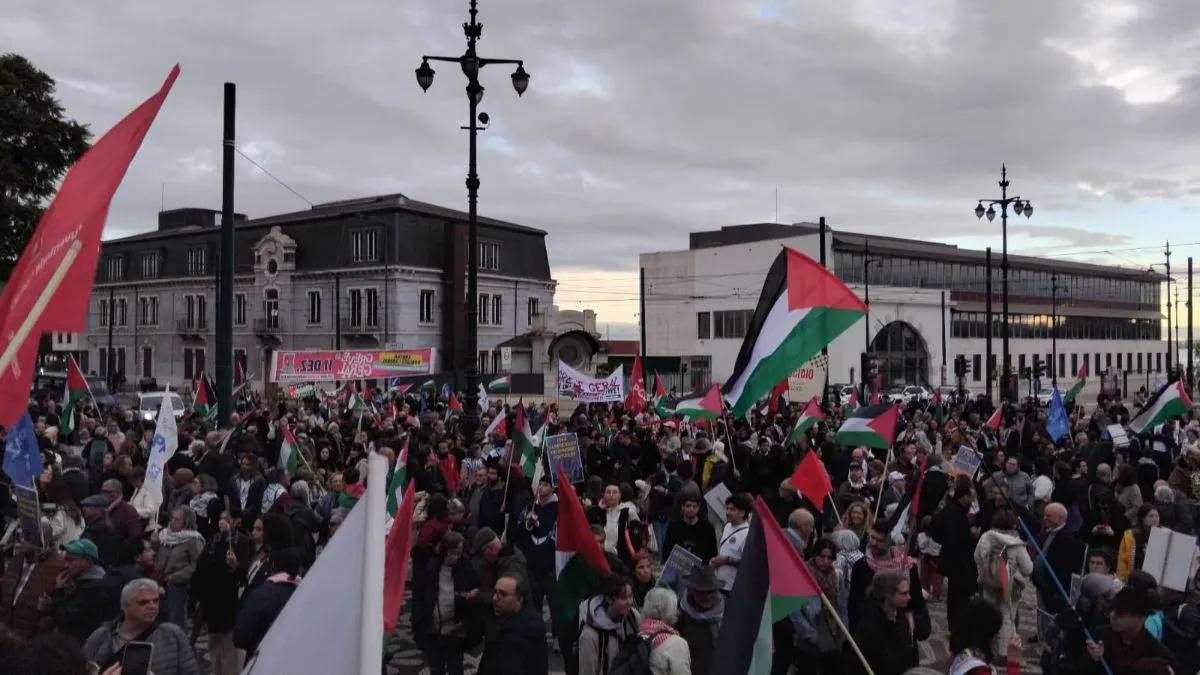
Beyond foreign policy, British politics and public demonstrations in solidarity with Palestine became part of the same debate over how the Starmer government is handling protests.
“considering using new powers that could include banning some solidarity marches”
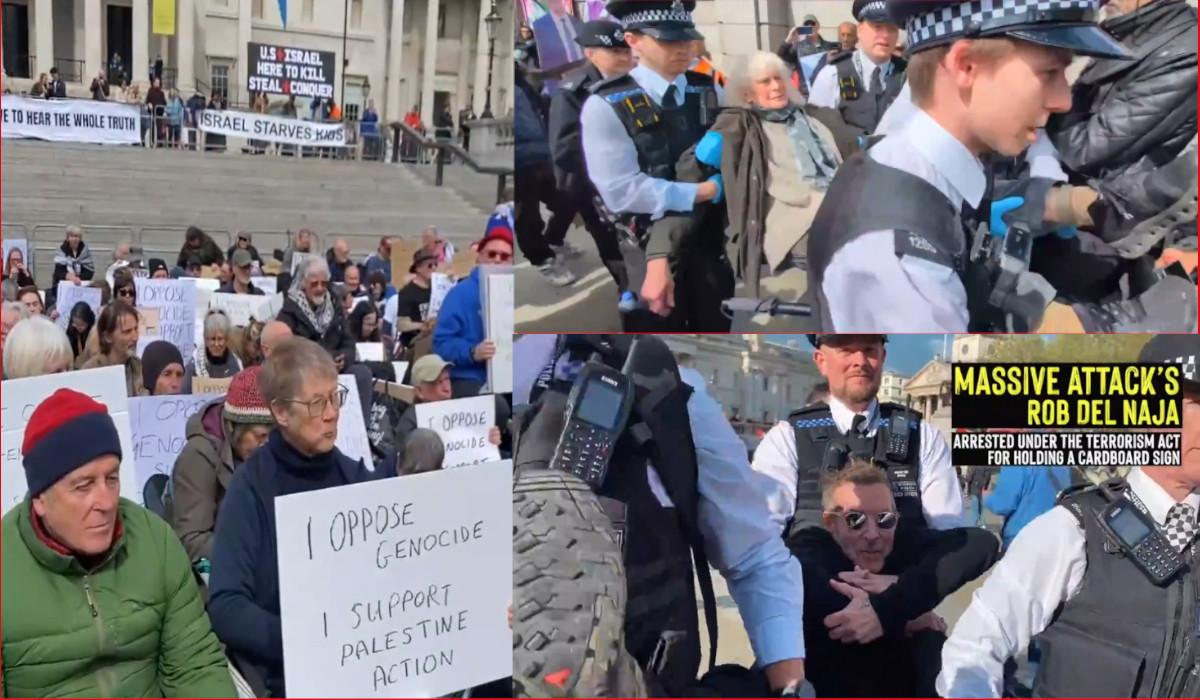
Al-Jazeera Net reported that Prime Minister Keir Starmer told the BBC that his government is considering using new powers that could include banning some solidarity marches with the Palestinian people, justifying this by what he described as the “cumulative impact” of these protests on Jewish communities in the country.

The same outlet said Starmer affirmed a commitment to freedom of expression and peaceful protest while stressing that some slogans during these marches are “completely banned” and require legal action.
Al-Jazeera Net described demonstrations in solidarity with Palestine as “near-weekly event in London since the Gaza war began in October 2023,” and it said the debate includes a split between those who see it as “legitimate democratic practice” and those who view it as a source of rising tensions and “anti-Semitism.”
It also reported that political and media data show a high density of meetings between British government officials and pro-Israel groups, including the Jewish Education Council and the European Leadership Network ELNET, and it said the Guardian reported that official documents obtained through Freedom of Information requests reveal attempts by officials at the Israeli Embassy in London to contact the British Attorney General's Office.
The outlet further said a petition signatories figure had surpassed 114,000 British citizens and that this was sufficient under the British parliamentary system to trigger an official debate in Parliament, while also stating that this momentum had not yet translated into tangible political steps.
Al-Jazeera Net also described a parallel development in which Britain raised its terrorist threat level to 'severe' and said critics used that security climate to justify tightening restrictions on protests, quoting Yasmine Ahmed saying, “It is disgraceful that the government chooses to close the unit at a time when serious violations of international law and horrific crimes are being committed in various parts of the world.”