
Kona Low Storms Strike Oʻahu and Maui, Hawaii Faces Worst Flooding in 20 Years
Key Takeaways
- Over 5,000 residents evacuated as Kona lows trigger Hawaii's worst flooding in 20 years.
- A 120-year-old dam on Oahu nears rupture risk, prompting evacuations.
- Two Kona low storms have hit Oahu and Maui, causing widespread flooding.
Historic Storm Systems
Hawaii experienced devastating back-to-back Kona low storm systems in March 2026, resulting in the state's worst flooding in more than 20 years.
“But the agency doesn't know how many”
The first storm struck on March 10, with major flooding and wind damage building on March 13-14, followed by a second Kona low that began affecting the islands on March 19, exacerbating the already saturated conditions.

The storms brought catastrophic rainfall to Oʻahu's North Shore, with parts of the island receiving 8-12 inches of rain overnight, while Kaala, Oʻahu's highest peak, recorded nearly 16 inches in a single day on top of 26.6 inches between March 10-16.
Governor Josh Green described the situation as extremely severe, particularly on northern Oʻahu, with officials warning that the flooding represented some of the worst weather events since the 2004 Manoa floods that destroyed critical university infrastructure.
Widespread Damage
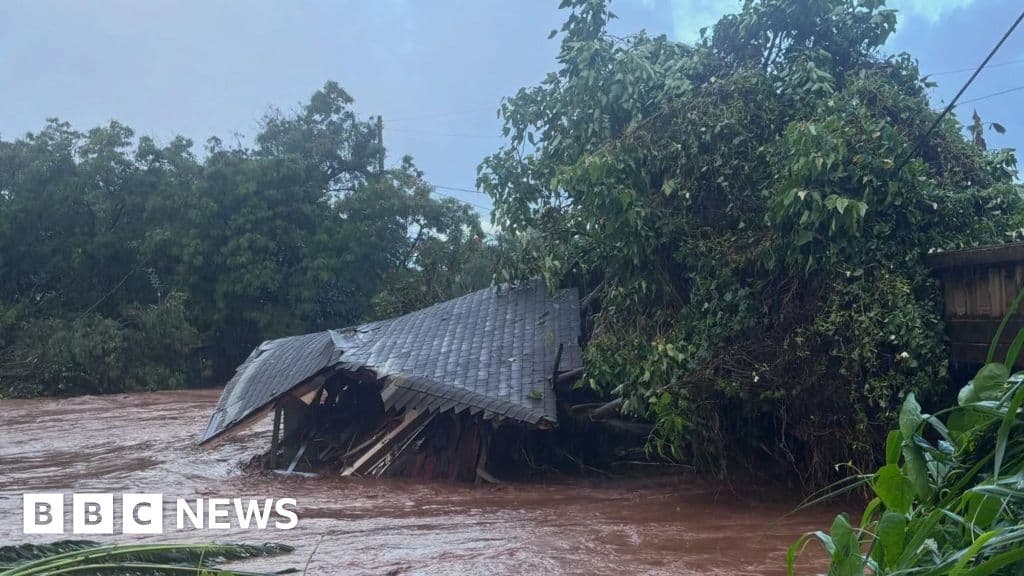
The hardest-hit areas were Waialua and Haleʻiwa on Oʻahu's North Shore, where muddy floodwaters inundated streets, shifted homes off their foundations, and swallowed vehicles.
One home on Kaihulo Drive in Mokuleia was swept onto the beach in a flash flood, with remnants of the house split in half and parts collapsed.
The Wahiawa Dam, a 120-year-old structure, posed an immediate threat as water levels rose dramatically from 24 to 25.6 meters (79 to 84 feet), just 1.8 meters (6 feet) below its capacity, prompting officials to warn of imminent failure.
This led to evacuation orders for more than 5,500 people downstream, though Hawaii Emergency Management later lifted the remaining orders as conditions improved.
Maui County also faced significant impacts with evacuation warnings issued for parts of Lahaina, Kīhei, ʻĪao Valley and Wailuku along the ʻĪao River, while Hāna Highway was restricted to emergency vehicles and essential workers.
Emergency Response
Emergency response efforts were extensive, with the Hawaii National Guard activated to assist in rescue operations.
““The dam continues to operate as designed with no indications of damage,” Dole said in a statement to The Associated Press”
More than 200 people were rescued from the floodwaters, though no deaths were reported, though around 10 people were treated for hypothermia.
One shelter at Waialua High and Intermediate School had to be evacuated when floodwaters reached it, requiring the relocation of about 185 people and 50 pets to another evacuation center.
Honolulu Mayor Rick Blangiardi estimated that hundreds of homes have been affected by the floodwaters, though the full scope of damage remains unassessed.
The Hawaii Emergency Management Agency coordinated response efforts, while local residents organized clean-up parties and rescue attempts, with one man filmed trying to rescue a neighbor's cat from the muddy waters.
Economic Impact
The economic impact of the storms is expected to be substantial, with Governor Josh Green estimating total damage could top US$1 billion.
This includes extensive losses to infrastructure such as roads, schools, airports, homes, and a hospital in Kula on Maui.

The financial toll reflects the widespread nature of the damage, with Hawaii Electric reporting roughly 6,500 customers on Oʻahu still without power on Saturday afternoon, along with smaller outages on Maui and Hawaiʻi Island.
A boil-water notice remained in place for North Shore Oʻahu from Mokulēʻia to Turtle Bay.
The state government implemented emergency measures, with Hawaii's state employees sent home to 'allow families to focus on getting to safety,' as Governor Green noted that with 'catastrophic flash flooding already impacting parts of Oahu, including evacuation orders on the North Shore and the potential for dam-related impacts, we are taking this situation extremely seriously.'
Climate Context
Meteorological experts and climate scientists have linked the increased severity and frequency of extreme weather events in Hawaii to human-caused global warming.
“Thousands evacuated as Hawaii faces worst flooding in 20 years Hawaii remains under a statewide flood watch after a severe storm hit the state and prompted officials to order evacuations”
Senior digital meteorologist Jonathan Belles explained that the flooding is connected to a heat dome entrenched in the Lower 48, explaining that 'when one area of the country is seeing heat, another is seeing cooler, wetter weather.'
He noted that 'right now, the West is seeing heat and the East is seeing slightly stormier weather. Well, that pattern continues west, too. That cooler, wetter weather persists over Hawaii and into Alaska.'
The National Weather Service reported that the intensity and frequency of heavy rains in Hawaii have increased amid human-caused global warming, as extreme rainfalls push infrastructure to its limits.
This pattern of extended wet weather without breaks means 'this flooding could continue for a while' until some major storm system can shift the pattern or it slowly breaks down.
More on Technology and Science
Typhoon Bavi Kills At Least 15 in Philippines as It Threatens Taiwan and Japan
19 sources compared
Wildfire Kills At Least 12 Near Los Gallardos, Leaving 23 Missing In Andalusia
41 sources compared

OpenAI Sunsets ChatGPT Atlas Browser, Pivots to ChatGPT Desktop App With ChatGPT Work
13 sources compared

FTC And Five States Reach 10-Year Right-To-Repair Settlement With Deere & Company
10 sources compared