Europe24 April, 20267 min read
Kosovo Court Jails Three Serb Separatists Over 2023 Banjska Attack
This article is an automated aggregation of coverage from news outlets. Our editorials offer in-depth analysis curated by the NewsCord team.
Three Kosovo Serbs convicted of terrorism, 2023 Banjska attack; two life terms, one 30-year term. Convicted on terrorism charges for the Banjska attack.
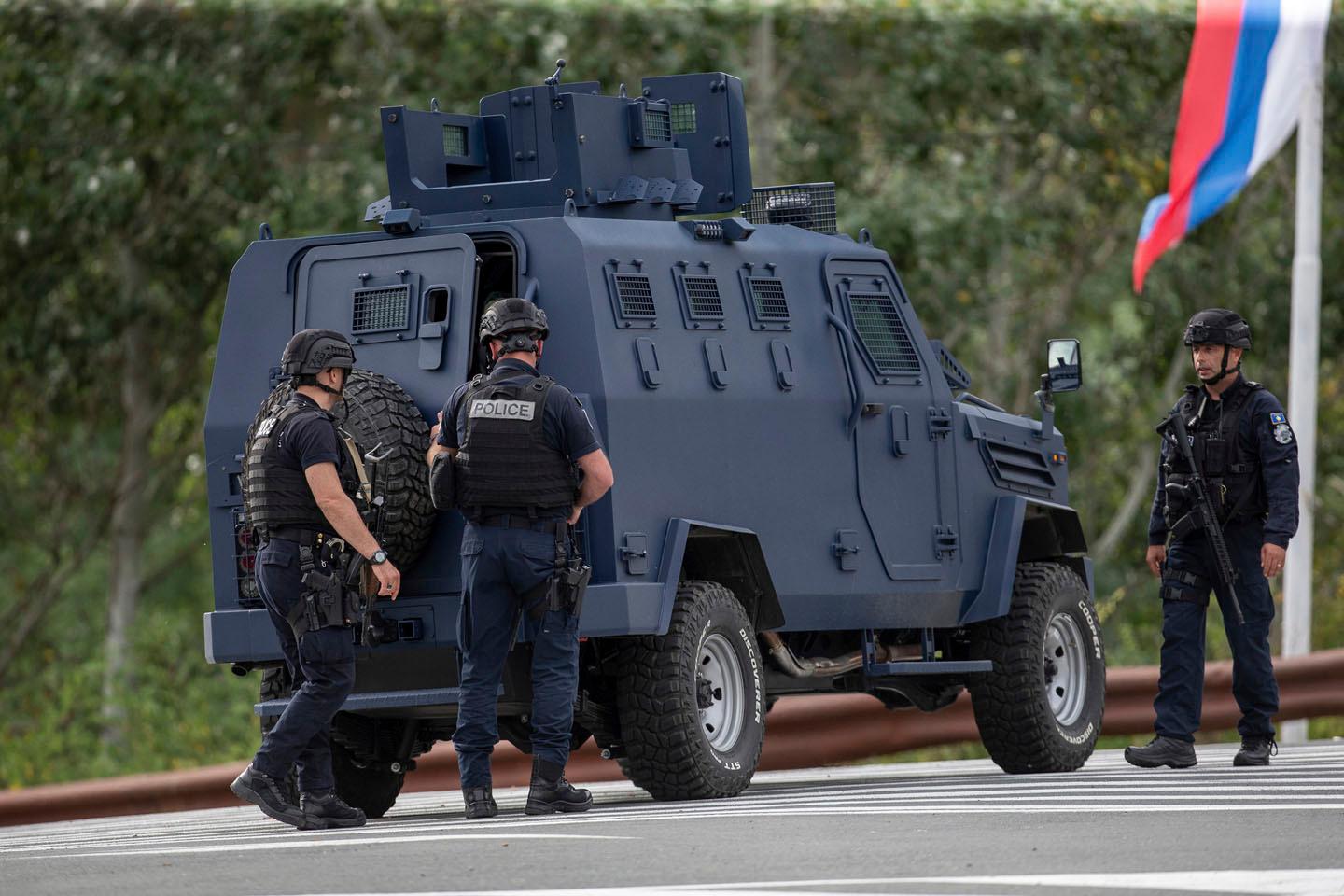
Banjska verdict and casualties
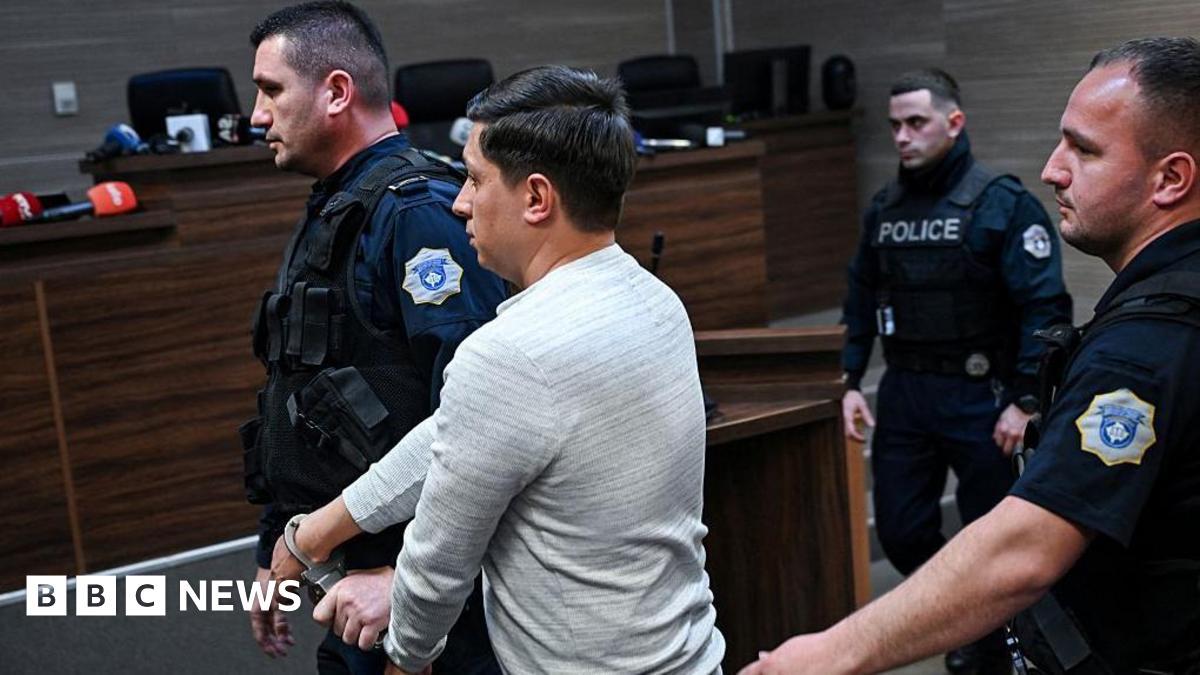
A Kosovo court sentenced three ethnic Serbs over the 2023 Banjska attack, a deadly incident that Kosovo described as a “terrorist” attack and that unfolded in the village of Banjska in northern Kosovo. The BBC reported that the court in Kosovo’s capital Pristina sentenced Vladimir Tolić and Blagoj Spasojević to life imprisonment and Dušan Maksimović to a 30-year jail term on Friday, with the Basic Court in Pristina convicting them on “terrorism” charges. Al Jazeera said the attack led to a clash with police that left one police officer and three of the gunmen dead, and it described the case as a deadly secession attempt near the country’s northern border in 2023.
“On Friday, the court in Kosovo's capital Pristina sentenced Vladimir Tolić and Blagoj Spasojević to life in prison and Dušan Maksimović to 30 years in prison.”
The BBC added that a police officer and three members of an armed group of Kosovo Serbs died during several hours of shooting in northern Kosovo, and it identified Sgt Afrim Bunjaku as killed while two colleagues were injured. The same BBC account said the armed group retreated to the nearby 14th century Serbian Orthodox monastery, forced their way in, and barricaded themselves inside, much to the alarm of pilgrims from Serbia’s second city, Novi Sad.

In the courtroom, Al Jazeera reported that Judge Ngadhnjim Arrni said the plan involved “violence with heavy weaponry” to “cut the northern part of Kosovo” and “attach this part of the territory to Serbia,” while Al Jazeera also recorded that Spasojevic told the court he was not a “terrorist.” The verdicts came after prosecutors charged 45 people in total, though the BBC said prosecutors believe most are in Serbia and unlikely to be handed over.
Escalation timeline and claims
The Banjska attack unfolded after a sequence of escalating tensions between Belgrade and Pristina, with the BBC describing the “Banjska incident” as one of the most dangerous days Kosovo had seen since it unilaterally declared independence from Serbia in 2008.
The BBC said the shooting started when police responded to a lorry blockade set up on a bridge in the early hours of Sunday 24 September, and Kosovo authorities said a group of about 30 men attacked officers with guns and grenades.
Eunews framed the same day as a “terrorist attack” in northern Kosovo, saying a Kosovo police officer was killed on Sept. 24 during an attack before the assault on the Banjska Serbian Orthodox Monastery by a commando of about thirty heavily armed individuals.
Eunews said the terrorist attack began in the early hours when Kosovo Police arrived in Banjska in response to a report of an illegal checkpoint at the border with Serbia, and it described officers being attacked from multiple positions with a heavy arsenal of firearms.
It also said that after killing one officer and wounding two others, the armed group entered the monastery complex where pilgrims from the Serbian city of Novi Sad were staying.
The BBC described how shooting continued throughout the day, resulting in the deaths of three members of the armed group, and it said that by late afternoon Kosovo police’s special forces took control of the monastery but the surviving group members had slipped away despite being “to all intents and purposes, surrounded.”
In the aftermath, the BBC reported that Milan Radoičić, the self-confessed leader of the group, emerged in Serbia boasting that he had “personally made all the logistical preparations” for the attack.
Courtroom statements and political stakes
In the courtroom, defendants and officials framed the Banjska attack in sharply different terms, with Al Jazeera recording that Blagoje Spasojevic told the court he was not a “terrorist” and saying, “This (incident) was my biggest mistake in life … but I did not kill anyone.” The BBC reported that Kosovo’s acting President Albulena Haxhiu welcomed the verdict, describing it as “proof that the attack on the Kosovo police, on the constitutional order and on the security of our country will not remain unpunished.” The BBC also quoted Kosovo’s Interior Minister Xhelal Sveçla saying, “it remains for Serbia to be held accountable for its political, financial and logistical role in this aggression,” tying the convictions to a broader argument about Serbian involvement.
Eunews described how Kosovo Prime Minister Kurti characterized the attackers as “Serbia-sponsored criminals,” saying they were “professionals, with military and police background, funded by Belgrade,” while Kosovo President Vjosa Osmani said the attempt to destabilize was orchestrated by “Serbian criminal gangs.” On the other side, Eunews reported that Serbian President Vučić accused Kurti of months of “provocations” and called Kurti’s actions “absolutely condemnable,” while also saying Kurti’s “life’s goal is to drag us into conflicts with NATO.”
KoSSev added that Kosovo’s Interior Minister Xhelal Sveçla publicly named a suspect, NR, known with the nickname “Gandhi,” as the “principale sospettato” in the case of the police sergeant Afrim Bunjaku’s killing. KoSSev also quoted Sveçla saying, “Questa è una prova evidente che questo gruppo criminale, diretto dalla Serbia, si è preparato a lungo e non ha mai rinunciato ai tentativi di minare l'ordine costituzionale e legale della Repubblica del Kosovo,” and it reported that Sveçla renewed accusations against Belgrade, insisting that “finché la Serbia si rifiuterà di estradare i sospettati, questi continueranno a rappresentare una minaccia per il Kosovo.”
Different outlets, different emphasis
While the core facts of the Banjska attack and the convictions are shared across outlets, the reporting diverges in how it emphasizes responsibility, courtroom process, and the broader European diplomatic frame. The BBC foregrounded the verdicts and Kosovo’s argument about Serbian accountability, stating that prosecutors charged 45 people in total and that prosecutors believe most of them are in Serbia and unlikely to be handed over, while also describing the “Banjska incident” as a label for “one of the most dramatic, dangerous and deadly days Kosovo has seen.” Al Jazeera emphasized the legal characterization of the defendants’ conduct, quoting Judge Ngadhnjim Arrni’s description of a “well‑organised plan” and recording that Spasojevic insisted he was not a “terrorist,” alongside the court’s sentencing of Spasojevic and Tolic to life and Maksimovic to 30 years.
Vreme, by contrast, focused on the procedural posture and the defense’s position, saying the prosecution requested life imprisonment and that the defense lawyers assessed that the prosecution did not prove individual guilt, but that it included all the accused, while also reporting that the Basic Court rejected the prosecution’s request to try Radoičić and others “in absentia.” Eunews placed the event into an EU mediation narrative, describing Brussels urging all actors to “work to defuse the situation in northern Kosovo” and quoting Josep Borrell’s role after telephone conversations with Albin Kurti and Aleksandar Vučić, while it also described the EULEX mission monitoring the situation and coordinating with NATO’s KFOR.

KoSSev added a separate emphasis on investigative developments after the verdict, naming NR “Gandhi” and describing ammunition and military equipment found in a “roulotte abbandonata a Korilje, vicino a Zvecan.” Even within the same event, the outlets differ in how they describe the attack’s immediate trigger: the BBC said police responded to a lorry blockade set up on a bridge, while Eunews said the Kosovo Police arrived in Banjska in response to a report of an illegal checkpoint at the border with Serbia.
Aftermath, investigations, and Europe-wide implications
The aftermath of Banjska extends beyond the three prison sentences, with multiple sources describing ongoing legal and security actions and the continued diplomatic pressure in Europe. The BBC said prosecutors charged 45 people in total and that prosecutors believe most of them are in Serbia and unlikely to be handed over, while it also described how Milan Radoičić remains at large in Serbia despite an Interpol arrest warrant limiting his freedom to leave the country. Al Jazeera reported that the trial was held for just three people who were in custody, and it said Kosovo has accused Serbia of being behind the attack while Serbia denied the allegations and said the men acted on their own.
“Prosecutors have charged 45 people in total - but they believe most of them are in Serbia and unlikely to be handed over.”
Vreme added that the prosecution requested that Radoičić and others on the run be tried in absentia, but the Basic Court rejected that request as unfounded, and it described additional charges against Radoičić including enabling and financing terrorism and money laundering. KoSSev described Kosovo Interior Minister Xhelal Sveçla renewing accusations against Belgrade and insisting that until Serbia extradites suspects, they will continue to represent a threat for Kosovo, while it also tied the naming of NR “Gandhi” to evidence found near Zvecan.
Eunews described EULEX monitoring the situation on the ground and being ready to support Kosovo institutions in maintaining stability and security of all communities, in close coordination with NATO’s KFOR, and it said Josep Borrell expressed condolences to the family and colleagues of the police officer who died in service. Separately, Koha.net reported that Serbia suspended investigations into the former Kosovar police officer Arbnor Spahiu, saying the Subotica prosecutor’s office suspended the investigation on November 21 due to lack of evidence, and it said Spahiu was arrested on June 7 at the border crossing between Hungary and Serbia while returning to Kosovo by bus from Austria with his family.