Gaza Genocide30 May, 20263 min read
Kyiv Denies Russia’s Drone Claim Of Zaporizhzhia Nuclear Power Plant Strike
This article is an automated aggregation of coverage from news outlets. Our editorials offer in-depth analysis curated by the NewsCord team.
Russia claimed Ukrainian drone attacked Zaporizhzhia Nuclear Power Plant. Kyiv denies the strike and says Russia's claims are disinformation.

Zaporizhzhia drone dispute
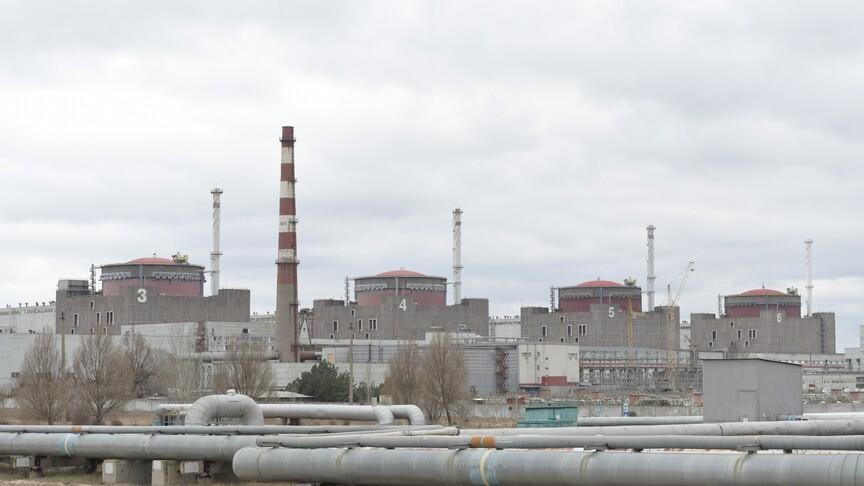
Kyiv denied Russia’s claims that a Ukrainian drone struck the Zaporizhzhia Nuclear Power Plant, with Ukraine’s Foreign Ministry saying Moscow’s accusations “lack logic” and calling them “another information operation” aimed at distracting the international community’s attention from Russia’s control over the plant.
The dispute centered on Rosatom’s claim that a Ukrainian combat drone struck the turbine building of Zaporizhzhia’s sixth power unit and caused a subsequent detonation, while Rosatom head Alexey Likhachev said the explosion “did blow a hole in the turbine hall wall.”

The IAEA said it was informed by the plant that a drone had struck a turbine building, and it reported that its team observed damage to the exterior of a turbine building during a site walk-down that was “consistent with the impact of a drone.”
IAEA Director General Rafael Grossi warned that “Attacking nuclear sites is like playing with fire,” and the IAEA said its team requested access to examine the affected turbine building first-hand.
The IAEA also said radiation levels at the site remain normal and that the plant has been under Russian control since March 2022, with IAEA personnel present since Sept. 1, 2022.
Oil strikes and denials
While Kyiv and Moscow traded claims over Zaporizhzhia, Al Jazeera reported that Ukraine launched coordinated drone attacks on Russian energy infrastructure across multiple regions overnight, with the most significant strike hitting Taganrog in Rostov Oblast. Rostov Governor Yury Slyusar confirmed that “A tanker, a fuel tank, and an administrative building caught fire at the port of Taganrog as a result of a drone attack,” and he said “there are no casualties,” while also adding that two civilians were injured when a drone struck a private home. In the Zaporizhzhia dispute, the Ukrainian military denied Russia’s claims as “yet another propaganda ploy,” saying “there was no active fighting during the incident, and no weapons were used.”
The Guardian reported that Rosatom’s head Alexei Likhachev called the incident “deliberate” and said it left a hole in the wall of a turbine hall, as the IAEA said it had been informed by the plant about the drone strike. Al Jazeera also reported that Zelenskyy wrote on X, “We are rightfully bringing the war back to where it came from,” in response to the Krasnodar attack mentioned alongside the oil-industry strikes.
Pattern fears and next steps
Beyond Ukraine’s plant, The National quoted IAEA Director General Rafael Grossi warning of a growing “pattern” of attacks on nuclear plants, saying “This is a phenomenon that is spreading, and it is incredibly dangerous and reckless.” The National reported that Grossi said the Barakah plant in Abu Dhabi had resumed operations within 12 hours after repairs following a drone strike on a generator, and he said the IAEA did not have evidence sufficient to attribute the Barakah attack to Iran, adding “We need tangible proof of the origin of an attack.” In the Zaporizhzhia case, the IAEA said its team requested access to examine the affected turbine building and that it would update information as the team reported further details after obtaining the requested access to the incident site.
El País framed the broader stakes as civil nuclear infrastructures being “no longer safe” because they are now considered targets of military strategies, and it described a “dangerous normalization” reaching public opinion. El País also pointed to the expiration of New START last February and argued that without a specific non-aggression treaty for nuclear facilities, the IAEA’s efforts to prohibit armed attacks on nuclear infrastructures are failing, while noting that Alejandro Zuritafue was head of international cooperation in nuclear research at Euratom between 2008 and 2016.