
Mafuko Gives Birth to Rare Mountain Gorilla Twins in Congo's Virunga National Park
Key Takeaways
- Mafuko, a 22-year-old mountain gorilla, gave birth to twins in Virunga National Park
- Both newborns are male and appeared healthy at first observation
- Community trackers discovered the twins; park staff will closely monitor them
Mountain gorilla twin birth
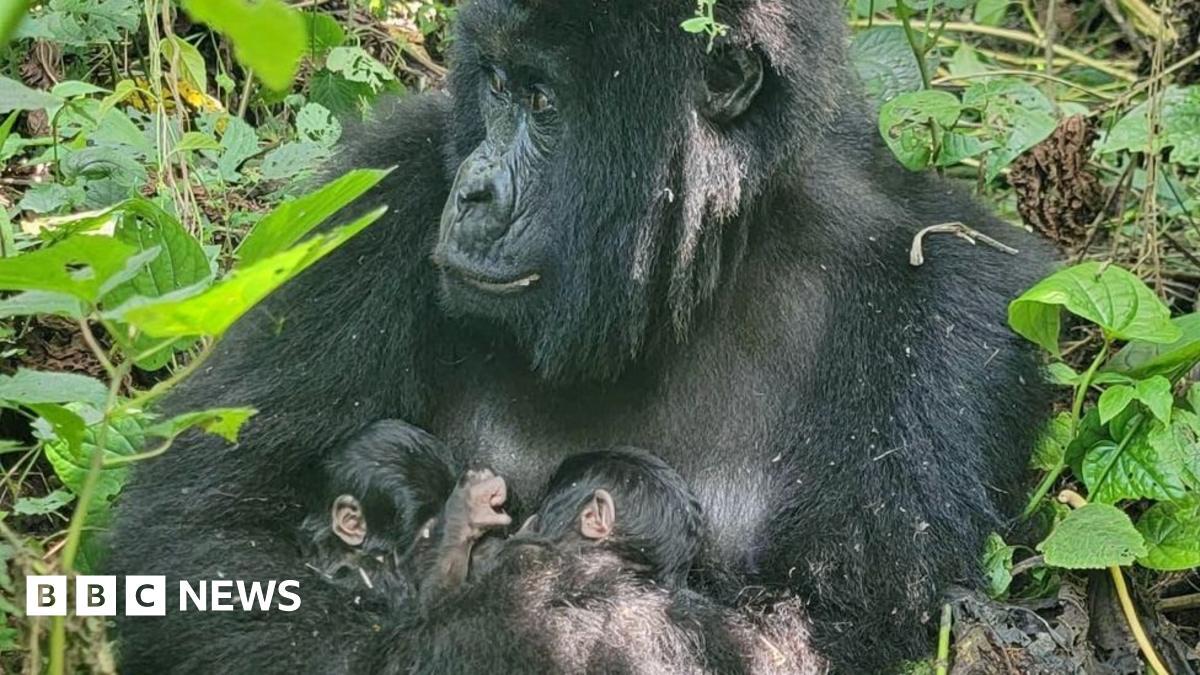
Virunga National Park announced that Mafuko, a mountain gorilla in eastern Democratic Republic of Congo, gave birth to male twins discovered on January 3.
“Mafuko, who is 22 years old, and her twins will be closely monitored by staff at Virunga National Park to support them at this critical early period A pair of twin mountain gorillas has been born in the eastern Democratic Republic of Congo - a rare occurrence for the endangered primates, conservationists at Virunga National Park say”
Park authorities described the event as a rare major occurrence for the endangered subspecies and noted the infants appeared healthy at the time of observation.
Virunga National Park is Africa’s oldest national park, covering about 7,700 to 7,800 square kilometers and home to many of the world’s remaining mountain gorillas.
Only two source snippets—TRT Afrika and the BBC—were provided for this summary, so citations are limited to those sources.
Mafuko the gorilla's history
The twins were born to Mafuko, a well-documented female gorilla.
Mafuko was born in 2003, survived the loss of her own mother to armed attackers at age four, joined the Bageni family at age 10, and has now given birth five times.
The BBC places Mafuko's history within a continuity of hardship and resilience and notes that typical gorilla pregnancies last about eight-and-a-half months with births roughly every four years to underline how exceptional twins are in this species.
Mountain gorilla conservation
Conservationists quoted in the BBC say the birth reflects a positive trend in mountain gorilla protection.
“Mafuko, who is 22 years old, and her twins will be closely monitored by staff at Virunga National Park to support them at this critical early period A pair of twin mountain gorillas has been born in the eastern Democratic Republic of Congo - a rare occurrence for the endangered primates, conservationists at Virunga National Park say”
Anti-poaching patrols and community programmes supported by the EU and UNESCO have helped gorilla numbers in Virunga increase over the past decade.
These gains contributed to the IUCN's 2018 reclassification of mountain gorillas from 'critically endangered' to 'endangered'.
TRT Afrika adds to this conservation framing by stressing the park's longstanding significance.
It also notes that the survival of twins can be especially fragile when infants are entirely dependent on the mother.
Virunga twin monitoring
Virunga authorities and rangers will closely monitor the new family and offer support if needed.
This response reflects both the joy of a rare birth and the practical challenges conservation teams face when mothers must rear twins without external assistance.
Both sources stress monitoring and the potential vulnerability of young twins, but the BBC frames monitoring as part of broader conservation success while TRT Afrika emphasizes the immediate biological difficulty of twin rearing and the park's status.
Reporting is limited to BBC and TRT Afrika snippets provided for this task, so broader media perspectives (regional, alternative, or scientific) are unavailable and could change the balance of reported emphasis.
More on DR Congo

DR Congo Files ICJ Case Against Rwanda Over Decades Of Violence In Eastern Congo
10 sources compared

Drone Strike in Goma Kills French UN Aid Worker; M23 Blames Congolese Forces, Kinshasa Denies
10 sources compared
M23 Rebels Accuse Congolese Army of Drone Strikes That Kill French Aid Worker in Goma
10 sources compared

Heavy Rain Triggers Landslide, Kills Over 200 Artisanal Miners at Rubaya Coltan Site in M23-Controlled North Kivu
16 sources compared