Marco Rubio Says US Awaits Iran Response to Strait of Hormuz Peace Deal
Key Takeaways
- Rubio says the US awaits Iran's response to its ceasefire proposal
- Iran has not yet replied; a response is expected today
- Strait of Hormuz clashes persist as US-Iran exchanges of fire escalate
Rubio awaits Iran reply
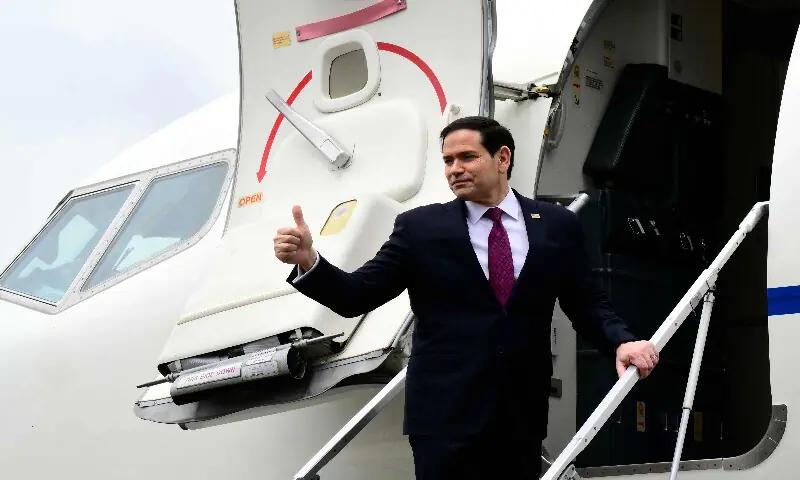
The United States was awaiting Iran’s response to a proposed peace deal on Friday, May 8, after both sides accused each other of triggering clashes in and around the Strait of Hormuz, according to Le Monde and Washington’s top diplomat Marco Rubio.
“US Secretary of State Marco Rubio said Washington was expecting a response from Iran on Friday to US proposals for a deal to end the conflict”
Rubio said, "We're expecting a response from them today at some point (...) I hope it's a serious offer, I really do," while he also argued that Iran must not control the Strait of Hormuz, where the flare-ups took place.
Le Monde reported that Washington sent Iran, via Pakistani mediators, a proposal to extend the truce in the Gulf to allow talks on a final settlement of the conflict launched 10 weeks ago with US-Israeli strikes on Tehran.
Iran’s foreign ministry spokesman Esmaeil Baqaei said the proposal was still "under review, and once a final decision is reached, it will certainly be announced," according to ISNA as cited by Le Monde.
The night before, US Central Command said Iran had launched missiles, drones and small boats at three US warships transiting the Strait of Hormuz, but that none were hit and American forces destroyed the incoming threats and retaliated against land bases in Iran, as Le Monde reported.
Accusations and competing claims
As the US awaited Iran’s reply, both sides traded accusations about what caused the clashes, with Le Monde reporting that Baqaei accused the US of a "blatant violation of international law and a breach of the ceasefire" and Iran’s central military command, Khatam al-Anbiya, saying the clash erupted when US vessels targeted an Iranian tanker heading toward the Strait of Hormuz.
Le Monde added that Iran said the strikes hit Bandar Khamir and Sirik as well as Qeshm island, and that it alleged the attack was carried out with the cooperation of "some regional countries."

In parallel, NPR reported that U.S. forces fired on and disabled two Iranian oil tankers on Friday after exchanging fire with Iranian forces in the Strait of Hormuz overnight, while the United Arab Emirates reported another Iranian missile and drone attack.
NPR also quoted Rubio telling reporters, "They threaten Americans, they are going to be blown up," and it recorded Iran’s Foreign Ministry condemnation of what it called "hostile" U.S. military action, including the X post by Abbas Araghchi: "Every time a diplomatic solution is on the table, the U.S. opts for a reckless military adventure."
What’s at stake next
The next phase of the standoff hinges on whether the proposal leads to structured talks and changes to maritime access, with Shafaq News saying Rubio warned that reports of Iran attempting to establish a body to "controlmaritime traffic in the Strait of Hormuz" would be “unacceptable.”
“Summary US Secretary of State said that no country in the world wants Iran to possess nuclear weapons ROME (Dunya News) - US Secretary of State Marco Rubio said that the United States has not yet received a response from Iran regarding its proposals, but Washington expects Tehran’s reply later today”
Shafaq News also described a proposed framework that would include a temporary moratorium on Iran’s uranium enrichment in exchange for gradual US sanctions relief and the release of billions in frozen Iranian assets, and it said the draft memorandum would address freedom of navigation through the Strait of Hormuz with both sides easing restrictions during a 30-day negotiation period.
NPR said the US proposal is aimed at ending the war, reopening the strait and rolling back Tehran's disputed nuclear program, while it reported that Washington is awaiting an Iranian response to that proposal.
In the meantime, the US military said it was preventing 70 tankers from entering or leaving Iranian ports, and Le Monde reported that US Central Command said its forces are preventing 70 tankers from entering or leaving Iranian ports.
The dispute over the strait’s control also remained central to Rubio’s message, as he told reporters in Rome that it was "unacceptable" for Iran to have a government agency that vets and taxes ships seeking passage through the strait, according to Aaj English TV.
More on Iran
Israel Built Secret Base in Iraq’s Desert to Support Air Campaign Against Iran
14 sources compared
Israel Built Secret Military Outpost in Iraq’s Western Desert, Then Struck Iraqi Forces
21 sources compared

Iran Warns Ships From US Sanctions Backers Won’t Be Allowed Through Strait of Hormuz
30 sources compared
U.S. Waits for Iran’s Response as Revolutionary Guards Threaten American Centers in Region
20 sources compared