Europe · 08 May, 2026 · 3 min read
Marco Rubio Urges Europe to Take Action Against Iran After Strait of Hormuz Warning
Rubio urged Europe to move beyond rhetoric and take concrete action against Iran. During a two-day Rome visit, he met Giorgia Meloni and Pope Leo XIV.
Purpose of Rubio’s Vatican meeting: pressure vs diplomacy/appeal.
9 of 10 outlets skipped it: el Mundo says there was “cold interaction” at Palazzo Chigi..
10outlets compared
Same story, two versions
tap a side to read it in full
POLITICO.eu
“No one has leverage on the Vatican … You have to engage the Vatican with reason”Read the original ↗
Time Magazine
“visit represented an important diplomatic moment for the Trump Administration”Read the original ↗
Frames the Vatican effort as either non-leverage appeal or routine diplomatic signaling.
Rubio presses Europe
U.S. Secretary of State Marco Rubio urged European allies to move beyond rhetoric and take concrete action against Iran during a two-day visit to Rome that included meetings with Premier Giorgia Meloni and Foreign Minister Antonio Tajani.
Speaking after meetings in Rome, Rubio warned that Tehran’s attempt to assert control over the strategic Strait of Hormuz was “unacceptable” and a threat to global security, telling reporters, “Everybody says Iran is a threat. Everybody says that Iran can’t have a nuclear weapon … but you’ve got to do something about it,”.
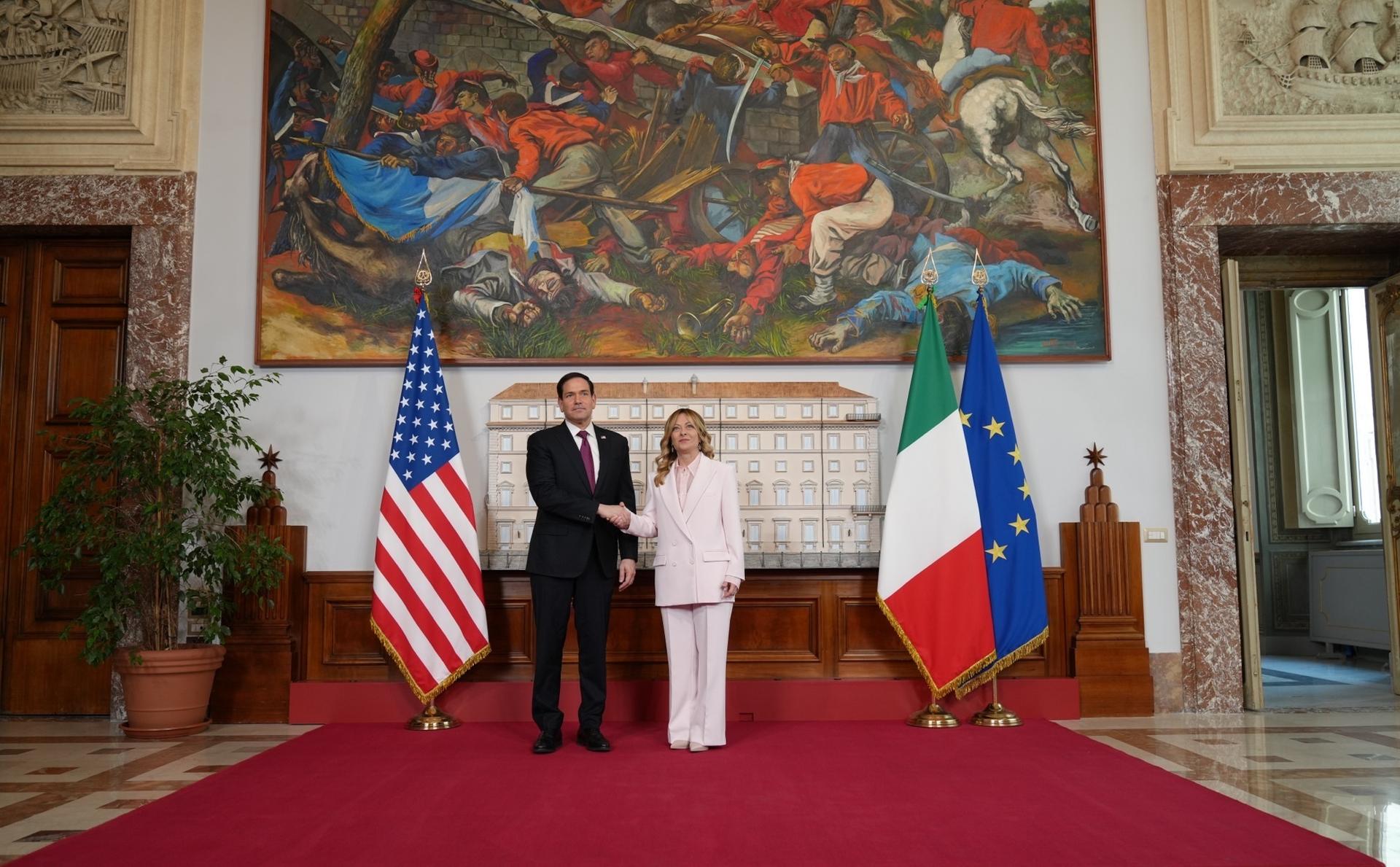
Rubio also said the United States had thwarted attacks on three Navy ships in the strait and cautioned Tehran that “The red line is clear. They threaten Americans, they are going to be blown up,”.
At the same time, Meloni described her meeting with Rubio as “constructive, frank and productive,” saying the talks covered strategic topics including freedom of navigation in the Strait of Hormuz, Ukraine, China, and areas of Italian interest such as Libya and Lebanon.
Tajani struck a conciliatory tone after meeting Rubio, saying, “I am convinced Europe needs America — Italy needs America — and the United States also needs Europe and Italy,” as he added he hoped “tensions have been calmed.”
Vatican feud and NATO
Rubio’s Rome itinerary also centered on the Vatican amid tensions driven by President Donald Trump’s repeated criticism of Pope Leo XIV, with Radio Free Europe/Radio Liberty saying the visit was aimed at recalibrating a longstanding relationship with Italy after weeks of heightened friction over Iran. Before departing Rome, Rubio told reporters, “The church is an important global institution and has a presence all over the world,” and he described the Vatican as an influential diplomatic channel while saying Washington could maintain “a very productive and fruitful and important relationship with the church.” Rubio issued sharp warnings about Iran’s “normalizing” of control over an international waterway, saying, “The normalizing of their control of an international waterway is both illegal and simply unacceptable,”.
He also addressed European frustrations over U.S. military posture, saying “We didn’t discuss any specifics like that,” after meeting Meloni, while adding that some countries in Europe, “like Spain, for example, denied us the use of those bases for a very important contingency.” In the background of the NATO discussion, Rubio said the move represented “less than 14 percent” of the U.S. force presence there and largely returned deployments to pre-2022 levels, as he sought to downplay immediate concerns over troop reductions in Germany.
What’s at stake next
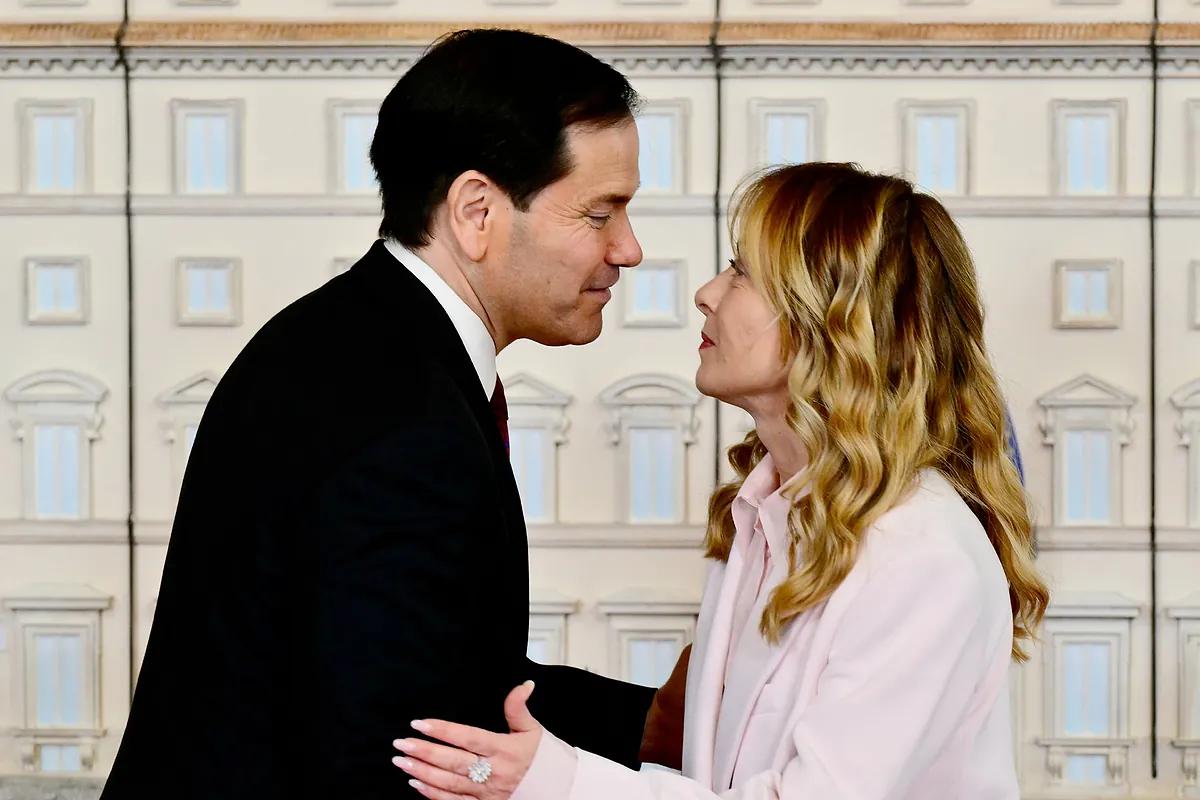
Rubio’s push for action against Iran in Europe was paired with a diplomatic effort to steady ties with Italy and the Vatican, as the Radio Free Europe/Radio Liberty report said the visit unfolded against strain in Washington-Rome ties and included consultations with Meloni and Tajani on May 8.
In Rome, Rubio also framed the U.S. approach as a diplomatic track, including a proposed U.N. Security Council resolution aimed at preserving freedom of navigation, while he said Washington was awaiting Iran’s response on Friday to ongoing diplomatic efforts.
For Italy, the stakes included how to respond to Trump’s threats tied to the Iran conflict and to NATO troop adjustments, with Rubio saying “no final decision” had been made on NATO troop adjustments and that any changes would depend on U.S. national interests and global priorities.
Italy’s position on the Iran conflict and cooperation with U.S. operations remained a central friction point, with the Japan Today report saying Italy opposed the U.S.-Israeli bombing campaign and that Tajani said Italy would be prepared to contribute naval forces to demine the Strait of Hormuz once a permanent ceasefire is reached.
Beyond the immediate Iran dispute, the Japan Today report said Rubio raised the need to protect economic interests and end the war in Ukraine, while Meloni warned that disruptions in the Strait of Hormuz risk driving up energy costs and inflation and that U.S. tariff threats weigh on Italy’s export-driven economy.