
Mehr News Agency Says U.S. Maximum Pressure Misreads Tehran’s Strategic Patience
Key Takeaways
- Tehran's foreign policy is rooted in culture, history, and strategy.
- U.S. maximum pressure misreads Tehran's strategic patience.
- Iran's aggressive policies rely on creating entities and terrorist militias.
Tehran’s logic under pressure
A West Asian analysis from Mehr News Agency argues that understanding Iran’s foreign-policy behavior is “practically impossible without a deep comprehension of the link between culture, history, and strategy,” and frames U.S. pressure tactics as a fundamental misread of how Tehran thinks.
“Foreign Affairs, African Cooperation and Moroccan Expatriates Minister Nasser Bourita affirmed on Sunday that King Mohammed VI always regards the security and stability of the Gulf Arab states as Morocco's own security: what harms you harms us, and what touches us touches you”
The piece says Donald Trump’s approach rests on “maximum pressure to break the will of the opposing side,” with “time” treated as “a weapon” where “the greater the pressure and the shorter the deadlines” supposedly raise the chance of capitulation.

Mehr News Agency contends that Iran “fundamentally plays this game by different rules,” insisting that in Tehran’s strategic mindset “time” is “not a constraint but an asset.”
It describes Iran’s “strategic patience” as “repeatedly echoed in Iran's official and unofficial discourse,” and links that patience to “a history spanning several millennia” that has “navigated through numerous external crises and pressures.”
In this framing, the analysis says impatience from Washington is interpreted in Tehran as “a sign of success, not weakness,” and that what Washington calls “increasing pressure” is read as “a sign of the opposing side's desperation.”
The article further argues that threats and humiliation “directly lead to greater resistance,” and that Tehran views “negotiation under pressure” as “meaningless” unless dialogue begins from “a position of relative equality” and with “a minimum level of mutual respect.”
Success without agreement
Mehr News Agency also argues that the two sides measure “success” differently, which it says helps explain why pressure fails to produce the outcomes Washington expects.
It states that in Washington, success is often “measured by demonstrable achievements: a formal agreement, a historic signing, or a joint statement,” while Tehran’s definition can be “entirely different.”
The analysis says that “standing firm against pressure, preserving red lines, and preventing the imposition of the opposing side's demands is itself considered a 'victory'—even if no agreement is reached.”
It adds that, in Iranian culture, “any agreement must be accompanied by the preservation of three principles: dignity, wisdom, and expediency,” and that otherwise “signing an agreement under pressure would yield no achievement for the Iranian people.”
The article then describes a “deadlock of the diplomatic path,” saying Trump’s “maximum pressure policy was faced with an internal contradiction from the outset.”
In its account, Trump “sought to bring Iran to the negotiating table by raising costs, while simultaneously creating conditions that, from Iran's viewpoint, rendered any negotiation tantamount to capitulation.”
Mehr News Agency further stresses that the disagreement is not only tactical but “with a profound misalignment at the level of 'worldview,'” where the logic of urgency and deadlines is interpreted in opposite ways.
Morocco frames Iran as destabilizer
While Mehr News Agency focuses on Tehran’s strategic worldview, Hespress presents a different angle by quoting Moroccan officials describing Iran’s actions in the region.
“Foreign Affairs, African Cooperation and Moroccan Expatriates Minister Nasser Bourita affirmed on Sunday that King Mohammed VI always regards the security and stability of the Gulf Arab states as Morocco's own security: what harms you harms us, and what touches us touches you”
Hespress reports that Foreign Affairs, African Cooperation and Moroccan Expatriates Minister Nasser Bourita affirmed on Sunday that King Mohammed VI “always regards the security and stability of the Gulf Arab states as Morocco's own security.”
In Bourita’s remarks at the sessions of the extraordinary ministerial-level meeting of the Council of the Arab League, he said the principle “what harms you harms us, and what touches us touches you” underpinned Morocco’s position.
Hespress says Bourita spoke remotely and highlighted Morocco’s support for Gulf Arab states, pointing to “the telephone calls he made to his brothers in the Gulf countries.”
The article recalls King Mohammed VI’s speech before the Moroccan–Gulf Summit held on April 20, 2016, including the quoted line: “Defending our security is not only a shared obligation, but one that is indivisible. Morocco always regards the security and stability of the Gulf Arab states as Morocco's security. What harms you harms us and what touches us touches you.”
Hespress then shifts to condemnation, stating that Bourita expressed Morocco’s “strong condemnation of Iran's brutal attacks against the sister Arab states,” describing them as “a flagrant violation of those states' sovereignty and a direct threat to the security of the region as a whole.”
In Hespress’s account, Bourita said these attacks are “but one manifestation of the aggressive policies” pursued by the Iranian regime “in a bid to sow discord and destabilize.”
Calls for Arab unity and dialogue
Hespress also reports that Bourita argued for mending Arab ranks and strengthening collective action, while simultaneously calling for Iran to halt what he described as “brazen assaults.”
The article says Bourita argued that “mending Arab ranks and strengthening joint action within the framework of the Arab League remains the best way to protect the collective security of the Arab states, safeguard their sovereignty and the interests of the peoples, and confront all challenges that threaten the safety and stability of the region.”
It adds that he urged a stance “away from tendencies of division, disunity and fragmentation,” and framed the goal as confronting “all practices that threaten the stability of the Arab region.”
In concluding his remarks, Hespress says Bourita stressed “the immediate need to halt Iran's brazen assaults, to clear the way for diplomatic efforts, to favor the language of dialogue, and to contribute to de-escalation and reducing tension in the region.”
Taken together, the two texts present competing logics: Mehr News Agency says Iran interprets pressure as “a sign of the opposing side's desperation,” while Hespress depicts Moroccan officials describing Iran’s behavior as aggressive and destabilizing.
Mehr News Agency also says “threat and humiliation not only fail to create an incentive for making concessions but also directly lead to greater resistance,” which aligns with its claim that “the closure of space for negotiation” follows public threats.
What each side expects next
Mehr News Agency portrays the next phase of diplomacy as constrained by incompatible expectations about urgency, deadlines, and the meaning of negotiation itself.
“Foreign Affairs, African Cooperation and Moroccan Expatriates Minister Nasser Bourita affirmed on Sunday that King Mohammed VI always regards the security and stability of the Gulf Arab states as Morocco's own security: what harms you harms us, and what touches us touches you”
It says Trump’s model treats “creating a sense of urgency” as a tool, but argues that “in the case of Iran, this assumption operates in exactly the opposite manner.”
The analysis claims Iran “not only does not fear the prolongation of processes but, in many cases, views it as advantageous,” and that “the passage of time can alter regional and international equations, weaken coalitions, and erode pressures.”
It concludes that “haste in reaching an agreement is seen as more detrimental to Iran than beneficial,” and that “the more the American side emphasizes deadlines and threats, the greater the distance from Tehran becomes.”
Hespress, meanwhile, frames the immediate political requirement as stopping what Bourita called “brazen assaults” so that “diplomatic efforts” can proceed and “de-escalation” can begin.
Hespress also reports that Bourita described Morocco’s stance as “full solidarity with these states and its full support for them in all legitimate measures they deem appropriate to preserve their security and reassure their citizens and residents there.”
More on Iran
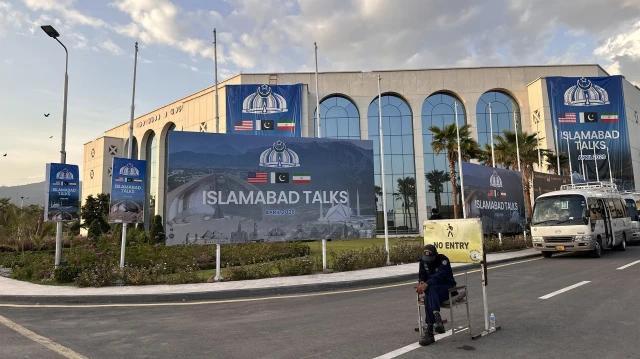
Donald Trump Extends Iran Ceasefire Indefinitely, Keeps U.S. Blockade in Strait of Hormuz
18 sources compared
Donald Trump Extends U.S. Ceasefire With Iran, Orders Naval Blockade to Continue
15 sources compared
Donald Trump Extends U.S. Ceasefire With Iran, Keeps Blockade of Iranian Ports
12 sources compared
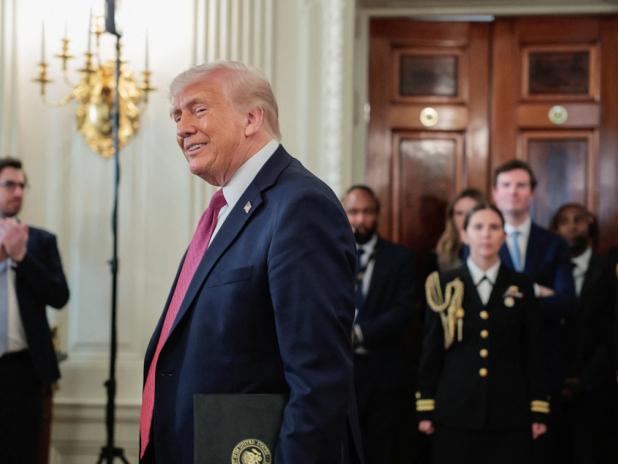
Donald Trump Extends Ceasefire With Iran Indefinitely, Maintains Blockade of Iranian Ports
13 sources compared