Technology and Science24 April, 20268 min read
Meta Signs Deal With Amazon to Deploy Millions of AWS Graviton Chips for AI
This article is an automated aggregation of coverage from news outlets. Our editorials offer in-depth analysis curated by the NewsCord team.
Meta will deploy tens of millions of AWS Graviton cores at scale. Deal runs for at least three years across Meta's 32 data centers.
Meta’s Graviton pivot
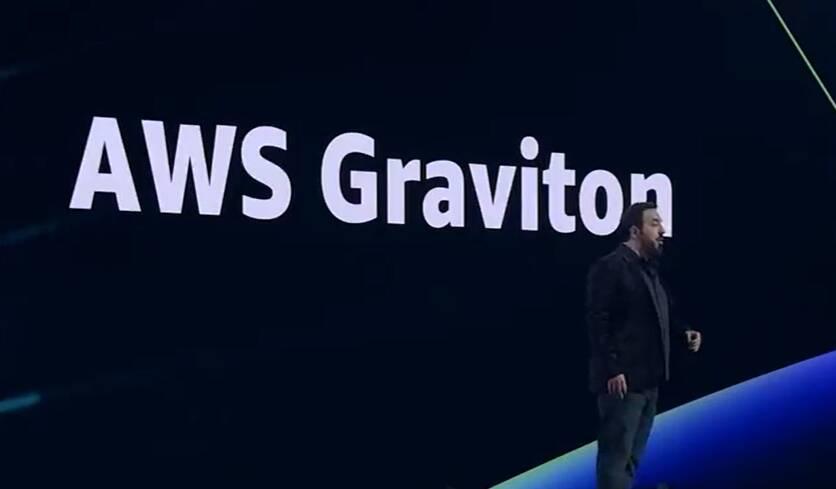
Meta has signed a deal with Amazon to use AWS Graviton chips to power its growing AI needs, with Amazon announcing Friday that Meta will use “millions of AWS Graviton chips.” TechCrunch frames the move as “another wild turn for AI chips,” emphasizing that “the AWS Graviton is an ARM-based CPU” rather than a GPU, and that “once those models are trained, AI agents built on top of them are causing a shift in the type of chip needed.” CNET likewise describes the agreement as a “huge deal” to deploy AWS Graviton processors in Meta’s “32 data centers over the next three years,” while noting that Amazon “hasn't disclosed the full value of the deal.”
In the same CNET report, Meta’s infrastructure chief Santosh Janardhan is quoted saying, “As we scale the infrastructure behind Meta's AI ambitions, diversifying our compute sources is a strategic imperative.” Amazon’s own description of the partnership says “The deployment starts with tens of millions of Graviton cores, with the potential to expand,” and positions the chips as purpose-built for CPU-intensive agentic workloads. The Register adds that Meta plans to deploy “tens of millions of Amazon Web Services' Graviton 5 CPU cores” to support “agentic AI deployments,” and it characterizes the collaboration as making Meta “among the largest-ever consumers of the cloud giant’s homegrown silicon.”


Why CPUs now matter
Across the coverage, the rationale for the Graviton deal is tied to how agentic AI changes compute patterns after model training.
TechCrunch explains that “While GPUs remain the chip of choice for training large models, once those models are trained, AI agents built on top of them are causing a shift in the type of chip needed,” and it lists “real-time reasoning, writing code, search, and the the coordination involved in managing agents through multi-step tasks.”

CNET similarly states, “Typically, AI models are trained on GPUs. Once trained, AI agents can use CPUs for more compute-intensive workloads, such as writing code,” and it says the Graviton chips are “designed to be efficient for AI-agentic tasks.”
Amazon’s product-focused writeup goes further by describing the deployment as meeting “massive demand for CPU-intensive compute for tasks like real-time reasoning, code generation, search, and orchestrating multi-step tasks,” and it ties that to Meta’s need to handle “billions of interactions while coordinating complex, multi-step agent workflows.”
In the same Amazon account, the company says Graviton5 is “purpose-built for these workloads,” and it specifies that “Graviton5 is built on the AWS Nitro System,” which “enables bare-metal instances for direct access to the hardware.”
ServeTheHome adds a practical framing by asking whether Meta bought the chips or would use them through AWS, and it reports it was told “AWS would host the parts,” which it interprets as Meta “buying not just the chips, but also the power, data center infrastructure, networking, and so forth around those cores.”
The people behind the deal
The agreement is presented not just as a procurement decision but as a strategic repositioning of Meta’s infrastructure and Amazon’s chip ambitions, with named executives offering direct statements.
TechCrunch quotes Meta’s infrastructure leadership indirectly through the deal’s framing, while CNET provides a direct quote from Santosh Janardhan: “As we scale the infrastructure behind Meta's AI ambitions, diversifying our compute sources is a strategic imperative.”
Amazon’s own writeup includes a statement from Nafea Bshara, saying, “This isn't just about chips; it's about giving customers the infrastructure foundation, as well as data and inference services, to build AI that understands, anticipates, and scales efficiently to billions of people worldwide,” and it also quotes Meta’s Santosh Janardhan again: “AWS has been a trusted cloud partner for years, and expanding to Graviton allows us to run the CPU-intensive workloads behind agentic AI with the performance and efficiency we need at our scale.”
CNBC adds another executive voice by quoting Nafea Bshara on Graviton’s role, and it also notes that Bshara “co-founded chip company Annapurna Labs, which Amazon acquired in 2015.”
The Register ties the diversification argument to Meta’s broader chip posture, quoting Santosh Janardhan’s statement that “As we scale the infrastructure behind Meta's AI ambitions, diversifying our compute sources is a strategic imperative. AWS has been a trusted cloud partner for years,” and it places the Graviton move alongside Meta’s earlier ARM-related steps.
In GeekWire’s account, Amazon CEO Andy Jassy is quoted in a LinkedIn post that agentic AI is “becoming almost as big a CPU story as a GPU story,” and GeekWire also reports that the deal “builds on Meta’s existing use of Amazon Bedrock.”

Numbers, specs, and scale
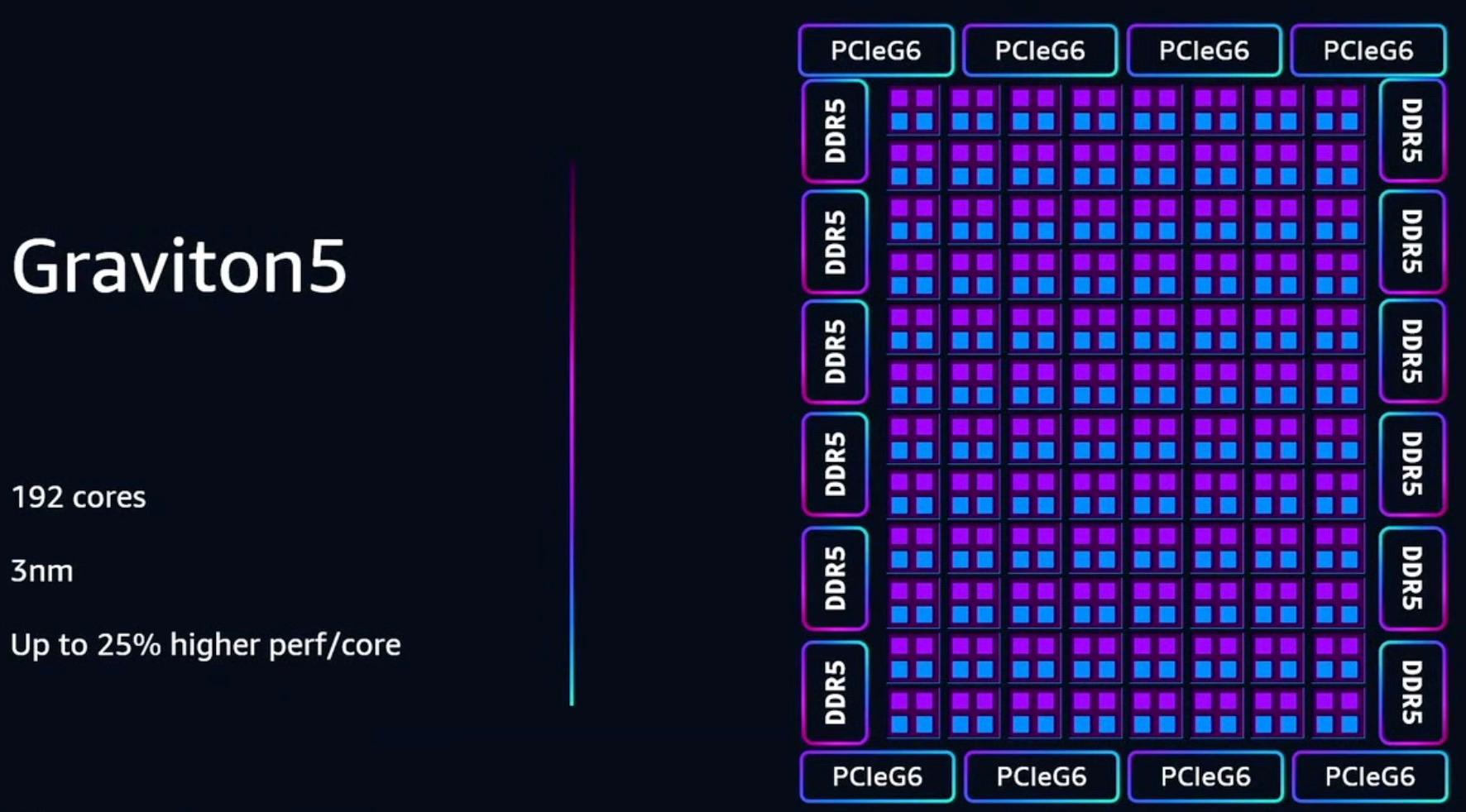
The reporting repeatedly returns to the scale of the deployment and to specific Graviton5 performance and architecture claims. Amazon’s materials say the deployment begins with “tens of millions of Graviton cores,” and CNET adds that Meta will use the Graviton processors in “32 data centers over the next three years,” while TechCrunch describes the deal as “millions of AWS Graviton chips.” CNET also provides detailed chip metrics, stating that “According to Amazon, the Graviton 5 chips have 192 cores and a cache that is five times larger than the previous generation,” and it adds that this “reducing communication delays between cores by 33%.”
CNET further claims energy and performance improvements, saying the chips should be “more energy-efficient, with 25% better performance than previous generations,” and it quotes AWS vice president Nafea Bshara saying, “This isn't just about chips; it's about giving customers the infrastructure foundation, as well as data and inference services.” About Amazon’s writeup adds more infrastructure specifics, saying Graviton5 “features 192 cores and a cache that is five times larger than the previous generation,” and it explains that the cache “reduces delays in how quickly those cores communicate with each other by up to 33%.” It also specifies the chip’s manufacturing and platform integration, stating Graviton5 is “built on 3-nanometer chip technology” and that it is “built on the AWS Nitro System,” which “enables bare-metal instances for direct access to the hardware.”
How outlets frame the same deal
While the core facts of Meta’s Graviton agreement are consistent across the reports, the emphasis and framing diverge sharply between outlets, especially around competition, chip ecosystems, and what the deal signals. TechCrunch highlights competitive timing and chip rivalry, saying AWS “timed the announcement of this deal right as the Google Cloud Next conference wrapped up,” and it describes the announcement as “like a virtual smirk at its cloud rival,” while also noting that “Last August, Meta signed a six-year, $10 billion deal with Google Cloud.” CNBC frames the move as an infrastructure grab tied to Meta’s scale and to the CPU’s return, stating that Meta will operate “32 data centers” and that the deal will run for “at least three years,” while also pointing to Meta’s “lay off around 8,000 employees, or 10% of its workforce.”
The Register emphasizes Meta’s ARM pivot and broader chip strategy, saying “After flubbing the Metaverse, Zuck embraces the Neoverse,” and it situates Graviton5 alongside Meta’s plans for “Nvidia's all new 88-core Vera CPUs” and Arm’s “AGI CPU” described as packing “136 Neoverse V3 cores into a 300 watt part.” GeekWire focuses on the strategic demand signal and ties it to Amazon’s chip business, reporting that Amazon CEO Andy Jassy disclosed in an annual shareholder letter that Amazon’s custom silicon business is generating “more than $20 billion a year in revenue,” and it adds that the deal “gives Meta access to tens of millions of Graviton 5 processor cores running in AWS data centers.” Even within the same theme, the sources differ on the scale wording—TechCrunch says “millions,” Amazon says “tens of millions,” and CNBC says “hundreds of thousands”—and they also differ on whether the deal value is disclosed, with CNET saying it is “worth billions” while CNBC says “Amazon didn't disclose the value of its Meta deal.”

What comes next
The deal’s consequences in the sources are framed as both immediate operational needs for Meta and longer-term competitive pressure on cloud and chip ecosystems. Amazon’s description says the partnership is “a significant expansion of a long-standing partnership between the two companies as Meta builds its next generation of AI,” and it emphasizes that Graviton5 supports “Elastic Fabric Adapter (EFA), enabling low-latency, high-bandwidth communication between instances,” which it calls “essential for Meta’s agentic AI workloads.” TechCrunch adds that the Meta deal “brings more of Meta’s cash back to AWS instead of competitors like Google Cloud,” and it ties the shift to Amazon’s internal chip-building pressure, stating that “the pressure couldn’t be higher on Amazon’s internal chip building team to deliver.”
CNBC similarly frames the move as a validation of AWS’s custom silicon strategy, saying Meta will become “one of the top five Graviton customers,” and it quotes Nafea Bshara saying, “Meta is now one the newest one,” while also noting that AWS says Graviton delivers “the best performance for a given price of all computing options available through the EC2 computing service” and uses “60% less energy.” GeekWire connects the deal to Amazon’s broader chip ambitions by reporting that Andy Jassy said it is “quite possible” Amazon will sell “racks of its chips to third parties in the future,” which would compete more directly with Nvidia. Even MLQ.ai’s coverage, while not providing new named executives, underscores that Meta is “purchasing full AWS cloud infrastructure including power, data center capacity, and networking,” and it says the deployment begins with “tens of millions” of cores with “room to expand,” reinforcing that the next phase is scaling the infrastructure stack rather than swapping a single chip.