
Meta’s Reality Labs Posts $4.03 Billion Operating Loss in First Quarter 2026
Key Takeaways
- Reality Labs posted a $4.03B operating loss in Q1 2026, $402M revenue.
- Meta plans to cut 8,000 jobs, about 10% of its workforce, amid AI push.
- Pivot toward AI and connected devices like Ray-Ban smart glasses.
Reality Labs keeps bleeding
Meta’s Reality Labs, the division tied to the metaverse and virtual reality, continues to rack up large losses even as the company shifts resources toward AI and wearables.
In Meta’s first-quarter 2026 results, Reality Labs posted an operating loss of $4.03 billion while bringing in $402 million in sales, according to CNBC’s reporting of the earnings release.
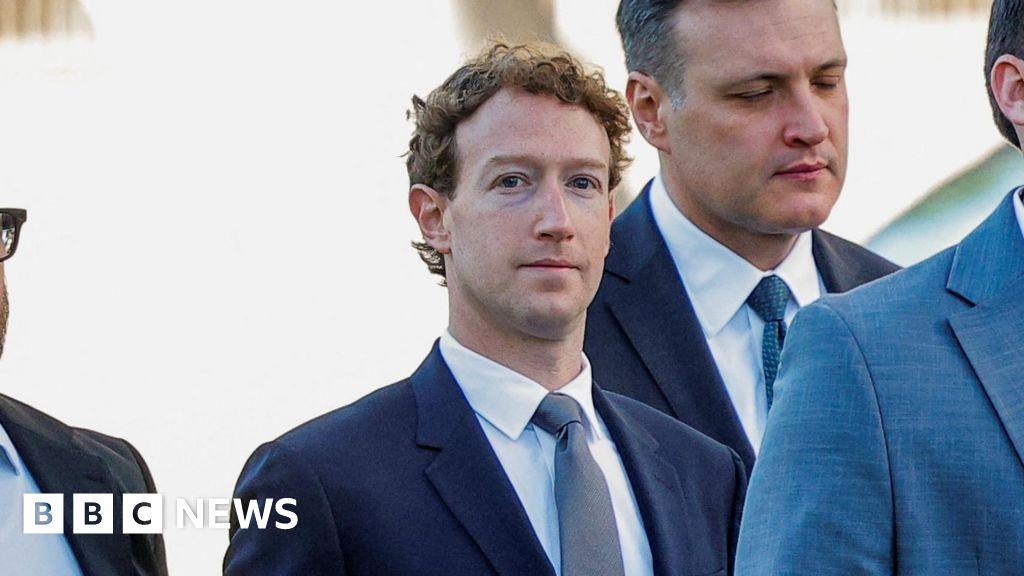
CNBC also said Wall Street was projecting a loss of $4.82 billion on $488.8 million in first-quarter revenue, and that Reality Labs has accumulated over $80 billion in total operating losses since late 2020.
Gigazine similarly reported that Reality Labs recorded a loss of $4.028 billion (approximately 650 billion yen) in the first quarter of 2026, with revenue of $402 million (approximately 60 billion yen).
Frenchweb framed the pattern as a “pilier déficitaire durable,” citing a fourth-quarter operating loss of 6.02 milliards de dollars for 955 millions de dollars of revenue.
Business Insider España put the fourth-quarter 2025 operating loss at $6.021 billion with revenues of $955 million, and said the full-year 2025 operating loss was $19.193 billion against annual revenues of $2.207 billion.
Across outlets, the numbers converge on the same story: Reality Labs’ losses are persistent, while Meta’s broader business remains comparatively strong.
Meta pivots to wearables
Meta’s financial pressure on Reality Labs is driving a strategic pivot that multiple outlets describe as a move away from exclusive VR hardware and toward connected devices and wearables.
Hipertextual reported that Meta decided to change course and would “despedirá a cientos de empleados de Reality Labs” to focus on “la IA y dispositivos como las gafas inteligentes Ray-Ban Meta,” citing Bloomberg for a personnel cut in the metaverse division.

Hipertextual said Meta confirmed it would “despedirá a 1.000 empleados, que equivalen al 10% de la plantilla de Reality Labs,” and added that the company planned to reinvest savings to support wearables growth “este año.”
The same article quoted a Meta spokesperson saying, “Dijimos el mes pasado que estábamos trasladando parte de nuestra inversión del metaverso hacia los wearables,” and said the company planned to reinvest those savings.
Frenchweb described the shift as a response to a “promesse technologique” that has stretched out, with Meta concentrating communication on connected glasses integrating AI, developed with EssilorLuxottica and offered at “799 dollars.”
KultureGeek echoed the internal memo framing, quoting CTO Andrew Bosworth: “With a potentially much larger user base and rapid growth, we are redirecting teams and resources toward mobile to accelerate adoption.”
La Vanguardia added that Bloomberg said Meta plans to lay off 1,500 people in Reality Labs, representing up to 10% of the workforce, and that cuts were expected to be announced this week.
Zuckerberg and Bosworth explain
Meta’s leadership has acknowledged that losses are expected to continue while the company reorients investment toward glasses and wearables.
“By Jean-Noël Legalland”
KultureGeek said an internal memo from CTO Andrew Bosworth specified the new priorities and described the VR-focused roadmap as shifting toward “mobile” and “connected devices,” while also quoting Bosworth’s language about redirecting teams and resources.
Hipertextual reported that Andrew Bosworth sent an email to all employees warning of the changes, and it quoted Bosworth saying, “Con una mayor base de usuarios potencial y la tasa de crecimiento más rápida actual, estamos trasladando equipos y recursos casi exclusivamente a lo móvil para seguir acelerando la adopción allí.”
KultureGeek also described the VR-focused division as operating as “a leaner and more horizontal organization, with a tightened roadmap to ensure long-term viability,” attributing that characterization to Bosworth.
KultureGeek further said Mark Zuckerberg defended the long-term vision during an investor call, while recognizing losses would continue, and it quoted Zuckerberg’s statement in French: « Pour Reality Labs, nous orientons désormais l’essentiel de nos investissements vers les lunettes et les wearables ».
Frenchweb likewise said Zuckerberg indicated he expected losses “similaires à celles de l’an dernier” for the coming exercise and described a “point haut” before a reduction.
Gigazine added that Meta stated in its earnings announcement that “additional lawsuits are scheduled in the United States this year, which could ultimately lead to significant losses.”
Numbers vary across reports
While the direction of travel is consistent, the reporting diverges on the scale of layoffs and the magnitude of losses depending on the outlet and the period it emphasizes.
Hipertextual said Meta would “despedirá a 1.000 empleados, que equivalen al 10% de la plantilla de Reality Labs,” while La Vanguardia, citing Bloomberg, said Meta plans to lay off 1,500 people in Reality Labs, representing up to 10% of the workforce.

Aligned with those cut figures, KultureGeek described “more than a thousand Reality Labs employees,” and Xataka said “Meta will lay off 10% of Reality Labs' staff, about 1,500 employees in total.”
On losses, KultureGeek and Frenchweb both referenced large cumulative figures, but Frenchweb said Reality Labs losses “approche désormais les 80 milliards de dollars,” while Business Insider España said Reality Labs has accumulated “more than $75 billion in operating losses” since the end of 2020.
KultureGeek’s French-language framing said Reality Labs “a englouti 19 milliards de dollars en 2025,” and it also said the division anticipated “des pertes similaires en 2026.”
Gigazine put the first-quarter 2026 loss at $4.028 billion (approximately 650 billion yen) and said cumulative operating losses have “topped $80 billion since the end of 2020.”
Even the narrative around the metaverse’s financial trajectory differs: frenchweb described a “cumul des pertes opérationnelles” nearing 80 billion, while MEXC and other alternative outlets used different totals and time windows, including “$83.5 billion burned on AR/VR.”
What comes next for Meta
The next phase for Meta’s strategy is framed as both a scaling effort for AI wearables and continued financial risk from Reality Labs, with additional legal exposure also in view.
Hipertextual said Meta was in conversations with EssilorLuxottica to “duplicar la producción de las Meta Ray-Ban,” and it reported that demand had been strong enough that the company “frenó el lanzamiento mundial de las Meta Ray-Ban Display para cumplir con los pedidos de Estados Unidos.”

Hipertextual also said Zuckerberg’s plans contemplated increasing production to “20 millones de dispositivos o más para este año,” and that if demand justified it, the company would be prepared to manufacture up to “30 millones de unidades,” while noting that nothing was confirmed.
Frenchweb described Meta’s connected glasses push as a way to bridge the gap while Reality Labs remains a “laboratoire stratégique,” and it tied the question of arbitrage to the fact that “l’intelligence artificielle capte désormais l’essentiel de l’attention et des investissements.”
CNBC reported that Meta laid off roughly 1,000 Reality Labs employees in January and conducted another round of job cuts in March affecting several hundred employees, while also saying Meta planned to eliminate 10% of its workforce, equating to 8,000 employees, and end efforts to fill 6,000 open roles.
Gigazine added that Meta’s earnings announcement warned that “additional lawsuits are scheduled in the United States this year, which could ultimately lead to significant losses.”
Business Insider España said investors welcomed Meta’s broader results, noting that Meta’s net income fell 3% to $60.458 billion due to the metaverse subsidiary, and that Meta expected capital expenditures between $115 billion and $135 billion in 2026.
More on Technology and Science

OpenClaw Launches Native Android And iOS Apps For Self-Hosted AI Gateway Control
11 sources compared

Glasgow QEUH Patient Tests Negative for Ebola After Precautionary Screening
10 sources compared

Greece Wildfires Force Evacuations, Destroy Homes Near Zante and Cefalonia
10 sources compared

Google Shuts Down Tenor API June 30, Forcing X, Discord, Bluesky, WhatsApp to Migrate
10 sources compared