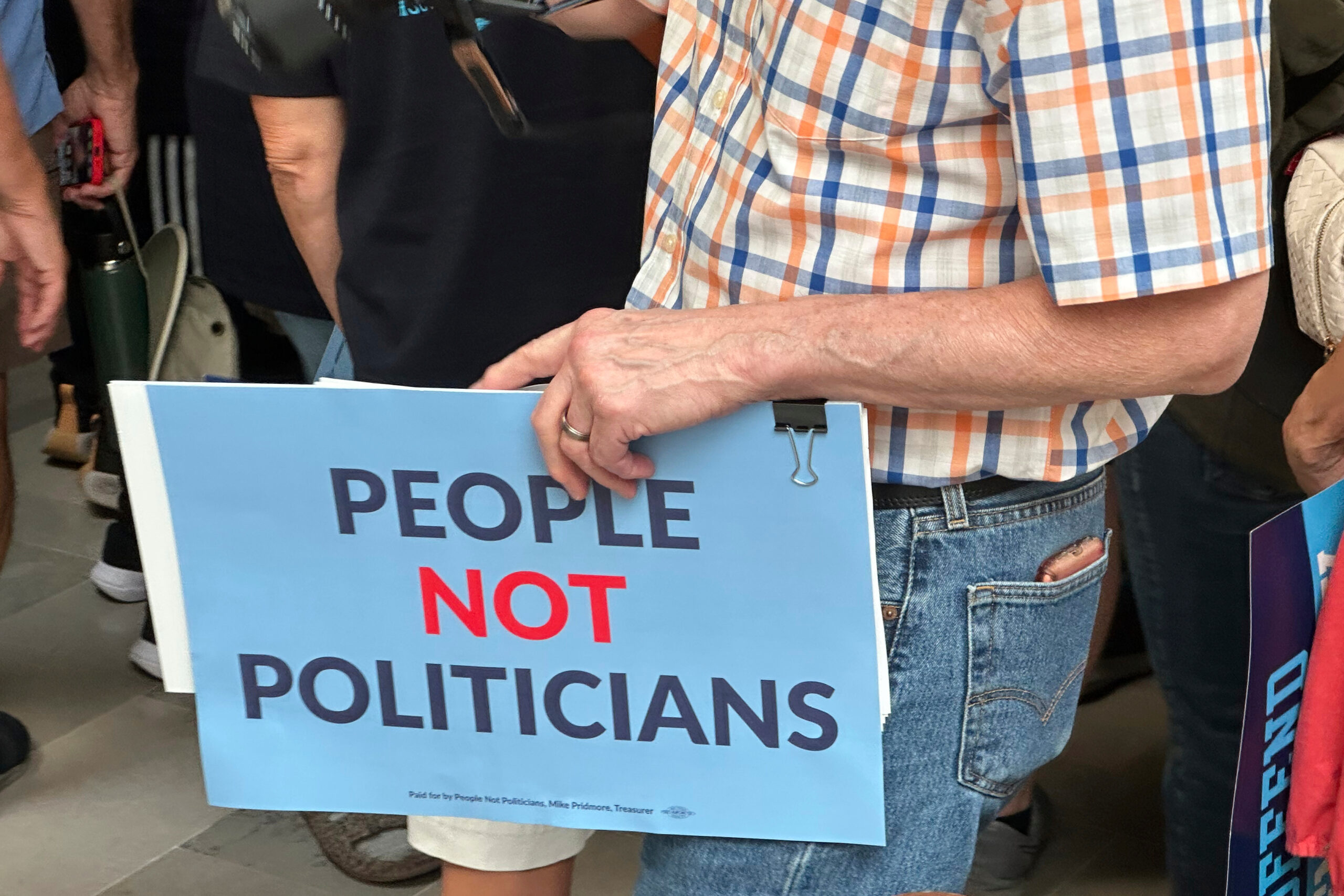
Missouri court rewrites biased ballot question on GOP gerrymander
Key Takeaways
- Missouri court struck down biased language from ballot question.
- Ballot measure could let voters block a Trump-backed GOP gerrymander.
- Court left some wording favoring the new gerrymander, a partial victory for voting rights advocates.
Judicial ruling on ballot language
A Missouri court Friday struck down biased language from a high-stakes ballot question that could let voters block a Trump-backed GOP congressional gerrymander — but left some wording that favors the new gerrymander intact.
“A Missouri court Friday struck down biased language from a high-stakes ballot question that could let voters block a Trump-backed GOP congressional gerrymander — but left some wording that favors the new gerrymander intact”
Partial victory and context
The ruling is a partial victory for voting rights advocates, who argued the original ballot summary drafted by Missouri Secretary of State Denny Hoskins (R) was designed to mislead voters — but it also underscores how GOP officials have continued to rig the process as they race to lock in the new map before the 2026 election.
Revised ballot summary text
“Do the people of the state of Missouri approve the act of the General Assembly entitled ‘House Bill No. 1 (2025 Second Extraordinary Session),’ which repeals Missouri’s congressional plan, and replaces it with new congressional boundaries that keep more cities and counties intact, and are more compact?”
“A Missouri court Friday struck down biased language from a high-stakes ballot question that could let voters block a Trump-backed GOP congressional gerrymander — but left some wording that favors the new gerrymander intact”
Ongoing strategy, clock concern
At the same time, Republicans have advanced a controversial legal argument that the new map remains in effect unless and until the referendum is formally certified — a position critics say would allow the state to run out the clock.
More on USA

Trump threatens to deploy ICE agents to US airports amid DHS funding standoff
46 sources compared

ICE Detainee Royer Perez-Jimenez Dies in Florida Detention Center; Officials Suspect Suicide
10 sources compared

Elon Musk Offers to Pay TSA Salaries During Partial Government Shutdown
50 sources compared

California lawmakers rename Cesar Chavez Day to Farmworkers Day amid sexual abuse allegations.
17 sources compared