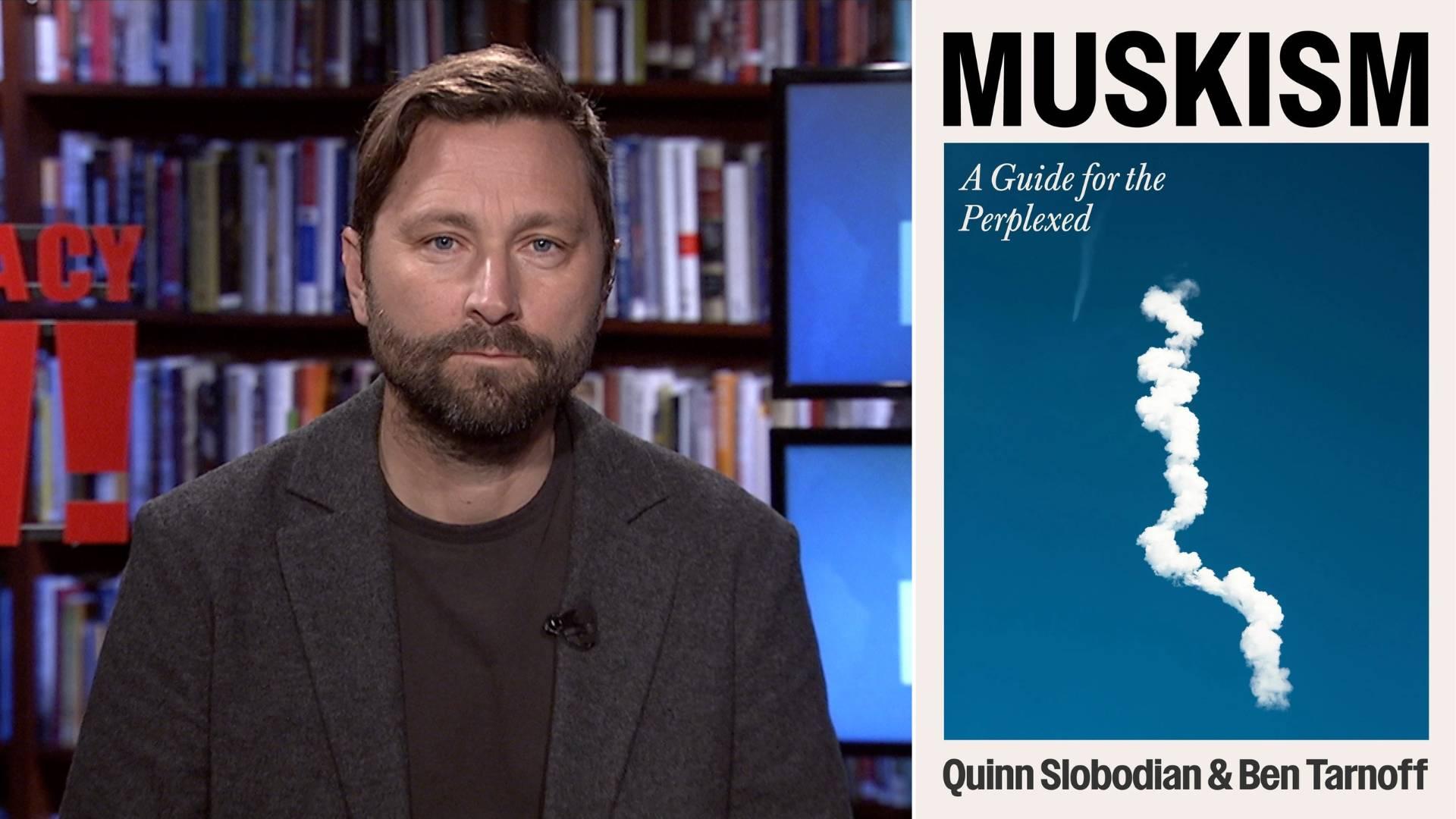
Muskism Book Frames Elon Musk’s Ideology as a State-Colonizing Operating System
Key Takeaways
- Elon Musk’s worldview is framed as an operating system for the 21st century.
- Musk runs SpaceX, xAI, Tesla, and X, amplifying his political influence.
- Elites pursue sovereignty and fusion with the state, creating a walled garden.
Muskism as a system
A new book, Muskism: A Guide for the Perplexed, frames Elon Musk’s worldview as more than a personal ideology, describing it instead as “an operating system for the 21st century.”
“In the new book, Muskism: A Guide for the Perplexed, authors Quinn Slobodian and Ben Tarnoff look at the worldview that shaped Elon Musk and the ideology that has coalesced around him”
In Democracy Now!’s discussion of the book, authors Quinn Slobodian and Ben Tarnoff are presented as arguing that Musk’s influence works through a “vertically integrated ideological stack” that can build “an echo chamber from low Earth orbit all the way back to Earth.”
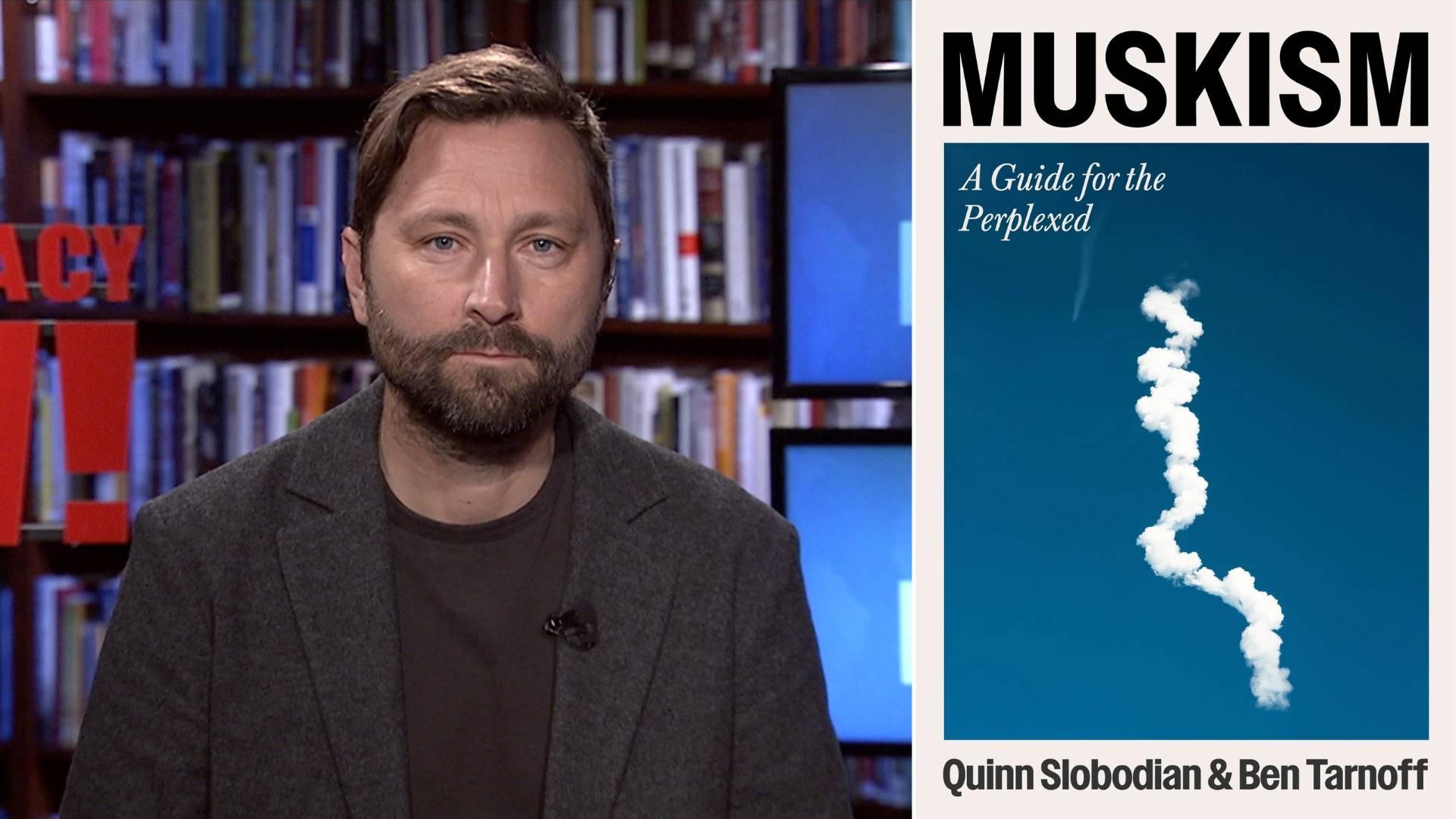
The program’s transcript ties that worldview to Musk’s business footprint, saying Musk “runs rocket company SpaceX, AI startup xAI, electric car maker Tesla and the social media platform X, formerly Twitter.”
It also links Musk’s political influence to “his use of X to advance controversial ideas, to his political donations, to the role he played leading the so-called Department of Government Efficiency.”
The segment quotes science fiction writer and journalist Cory Doctorow writing that “Muskism doesn’t seek to exit the state, it seeks to colonize and control it.”
In Truthout’s coverage of the same book, the argument is summarized as Musk and Silicon Valley “aren’t Libertarian. They Want to Fuse With the State.”
Together, the sources depict Muskism as a framework that connects rockets, AI, cars, social media, and state power into a single ideological project.
SpaceX, IPO, and fusion
The sources place SpaceX at the center of the Muskism story, describing it as both a corporate vehicle and a unifying platform for Musk’s other ventures.
In Democracy Now!, Quinn Slobodian says, “we’re gearing up for what is going to be likely the largest IPO in history with SpaceX, likely in June,” adding that the valuation is “projected to be somewhere between $1.5 trillion and $2 trillion.”
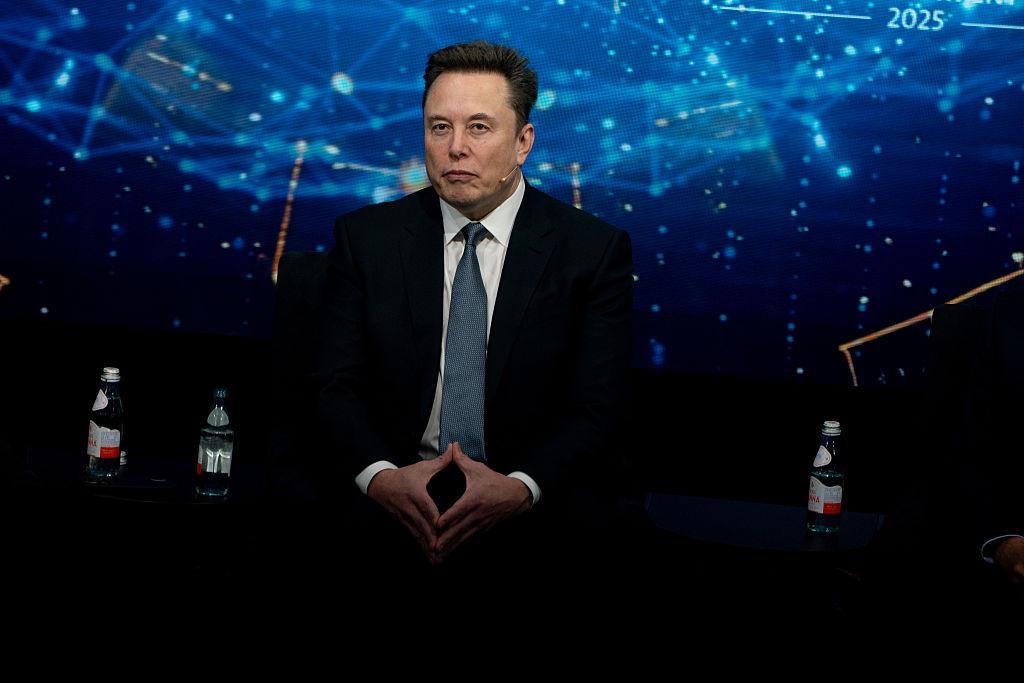
He also says that SpaceX has become “a kind of a merger of many of Musk’s ventures,” stating that “xAI, the AI company that was mentioned, is now part of SpaceX” and that “X.com itself is now part of SpaceX itself, too.”
The Jacobin source similarly asserts that “This June, SpaceX is set to debut its initial public offering (IPO), which, at $1.4 trillion, will be the biggest in history.”
Jacobin also describes a recent acquisition, saying “Last month, SpaceX acquired his money-losing company xAI, the proprietor of Grok,” and it characterizes Grok as “best known for espousing white-supremacistconspiracy theoriesand producingchild pornography.”
In Democracy Now!, Slobodian frames the integration as ideological as well as operational, saying Musk is “not just building a kind of a rocket company or a satellite company” but creating “a kind of closed loop for the ideology that he wants to push out.”
Across these accounts, SpaceX’s IPO timeline and the consolidation of xAI and X into SpaceX are presented as key mechanisms for the Muskism thesis.
Fortress futurism and apartheid
The sources also connect Muskism’s worldview to Slobodian’s account of Musk’s formative ideas, especially through the lens of apartheid-era South Africa.
“5 Book Reviews You Need to Read This Week “Musk is many things: entrepreneur, far-right troll, cautionary tale about the negative effects of completely lacking a good sense of humor”
In Democracy Now!, Juan González asks about “Musk’s childhood, his being raised in South Africa, and the deep commitment that he has to racial hierarchy, industrial self-reliance and what you call fortress futurism.”
Slobodian responds by describing “where he gets this idea of the state as a kind of technologically enabled fortress that needs to be constantly reinforced and buttressed against external enemies and internal enemies.”
He then characterizes “late apartheid South Africa” as “a perfect prototype for this version of organizing society and economic forces,” while also saying it was “politically explicitly engineered to reinforce racial hierarchies.”
Slobodian’s account emphasizes that the apartheid state was also “a very high-tech country,” and he lists specific elements: “They were importing nuclear technology from the United States and Israel,” “They built out their own bomb,” and “They were using IBM mainframes to actually sort out populations and conduct the very practice of apartheid.”
He adds that “They built out their own auto industry inside of South Africa,” and that it became “a kind of enclosed enclave economy, which was nevertheless still plugged in to a global economic marketplace.”
Taken together, the sources depict fortress futurism as a political-technical model, with apartheid-era South Africa presented as a prototype for technologically reinforced hierarchy.
Critics, ideology, and limits
While the book is presented as a major interpretive project, the sources also include critiques of how Muskism is framed and what it may omit.
Literary Hub’s excerpt from a review by Matt McManus says, “Muskism is very much about Musk’s worldview, right down to the book’s chilling coda,” but it also argues that “the focus on a singular figure has the effect at points of obscuring as much as it reveals.”
The same excerpt states that “Muskism’s account of the rise and influence of its protagonist is one squarely focused on ideology, obscuring the broader political and economic forces working behind the scenes,” and it adds that the reviewer “would benefit from situating Musk in the broader nest of institutions and practices that have allowed him to flourish.”
The excerpt further says the reviewer was “left feeling the definitive left-wing critique has yet to be written,” and it poses questions about “What social structures enabled Musk and his peers to acquire so much power.”
Truthout’s framing, by contrast, emphasizes the book’s central claim that Musk and Silicon Valley “aren’t Libertarian. They Want to Fuse With the State,” aligning with the Doctorow quote that Muskism seeks to “colonize and control” the state.
Democracy Now! reinforces the book’s emphasis on ideology by quoting Slobodian’s description of a “vertically integrated ideological stack” and by presenting Muskism as “an operating system for the 21st century.”
Together, the sources show that even within coverage of the same book, readers and reviewers diverge on whether the focus on Musk’s worldview is sufficiently connected to broader structures.
A walled garden future
The Jacobin excerpt portrays Muskism as a future built around elite sovereignty and exclusion, describing “a chosen elite enjoys sovereignty, as a service, through the technologies they provide.”
“In the new book, Muskism: A Guide for the Perplexed, authors Quinn Slobodian and Ben Tarnoff look at the worldview that shaped Elon Musk and the ideology that has coalesced around him”
It says those left outside “their Edenic fortress are merely a threat,” and it characterizes Muskism as “the dark and twisted operating system of the twenty-first.”
In that framing, Musk’s strategy is described as closing ranks around a “walled garden,” where “The hierarchies on which our world is built are fixed,” and “The only thing left to do is to protect yourself by entering his walled garden, a paradise insulated from the racialized masses.”
The excerpt also asserts that Musk’s approach is “sovereignty through technology,” and it describes “sovereignty as a service” as providing self-sovereignty “with electric vehicles built to insulate the consumer from geopolitical oil shocks” and on the national level with “Starlink’s satellites and SpaceX’s rockets.”
It further describes the internal logic of Musk’s vertically integrated structure, saying “Inside this fortress, there is a dialectic at play,” and that “Musk’s factories and companies are vertically integrated to create a seemingly flat structure, but the lack of hierarchy on the factory floor is used to entrench power structures outside of it.”
Democracy Now! and Truthout, meanwhile, keep returning to the state and ideology connection, with Doctorow’s line that Muskism seeks to “colonize and control” the state and with Truthout’s headline that Musk and Silicon Valley want to “Fuse With the State.”
Across these sources, the stakes are presented as a political future in which technology and statecraft reinforce a fortress-like order rather than stepping outside it.
More on Technology and Science

U.S. Space Force Names 12 Companies Developing Golden Dome Space-Based Interceptors
13 sources compared

Trump Justice Department Moves State-Licensed Medical Marijuana From Schedule I to Schedule III
18 sources compared

Porsche Begins Selling All-Electric Cayenne Coupe Electric In Late Summer 2026
16 sources compared

Wendy Duffy Dies In Switzerland Assisted Suicide After Son Marcus’s Death
11 sources compared