
Technology and Science · 25 June, 2026 · 6 min read
Muséum National D'Histoire Naturelle Explains Ichthyosaurs’ Dolphin-Like Marine Reptile Evolution
Ichthyosaurs were marine reptiles, not dinosaurs, and not ancestors of dolphins. They lived in the Mesozoic oceans alongside dinosaurs.
9 of 10 outlets skipped it: l’argument “pas des ancêtres des dauphins” et la correction historique autour des ichthyosaures (reptiles marins du Mésozoïque)..
13outlets compared
Same story, two versions
tap a side to read it in full
elDiario.es
“« the secret lies in a complex hierarchy of vortices created with every tail movement. »”Read the original ↗
Sportlife.es
“« To achieve efficient speed, it’s essential to be aware of the medium we’re in: water »”Read the original ↗
Deux cadrages coexistent : l’un décrit un mécanisme biologique-physique précis (DNS, hiérarchie de tourbillons), tandis que l’autre le transforme en conseils généraux de performance sportive, déplaçant l’explication du niveau “écoulement/vortex” vers celui du “milieu/résistance et technique”.
Ichthyosaurs, dolphins, and speed
In the Mesozoic seas, ichthyosaurs were marine reptiles with “des allures de dauphins,” but they were not dolphins’ ancestors and not dinosaurs.
“des allures de dauphins”
The Muséum national d'Histoire naturelle describes ichthyosaurs as “des reptiles marins qui ont vécu en même temps que les dinosaures et des millions d'années avant les premiers cétacés.”
It says these reptiles were “les premiers reptiles pélagiques,” adapted not only to coastal waters but also “au large des côtes de la Pangée.”
The article places them in the oceans “il y a environ 248 à 90 millions d’années,” and says they descended from terrestrial species “probablement il y a plus de 252 millions d’années, au Permien.”
It also frames a long history of scientific interpretation, noting that late 17th-century fossil descriptions suggested they were “poissons,” before a “fossile quasiment complet” discovered in 1811 by Mary Anning and Joseph Anning helped clarify that it was “un reptile au mode de vie aquatique.”
The Muséum text adds that the animal was named Ichthyosaurus, meaning “reptile-poisson,” and that “plus de 90 espèces d’ichthyosaures” have been described.
Across the same broad theme of aquatic motion, other sources focus on how modern dolphins achieve speed, with physics and engineering approaches that echo the question of how bodies move efficiently through water.
Physics of dolphin propulsion
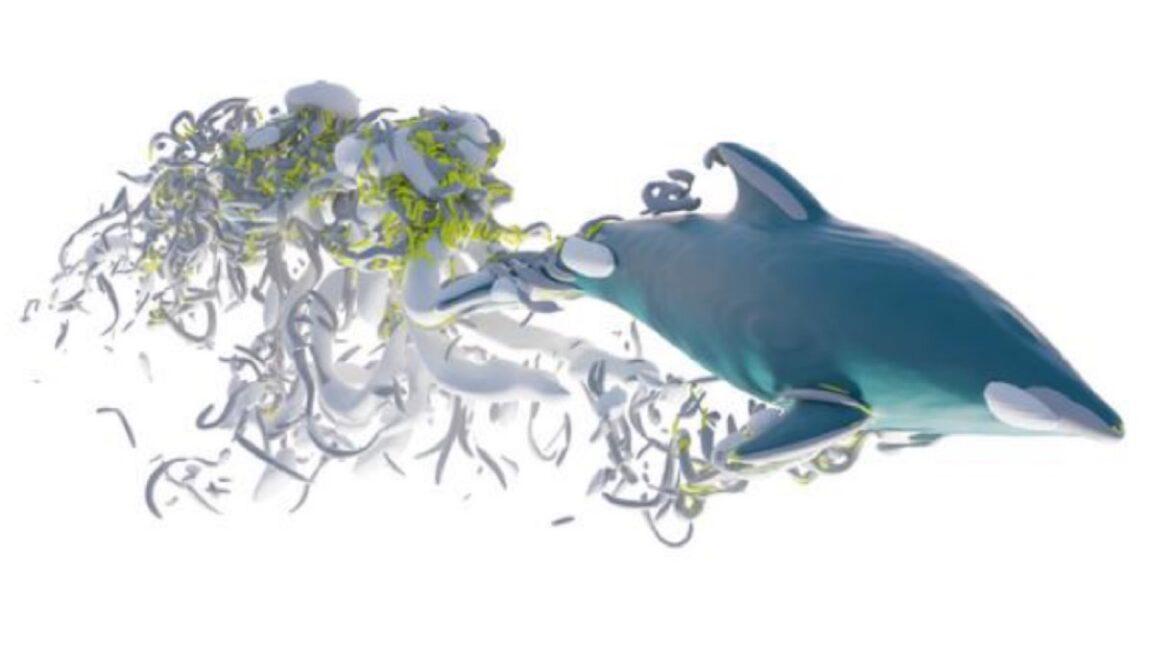
A separate line of research, reported by elDiario.es and echoed in Ars Technica, uses supercomputer simulations to explain how dolphins swim so fast.E
elDiario.es says a team from Osaka University, led by Yutaro Motoori and Susumu Goto, used simulations “créées avec a supercomputer” to reproduce dolphin movement and publish in Physical Review Fluids.E

It describes the mechanism as “a complex hierarchy of vortices created with every tail movement,” where tail motion pushes water backward and stirs it into vortices of different sizes.
The article emphasizes that until now it was “very difficult to analyze what this entailed,” because the flow appears as “turbulent water full of vortices of various sizes that intertwine.”
Using Direct Numerical Simulations on high-performance supercomputers such as Fugaku, the researchers decomposed the turbulent flow with “scale decomposition,” identifying “Large-scale vortices” and “Intermediate and small vortices.”
elDiario.es quotes Yutaro Motoori explaining the goal: “Our goal is to understand which parts of the turbulent flow really help the dolphins swim so fast.”E
Ars Technica similarly reports that Japanese scientists from the University of Osaka ran “multiple supercomputer simulations” and found that “the initial tail oscillations produce large vortex rings that generate thrust,” while “the smaller ones don’t contribute to the forward motion.”
Ars Technica also includes a direct quote from co-author Susumu Goto: “Our results show that the hierarchy of vortices in turbulence is crucial for understanding dolphin swimming.”
Bio-inspired dolphin skin
Engineering efforts to borrow dolphin-like properties show up in korii. and in the broader dolphin-speed discussion.
“between 0.1 and 0.2 millimeters thick”
korii. reports that Chinese engineers at the Ningbo Institute of Materials Technology and Engineering, in Zhejiang Province, China, made public “the results of tests conducted on a bio-inspired boat propeller.”
The device is described as being coated with a “skin that mimics a dolphin's,” with the coating thickness specified as “between 0.1 and 0.2 millimeters thick.”
korii. says the biomimetic layer imitates cetacean skin to “reduces drag and improves the propeller's efficiency,” and it ties the design to dolphin skin microstructures that “can adapt to the animal's speed, also aided by mucus secretion.”
The article adds that the coating was tested on a large oil tanker with a deadweight of “300,000 tonnes,” and that the ship covered “over 35,000 nautical miles (about 65,000 kilometers) in 200 days” for Cosco Shipping Energy.
It reports a performance outcome: “To reach its cruising speed, the liner didn't have to push its engine as hard and thus achieved a 2% fuel saving.”
korii. then quantifies environmental and cost implications, saying the 2% saving represents “a reduction of 900 tonnes of greenhouse gas emissions per year” and that it would lower the annual fuel bill by “$140,000 (about €128,600).”
The same piece also includes a cost estimate for the coating—“estimated at $20,000 (about €18,400)”—and quotes Zeng Zhixiang, a researcher at the Ningbo Institute of Materials Technology and Engineering, saying “The bioinspired dolphin skin has a comparatively simpler structure and is more cost-effective than bioinspired shark skin.”
Watching dolphins without harm
While researchers and engineers pursue dolphin-inspired speed, Radio France focuses on how people watch dolphins in the Mediterranean without disturbing them.
It describes a “magical sight” of vacationers watching dolphins near the Giens Peninsula in the Var region, but warns that outings can be dangerous “if they are not properly supervised.”
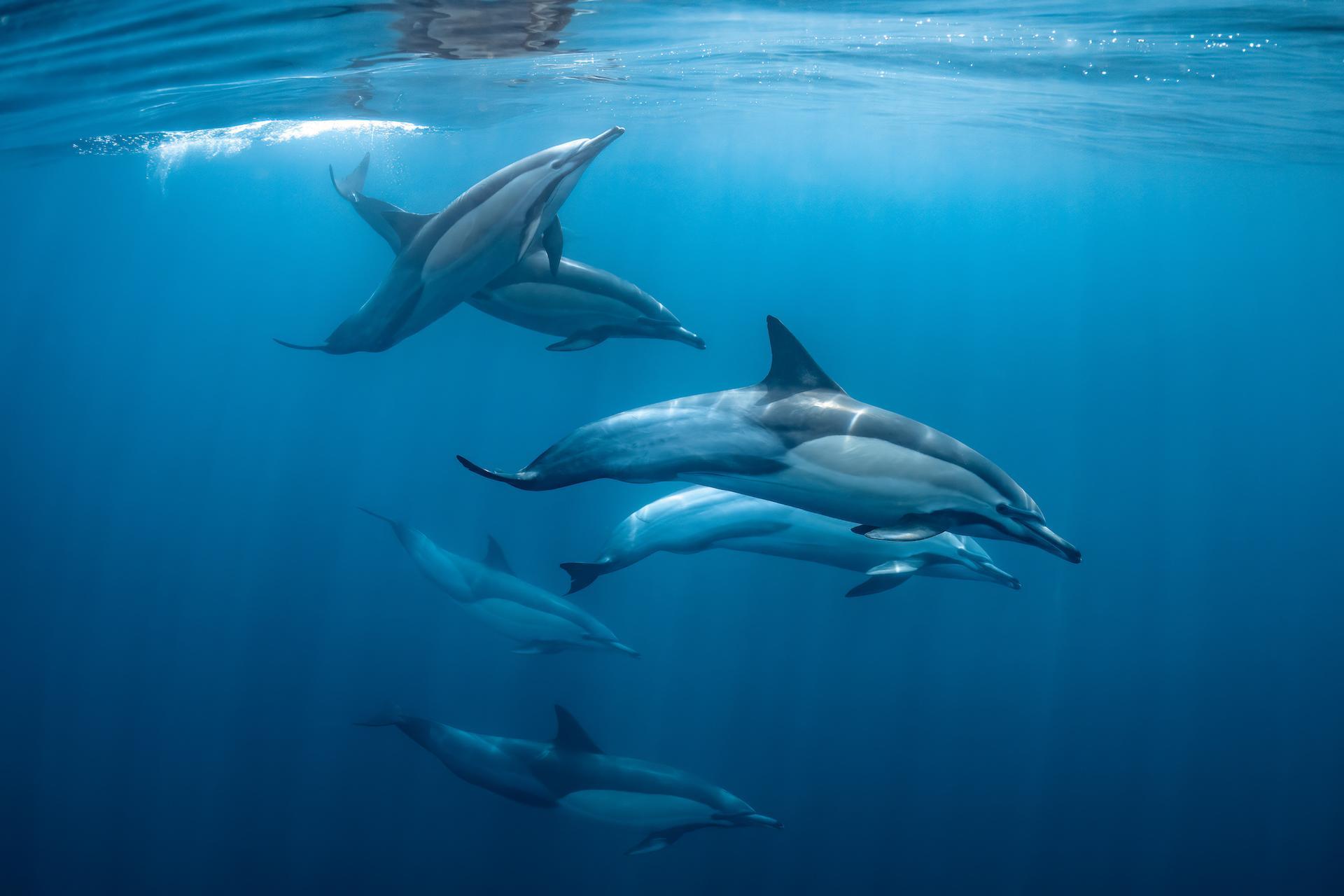
The article says the captain of the Espace Mer company based in Giens, Chloe, “does not come within 100 meters of the dolphins,” and that she follows “the guidelines of the High Quality Whale Watching label.”
Those guidelines include not approaching “at full speed through a dolphin school,” not “startling them from behind,” not “disturbing mothers and their calves,” and not staying near them for more than “half an hour.”
Radio France also reports that some companies propose banning swimming with dolphins, and it quotes Chloe: “We are in their home; we are not in a zoo.”
Another company manager, Cédric Brun of Vertical Horizon in Hyères, is quoted saying, “these are powerful animals, very intrusive, and there is a risk of transmitting bacteria or viruses to them and vice versa.”
The article adds that Joséphine Chazaud, project manager for the responsible observation label within Souffleurs d'écume, says aerial reconnaissance is “a source of stress for the animals.”
It then shifts to consequences, quoting Joséphine Chazaud that “the animals feed less well when disturbed,” and that it is “even more dangerous for the youngsters who must feed several times a day.”
Radio France also cites François Piccione, coordinator of the Oceans, Seas and Coasts network for the NGO, estimating that “cetaceans are found less close to the coast,” and it says France Nature Environnement “therefore requests the Ministry of the Environment to outright ban swimming with cetaceans.”
Mortality, pollutants, and speed
The sources also connect dolphin speed and aquatic biology to environmental stress and mortality patterns, while describing specific strandings in France.
“Each degree of warming in the water increases mortality by 14%”
Futura reports that researchers from the Zoological Society of London established a link between “environmental stress” and the spread of diseases among cetaceans in British waters, attributing environmental stress to “chemical pollutants in the water and the warming of the sea.”
It specifies that polychlorinated biphenyls (PCBs), also known as “chlorinated biphenyls,” have been banned in Europe since 1987 and that they “do not break down in water, except at temperatures above 1,000 °C.”
Futura says PCBs infiltrate marine animals, affecting “their immune systems and their ability to reproduce,” and it quantifies warming effects: “Each degree of warming in the water increases mortality by 14%.”
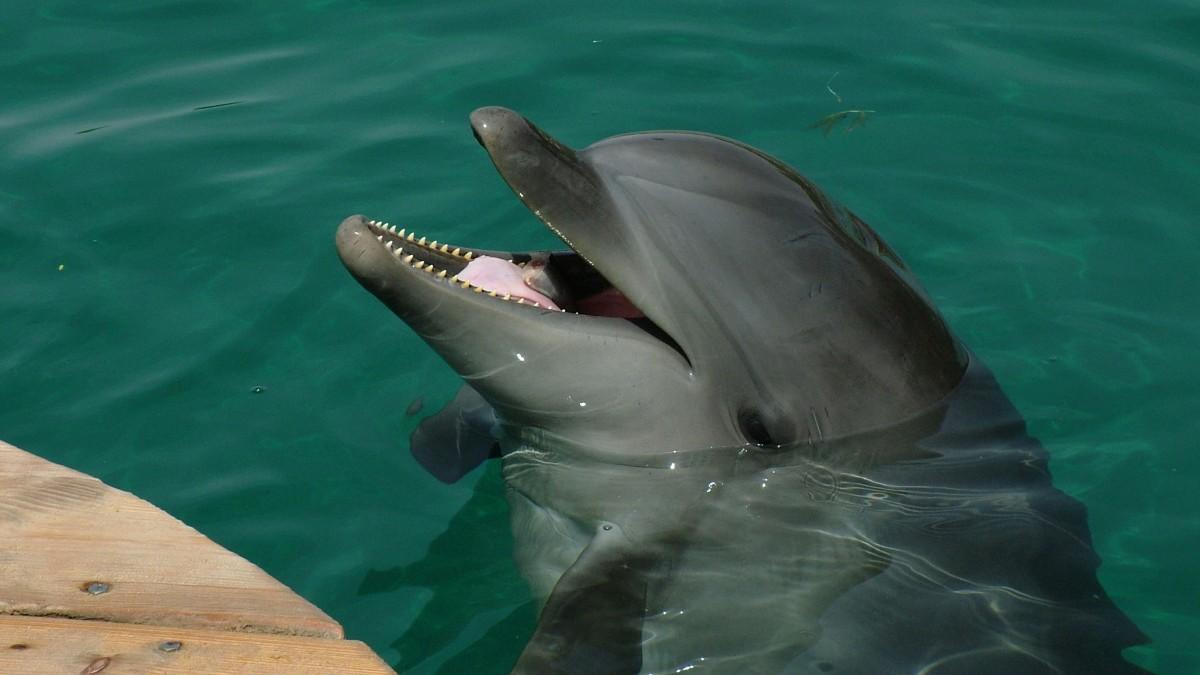
It also reports that “836 dolphin carcasses recovered between 1990 and 2020 were analyzed” for the short-beaked common dolphin, and that “for each additional degree of warming at the sea surface, the mortality of these dolphins increases by 14%.”
In France, Ouest-France reports a stranded dolphin found dead on a beach in the Côtes-d’Armor, stating it was “found washed up by walkers on Sunday, January 19, 2025, at Martin-Plage, in Plérin (Côtes-d’Armor).”
It adds that the dolphin’s “snout is deteriorating rapidly” and that the animal appears to be an “adult common dolphin,” while noting that the bay’s natural reserve contact for Pelagis had not yet been informed.
Ouest-France also provides a comparison to other rescues, saying that on Friday, January 17, 2025, a mother and her calf were saved while in bad shape in the Douron estuary, and that on the same day fifteen dolphins were trapped by the tide in Cancale Bay in Ille-et-Vilaine, where two died during the procedure.