Asia · 30 April, 2026 · 8 min read
Myanmar Junta Moves Detained Aung San Suu Kyi From Prison to House Arrest
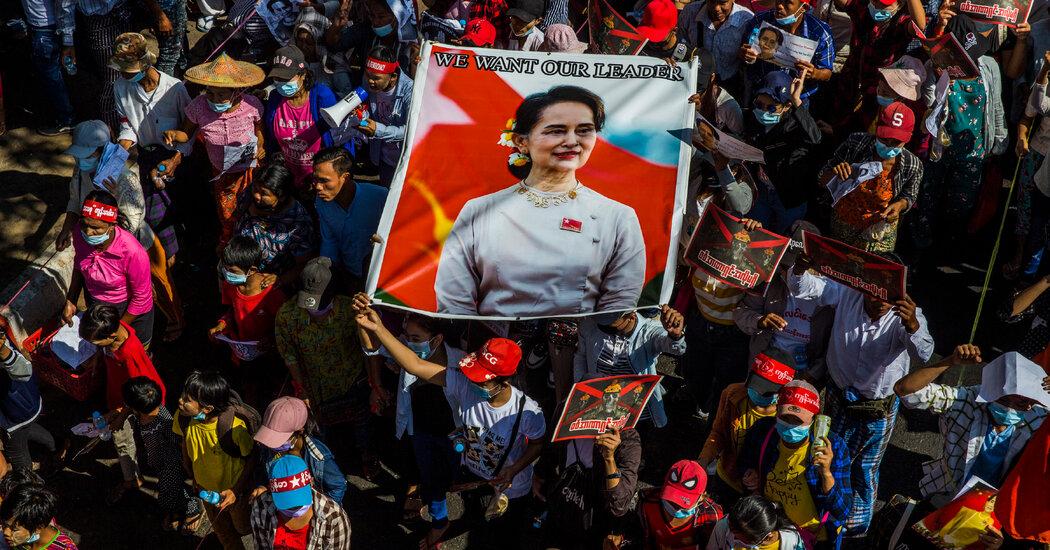
Suu Kyi moved from Naypyidaw Prison to house arrest. Detained since the 2021 military coup.
Reported sentence length before/after commutation and how severe the punishment was.
7 of 9 outlets skipped it: proof of Life campaign to demand evidence that she is still alive.
10outlets compared
Same story, two versions
tap a side to read it in full
The Guardian
“After a marathon run of trials, Suu Kyi was sentenced to 33 years after convictions on charges ranging from corruption and inciting election fraud to violating state secrecy rules, which her allies maintain were politically motivated and aimed at sidelining her.”Read the original ↗
The New York Times
“Ms. Aung San Suu Kyi, 80, has been detained since 2021, when she was forced from power in a bloody coup led by the military and sentenced to 27 years in prison.”Read the original ↗
Different outlets disagree on the historical scale of her sentence (33 years vs. 27 years) and thus on how far the regime had already reduced her punishment prior to the house-arrest move, shaping readers’ sense of justice and severity.
Prison to House Arrest
Myanmar’s detained former leader Aung San Suu Kyi is being moved to house arrest, state media reported on Thursday, more than five years after the military ousted the civilian government she led and jailed the Nobel laureate.
“the remaining portion of Daw Aung San Suu Kyi’s sentence has been commuted to be served at a designated residence”
The state-run MRTV reported that “the remaining portion of Daw Aung San Suu Kyi’s sentence has been commuted to be served at a designated residence,” using an honorific for the veteran politician.
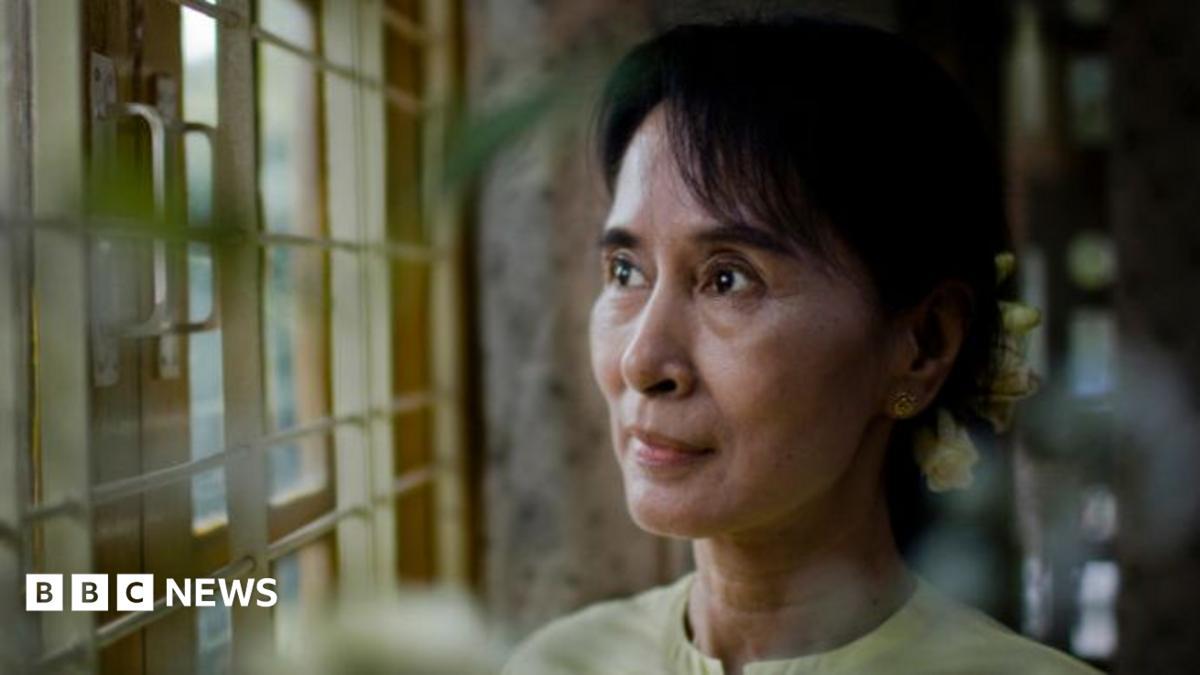
AP reported that Myanmar’s military information office confirmed the news through a text message to the press, and that the announcement was accompanied by a photo of the 80-year-old leader dressed in a traditional white blouse and skirt.
The photo showed Suu Kyi sitting on a wooden bench behind a low table facing two unidentified men, one in a police uniform and the other wearing another kind of uniform, and AP said it was not clear when or where it was taken.
The BBC said a statement by military leader Min Aung Hlaing, who led the coup, said he had “commuted her remaining sentence to be served at the designated residence,” and that the 80-year-old Nobel laureate had been held in detention since she was removed from office in a military coup in 2021.
The BBC also said the statement indicated she was likely held in a military prison in the capital Nay Pyi Taw, and that state media broadcast a picture of her sitting with two uniformed personnel.
The Guardian described the MRTV report as the first public image of her in years.T
Amnesties and Timed Moves
The house-arrest transfer was announced alongside prison sentence reductions and a broader amnesty tied to religious observances, with multiple outlets describing the timing and scope.
AP said earlier Thursday, authorities had announced her prison sentence was being reduced as part of a prisoner amnesty marking the Buddhist religious holiday, the Full Moon day of “Kason,” known as Buddha’s Birthday and Demise, and that it covered 1,519 prisoners, including 11 foreigners.
AP added that the sentences of convicts remaining in prison were cut by one-sixth, and that Thursday’s amnesty, the second applied to her in recent weeks, would bring her sentence down to 18 years, with more than 13 years left to serve according to the calculation.
The Guardian reported that earlier on Thursday, her sentence was reduced by a further one-sixth as part of a wider amnesty of all prisoners in Myanmar’s jails, and that Suu Kyi’s sentence had already been commuted to 27 years and then by a sixth in a Myanmar new year amnesty on 17 April that freed her ally and co-defendant Win Myint.T
The New York Times said the junta pursued an effort to win global legitimacy and reported that the state news outlet Myanmar Radio and Television said she would spend the remainder of her sentence at a designated residence, while also noting that state media did not specify where that would be.T
France 24 said Min Aung Hlaing ordered the move and that the statement from his office said he had “commuted the remaining sentence” of the 80-year-old Suu Kyi “to be served at the designated residence,” and it described the order as coming after he was sworn in as president following an election dismissed as civilian window dressing.
Bloomberg described the decision as “a conciliatory gesture a few days ahead of the Association of Southeast Asian Nations Summit in the Philippines,” and said it was part of a mass amnesty marking Buddha Day, with the junta also freeing more than 1,500 prisoners and reducing one-sixth of the remaining jail term of other inmates including Suu Kyi.
UN and Family Doubts
Reactions to the transfer split between international officials welcoming the change and Suu Kyi’s family and allies questioning whether it reflects genuine progress or even confirming her wellbeing.
“I still do not know where my mother is. I do not know how she is. I remain deeply concerned about whether she is still alive”
At the United Nations in New York, UN spokesperson Stephane Dujarric welcomed the news, saying, “We’ve just seen the reports,” and adding, “I can tell you that we appreciate the commutation of Aung San Suu Kyi to a so-called house arrest in a designated residence.”
Dujarric also said the only viable political solution in Myanmar “must be based on immediate cessation of violence and a genuine commitment to inclusive dialogue,” according to the Guardian.T
AP similarly reported that U.N. Secretary-General António Guterres appreciates Suu Kyi’s movement from prison to house arrest, calling it “a meaningful step toward conditions conducive to a credible political process,” and that U.N. spokesman Stéphane Dujarric reiterated a call for the swift release of all political prisoners, stressing that this is “a fundamental step” toward a political process.
But Suu Kyi’s son Kim Aris said the announcement did little to dispel fears about her condition or even confirm that she was still alive, telling the Guardian, “I still do not know where my mother is. TI do not know how she is. I remain deeply concerned about whether she is still alive,” and “If she is alive, I ask for proof of life.”
The BBC reported that Kim Aris told it, “I hope this is true. I still haven't seen any real evidence to show that she has been moved,” and that until he is allowed communication or independent verification, “then I won't believe anything.”
NPR quoted Nay Phone Latt, spokesperson for Myanmar’s parallel anti-junta administration, the National Unity Government, saying, “Where is she?” and adding, “This is not hard evidence that Daw Aung San Suu Kyi is alive, nor is it an unconditional release of our leader.”
How Outlets Frame the Same Move
Different outlets describe the same transfer while emphasizing different implications, from international legitimacy efforts to skepticism about the junta’s motives and the meaning of the “designated residence.”
The New York Times framed the move as part of the junta’s effort “to win global legitimacy,” describing the transfer as state media reported it and noting that the junta has consolidated control by jailing opponents and squashing dissent.T
Bloomberg similarly described the move as “a conciliatory gesture” ahead of the Association of Southeast Asian Nations Summit in the Philippines, and said the regime seeks international recognition.
NPR, by contrast, emphasized doubts and described the move as a “calculated gesture” rather than genuine progress, quoting Nay Phone Latt asking, “Where is she?” and saying it is “not hard evidence” of her being alive.
The BBC highlighted the secrecy and the lack of independent verification, saying Kim Aris told it the picture was “meaningless” because it was taken in 2022, and that “So, until I'm allowed communication with her, or somebody can independently verify her condition and her whereabouts, then I won't believe anything.”
France 24 reported that Suu Kyi’s lawyers “welcome the evolution of her situation while stressing that she remains wrongly deprived of liberty,” and it described a senior source from her dissolved National League for Democracy telling AFP she would likely be kept sequestered at an address in Naypyidaw, while also quoting a Naypyidaw police source saying security forces had been ordered to “enforce restrictions.”
The Guardian, while also reporting the commutation, placed the move in the context of a deadly civil war triggered by the February 2021 coup and described the UN response as a “meaningful step,” while also quoting Kim Aris’s concerns about proof of life.T
What Comes Next
The transfer’s immediate consequences are framed around access, verification, and the broader political process in Myanmar, with multiple outlets tying Suu Kyi’s status to the fate of political prisoners and the trajectory of the civil war.
“Moving her from a prison to a secret location does not mean freedom”
The Guardian reported that the UN’s Stephane Dujarric said the only viable political solution “must be based on immediate cessation of violence and a genuine commitment to inclusive dialogue,” and it described Suu Kyi’s whereabouts as unclear amid a deadly civil war triggered by the February 2021 coup.T

AP said the message announcing her transfer stated it was “made to celebrate Buddha Day, to show humanitarian concern, and to demonstrate the kindness of the state,” while also noting that it did not specify her exact location.
NPR said the location has not been disclosed and that Nay Phone Latt asked, “Where is she?” and argued it is “not hard evidence” of her being alive, while also quoting Kim Aris saying, “Moving her from a prison to a secret location does not mean freedom,” and “She remains a hostage, completely cut off from the world and under the absolute control of those who continue to unlawfully detain her.”
The BBC reported that Kim Aris said he had not been heard from in years and that his legal team told Reuters they had had no direct notification about her house arrest, while also saying her lawyers have not seen her for more than three years and her family has had no contact for more than two.
France 24 reported that Suu Kyi’s lawyers “welcome the evolution of her situation while stressing that she remains wrongly deprived of liberty,” and it quoted Suu Kyi’s son Kim Aris saying, “They're playing their same usual games as far as I'm concerned,” and “They're trying to legitimise themselves in the eyes of the international media and governments around the world.”
AP and The Guardian both connected the move to international pressure and political detainees, with AP citing the Assistance Association for Political Prisoners that 22,047 people had been detained for political reasons since the army takeover.