
Nature Study Led By Edward Snelling Shows Modern Air Could Support Carboniferous-Sized Griffinflies
Key Takeaways
- Nature study dismantles the oxygen theory of insect gigantism.
- Giant insect wingspans reached about 70 centimeters in fossils.
- Longstanding oxygen-based explanations for gigantism are being re-evaluated.
New Oxygen Theory Challenge
A Nature-published study upends the long-held oxygen-limit view of prehistoric insect gigantism by showing modern air could have supported griffinflies as large as their Carboniferous ancestors.
“Three-hundred million years ago, the skies of the late Palaeozoic era were buzzing with giant insects”
Researchers measured tracheolar volume density in 44 species of flying insects and found that tracheoles occupy roughly 1 percent of flight muscle—and that fraction hardly changes across a 10,000-fold mass range.
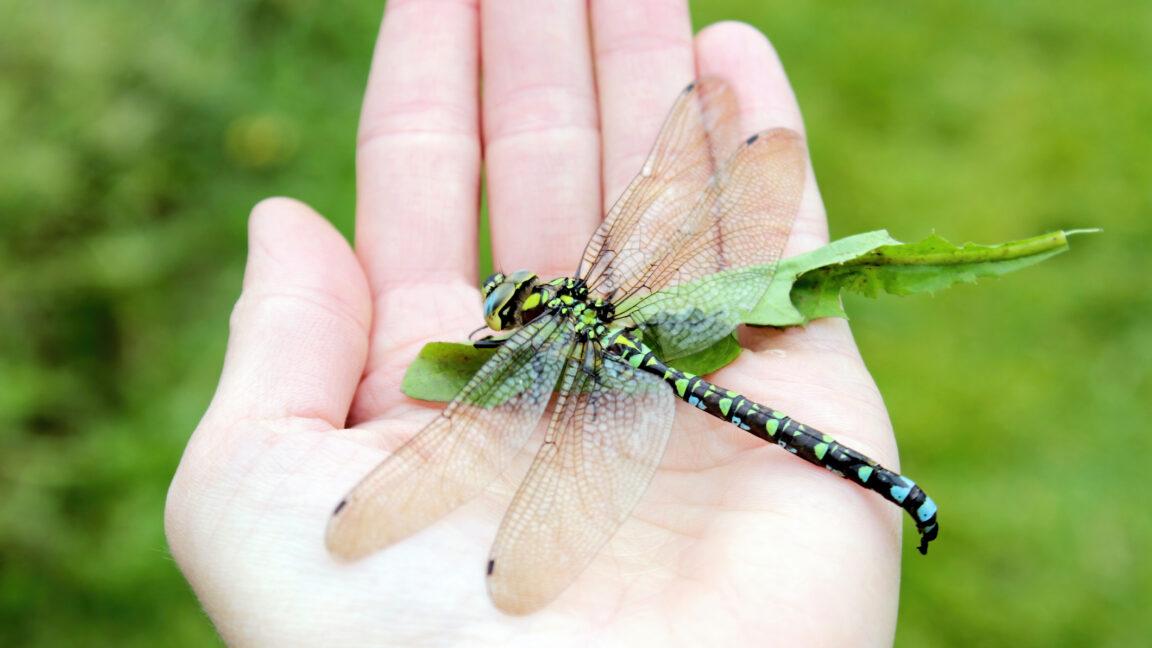
This undermines the core premise of diffusion-limited gigantism, since a bottleneck in oxygen delivery would demand noticeably more tracheolar space as size increases, a pattern this study did not observe.
The old link between atmospheric oxygen and giant size is therefore not the decisive factor it once seemed to be, as a Nature paper led by Edward Snelling argues.
Oxygen vs. Diffusion Geometry
Insects breathe through a branching tracheal system, and the team’s measurements show tracheoles occupy roughly 1 percent of flight muscle volume—an amount that barely shifts across species spanning from tiny psyllids to large beetles.
By contrast, vertebrate capillaries can occupy up to 10 percent of tissue volume, and mitochondria often fill about 20 percent in flight muscle, underscoring that diffusion geometry, not just ambient oxygen, constrains oxygen delivery in insects.
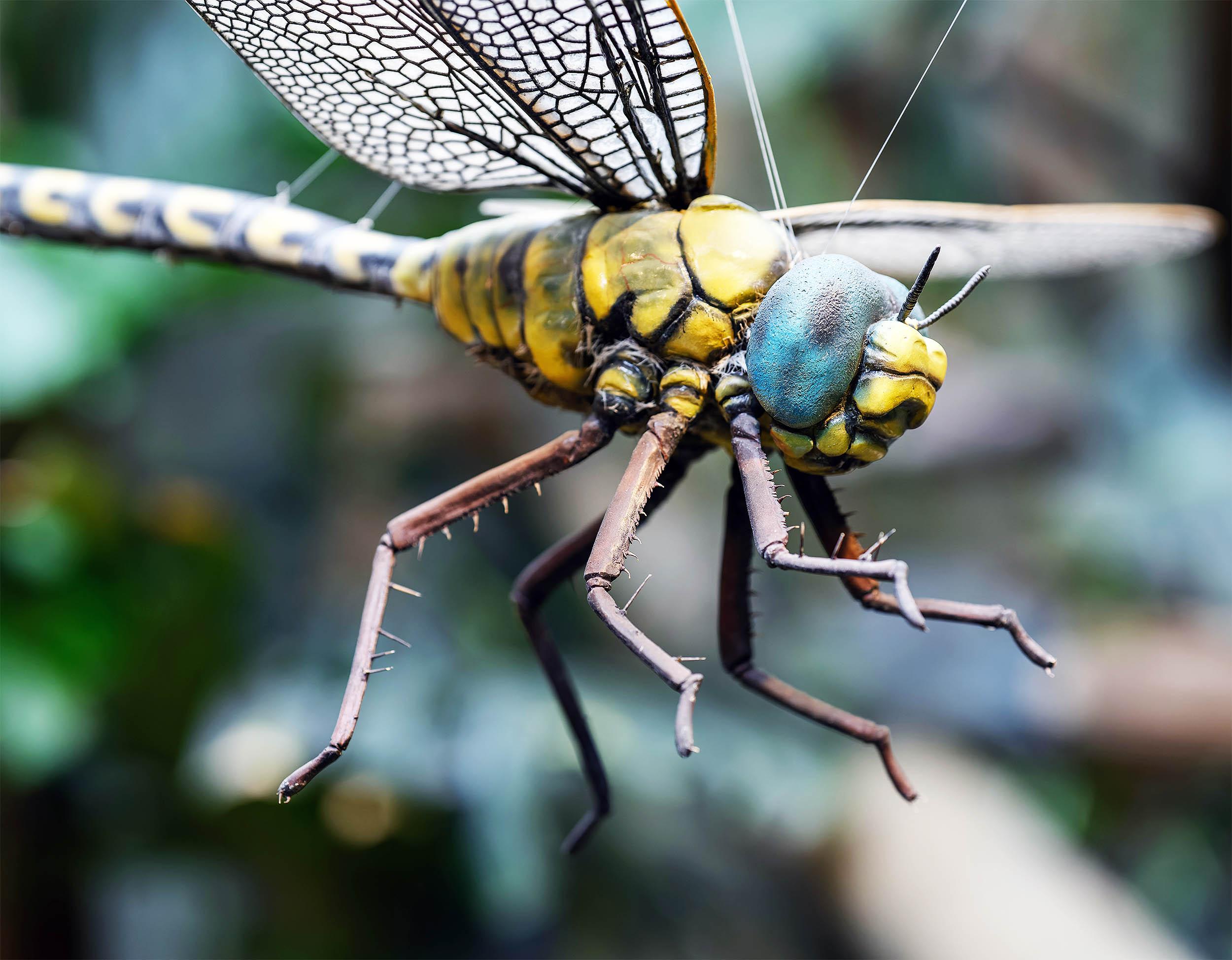
These figures emerge from high-resolution analyses of 44 species, revealing a consistent tracheolar footprint across a 10,000-fold mass range.
The new framing shifts the debate from ‘was the air thick enough’ to ‘how is oxygen actually delivered inside flight muscles.’
Ecology Over Physiology
Despite overturning a central tenet, the new work also highlights fertile questions about why giant insects disappeared.
“300 million years ago, giant insects thrived on Earth, but new research reveals the true reason behind their mysterious disappearance”
The Nature team notes that even if diffusion wasn’t the primary limiter, environmental change—predation, competition, and habitat shifts—could have reshaped faunas in later periods.
In other words, oxygen alone may not have dictated maximum size; ecological context and life-history tradeoffs could have mattered more than previously thought.
This reframing aligns with broader regional analyses that emphasize ecosystems and interactions alongside physiology.
Scale and Techniques
The Brighter Side recounts that the team required 1,320 transmission electron micrographs across five years of work.
Ars Technica underscores that the research examined 44 species to map tracheolar volume density.
Across sources, the results converge on a striking finding: the tracheolar system’s share of flight muscle remains a tiny, size-insensitive fraction.
This undermines a simplistic oxygen-delivery bottleneck and points researchers toward ecological and mechanical constraints as likely players.
Toward Integrated Explanations
Taken together, the findings inaugurate a new research agenda for insect gigantism that foregrounds evolutionary, ecological, and mechanical factors alongside physiology.
“Three-hundred million years ago, the skies of the late Palaeozoic era were buzzing with giant insects”
The Earth piece emphasizes how the old narrative—oxygen as the sole governor of size—needs updating in light of the tracheolar efficiency revealed by modern microscopy and fossil context.
The Brighter Side highlights that, while some compensation exists in larger insects, it is not enough to sustain a simple “oxygen is everything” explanation.
The Indian Defence Review frames the result as a direct challenge to the oxygen-limitation premise and a prompt to reassess historical size trajectories in West Asia and beyond alongside global data.
Global Perspectives on Narratives
The broader takeaway for science communication is that new physiological data can drastically reshape how we narrate deep-time biology, especially when non-Western perspectives emphasize ecological context and regional ecosystem dynamics alongside anatomy.
Non-Western and regional outlets have highlighted that the oxygen story was never the sole driver of insect evolution and that environmental change, predator–prey dynamics, and ecosystem structure better fit the observed fossil record.
As a result, the conversation shifts from a single-factor ‘air chemistry’ explanation to a more nuanced matrix of constraints, a shift that these diverse sources portray in parallel with the Nature study’s emphasis on mechanistic detail.
Ultimately, the findings invite a broader, more global data set to reassess when and why giant insects rose and fell, beyond the once-dominant oxygen-centric narrative.
More on Technology and Science

Anthropic Confirms Mythos Capybara Tier, Limits Release To Cybersecurity Trials After Draft Leak
12 sources compared

Sony Raises Global PS5 Prices Effective April 2, 2026 — Disc $649.99, Digital $599.99, Pro $899.99
27 sources compared

Pro-Iranian Hackers Claim They Hacked And Posted Kash Patel Emails And Photos
121 sources compared

U.S. District Judge Rita Lin Blocks Pentagon's Anthropic Risk Designation, Pauses President Trump's Contract Ban
16 sources compared