Nevada Judge Bars Kalshi From Offering Event Contracts
Key Takeaways
- Nevada judge imposes 14-day ban on Kalshi's sports, election, entertainment contracts.
- Regulators say these contracts violate gambling laws without a license; Kalshi cites CFTC jurisdiction.
- Ninth Circuit denied Kalshi stay, leaving Nevada case to enforcement.
Court Restrains Kalshi
A Nevada judge has temporarily barred prediction market operator Kalshi from offering event contracts for sports, elections, and entertainment within the state.
“Log in to keep reading or access research tools and resources”
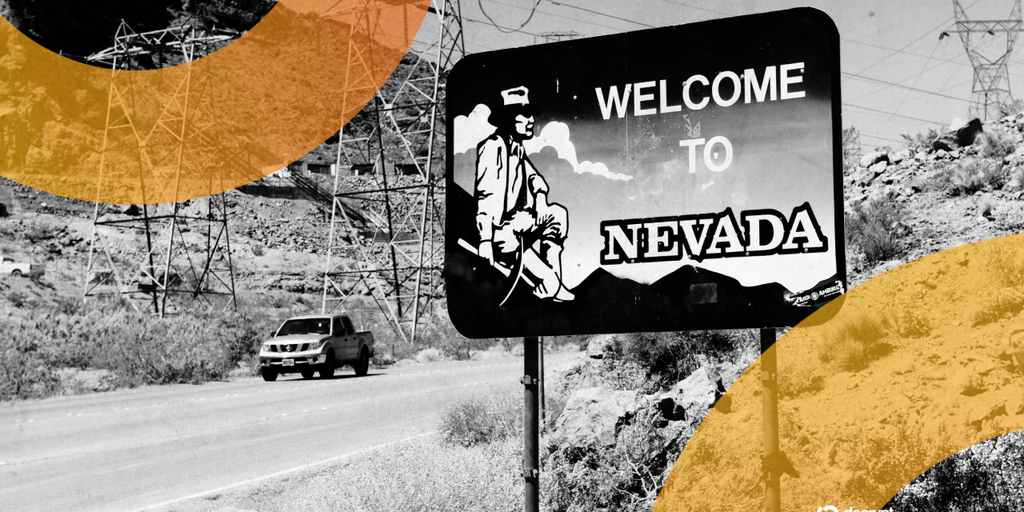
District Court Judge Jason D. Woodbury in Carson City signed a temporary restraining order on March 20, 2026, that effectively halts Kalshi's operations in Nevada for up to two weeks.
The order came in response to a civil enforcement action filed by the Nevada Gaming Control Board (NGCB), which contends that Kalshi's prediction market constitutes illegal gambling under state law.
This represents the first time any state has successfully forced Kalshi to cease operations, setting a precedent in the growing legal battle over prediction market regulation.
The restraining order prevents Nevada residents from accessing Kalshi's markets while the case proceeds, with a hearing scheduled for April 3 to determine whether to extend the prohibition.
Nevada's Regulatory Position
Nevada regulators maintain a strict regulatory stance on gambling, arguing that Kalshi's business model clearly falls under the state's expansive gaming laws.
The NGCB contends that Kalshi operates a 'percentage game' under Nevada law, which requires a gaming license and strict age verification protocols.

State regulators point to Kalshi's commission-based fee structure as evidence that the company profits directly from gaming activities within Nevada's borders.
Nevada has a significant interest in protecting its regulated gaming ecosystem, which generated record revenues of over $15 billion in 2023.
The board emphasizes its obligation to protect Nevada citizens and prevent unlicensed operators from undermining the state's carefully regulated gaming industry.
This legal action follows a pattern of Nevada's aggressive stance against prediction markets, as the state has previously targeted competitors like Coinbase and Polymarket with similar regulatory challenges.
Kalshi's Federal Argument
Kalshi counters Nevada's regulatory claims by asserting its status as a federally regulated entity under the Commodity Futures Trading Commission (CFTC).
“Kalshi gets temporary Nevada ban in dispute over sports betting A Nevada court issued a 14-day ban on a wide range of contracts from prediction market firm Kalshi as the firm continues battling with state regulators”
The company argues that its registration as a designated contract market places it squarely under federal jurisdiction, which should preempt state gambling regulations.
Kalshi points to its federally mandated compliance controls, including market surveillance, KYC/AML checks, and clearing protocols, as evidence that it operates a financial exchange rather than a sportsbook.
The company maintains that event contracts should be viewed as financial instruments known as 'swaps,' not gambling products, and claims that Congress granted the CFTC exclusive jurisdiction over futures trading on approved exchanges.
However, Judge Woodbury noted in his order that the question of federal preemption in this regard remains 'nuanced and rapidly evolving,' suggesting that the courts have not been leaning in favor of federal preemption in this area.
Broader Regulatory Battle
The Nevada case represents part of a broader, intensifying regulatory battle between states and prediction market operators across the country.
This legal conflict reflects fundamental disagreements about whether event-based contracts should be classified as financial derivatives or gambling products.
Several states, including Tennessee, Ohio, Arizona, and Massachusetts, have initiated similar legal actions against prediction market companies.
The situation has been complicated by inconsistent court rulings, with federal courts in Tennessee recently blocking state regulators from pursuing Kalshi, while Ohio judges have rejected the company's arguments.
The regulatory landscape has become particularly contentious following Arizona's recent filing of 20-count criminal charges against Kalshi, marking the first time a prediction market company has faced criminal charges.
This fragmented regulatory environment has created significant uncertainty for prediction market companies operating across multiple jurisdictions.
Kalshi's Financial Position
Despite the temporary setback in Nevada, Kalshi maintains significant financial strength as it navigates these regulatory challenges.
“In brief - Kalshi was temporarily banned in Nevada, halting its sports, politics, and entertainment markets for at least 14 days”
The company has been actively raising capital, recently securing approximately $1 billion in new financing that values the company at $22 billion—double its valuation from the end of 2025.
This substantial investment suggests that investors remain optimistic about Kalshi's long-term prospects despite the legal uncertainties.
The company's current predicament stems from a year-long legal battle that began in March 2025 when the NGCB issued a cease-and-desist notice ordering Kalshi to stop offering sports event contracts in the state.
Kalshi initially refused to comply and filed its own lawsuit against the regulatory board.
The temporary restraining order issued by Judge Woodbury effectively puts Kalshi's Nevada operations on hold for at least two weeks, though the company may seek emergency intervention from higher courts if the order is extended.
More on Finance

Coinbase Launches Stock Perpetual Futures for Non-U.S. Users
12 sources compared

Coatue Management-Led Round Drives Kalshi's $1B Funding, Valuation Soars to $22B
12 sources compared

Fed Keeps Interest Rates Steady Amid Iran War Uncertainty
26 sources compared
Arizona Attorney General Kris Mayes Files 20-Count Criminal Charges Against Kalshi.
44 sources compared