USA26 March, 20262 min read
New York Times Exposé Prompts California To Rename Chávez Day Farmworkers Day Effective Immediately
This article is an automated aggregation of coverage from news outlets. Our editorials offer in-depth analysis curated by the NewsCord team.
Newsom signs AB 2156 renaming César Chávez Day to Farmworkers Day. Renaming follows sexual abuse allegations against Chávez publicized by NYT investigation.

NYT-provoked renaming
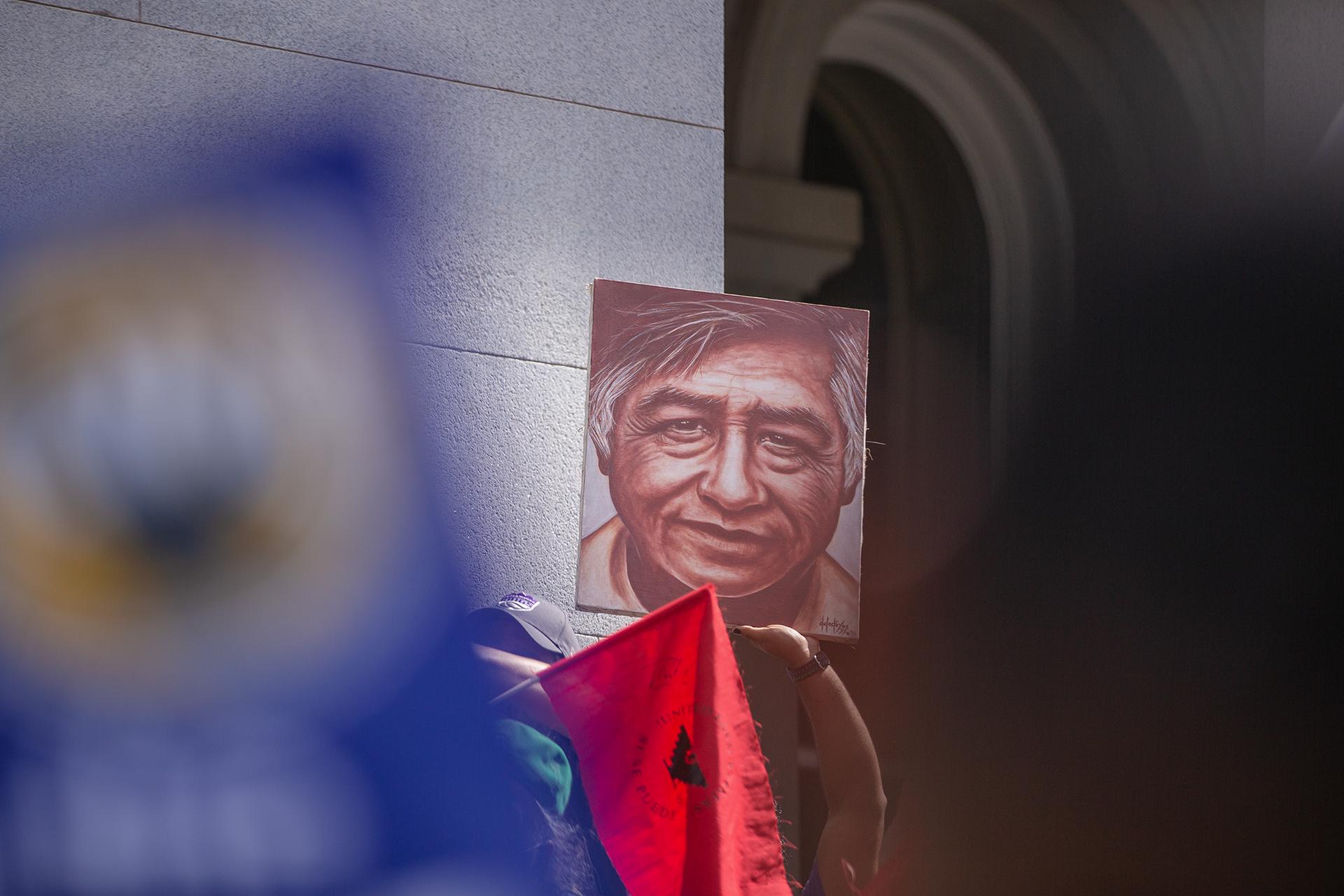
The single most important new development is the rapid, nationwide reckoning prompted by The New York Times investigation into César Chávez's conduct, which spurred California to act with unprecedented speed by renaming Chávez Day to Farmworkers Day and implementing an immediate effect through an urgency clause. California Governor Gavin Newsom signed Assembly Bill 2156 on March 26, 2026, taking effect the same day and ahead of the March 31 holiday, as part of a bipartisan push to shift the focus from a single founder to the broader farmworkers’ movement. The change renames the holiday, not just commemorates the movement, and signals a deliberate break from elevating Chávez personally in public life.
“California renames César Chavez Day following sexual abuse allegations.”
Multiple outlets note the scale of the shift, describing it as part of a wave of renaming and erasure of Chávez’s name from public spaces, schools, and monuments. This was accompanied by immediate administrative actions in cities and counties—from Los Angeles proclaiming Farmworkers Day to Fresno County renaming observances—demonstrating a rapid, top-to-bottom realignment around the farmworker rights movement rather than any one individual.

AB 2156 specifics
AB 2156 renames the March 31 holiday to Farmworkers Day and includes an urgency clause that makes the change effective immediately. The Senate approved the measure 37-0 after an Assembly vote, and Newsom signed it into law on the same day. Supporters say the farmworker movement was never about one man, emphasizing a broader collective legacy, while critics worry about erasing Chávez’s historical role.
The bill does not address the 2000 curriculum requirement, leaving educational content adjustments to schools and districts. Fresno County, Los Angeles, and other municipalities are already implementing changes to observances, signage, and public commemorations.
Global Chávez discourse
La Jornada reported that the renaming follows explosive allegations and noted Governor Newsom’s expected signature, with Dolores Huerta among those who spoke to reframe the legacy. Univision described the move as official, tied to New York Times reporting that Chávez sexually abused women and girls. Devdiscourse noted that Minnesota and Texas were considering similar actions, signaling broader regional dynamics.
“El cambio comes after explosive allegations... Dolores Huerta, quien co-lideró el movimiento.”
The Guardian framed the renaming as part of a wider wave of renaming memorials in response to the NYT investigation. Across these outlets, the NYT report is treated as a catalyst for a broader global conversation about accountability and memory in social movements.
National rebranding fallout
The renaming reverberated beyond California, with outlets covering moves in other jurisdictions and the emergence of new mileposts like Los Angeles’ proclamation of Farmworkers Day and Denver’s Sí, Se Puede Day. Lawmakers argued the movement was bigger than Chávez, while critics warned that erasing Chávez’s role could oversimplify and sanitize history. California’s own actions—Fresno County’s shift and statue coverings—were cited as concrete signals of the national rebranding trend.
Education policy questions remained—curriculum and lessons about Chávez and the movement were to be revisited by schools, with many districts facing the task of aligning history teaching with the new public memory. This evolving landscape suggests a broader reassessment of how societies memorialize controversial figures within labor and civil rights struggles.