NIA Arrests Matthew VanDyke, Six Ukrainians, and One American in India Terror Probe
Key Takeaways
- NIA arrests seven foreigners—six Ukrainians and American Matthew VanDyke—under UAPA.
- Entered India via Mizoram's restricted border areas, then Myanmar to train militants and supply drones.
- Seven foreigners remanded to 11-day NIA custody for interrogation.
Arrest Operation Overview
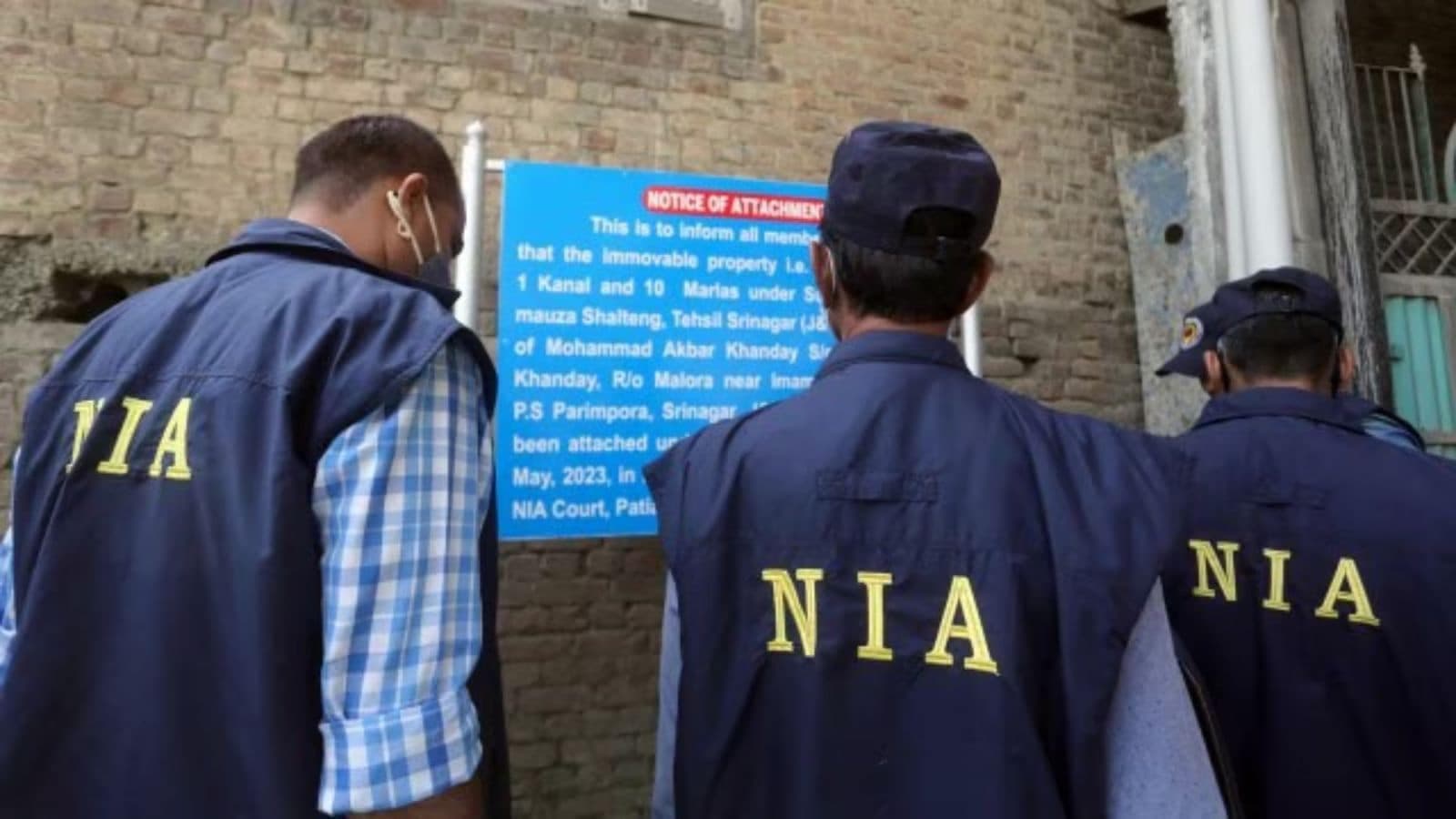
The National Investigation Agency (NIA) conducted a major anti-terror operation on March 13, 2026, arresting seven foreign nationals including one American and six Ukrainians for allegedly plotting terrorist activities involving cross-border networks and drone technology.
“Trending: West Asia war Trump China visit Pakistan-Afghanistan conflict Attacks in the UAE Netanyahu death rumours Fide Candidates 2026 advertisement Six Ukrainians, 1 American arrested in India over terror charges”
The arrests were carried out in a coordinated operation across three airports - the US national Matthew Aaron Van Dyke was apprehended at Kolkata airport, while three Ukrainian nationals each were arrested at Lucknow and Delhi airports.

According to the NIA, the group entered India on valid tourist visas but violated regulations by travelling to Mizoram without obtaining the mandatory Restricted Area Permit (RAP), then crossed into Myanmar where they established links with ethnic armed groups hostile to India.
The agency alleges their activities were part of a larger conspiracy involving drone consignments sourced from Europe and delivered to armed groups in Myanmar.
Arrested Individuals' Backgrounds
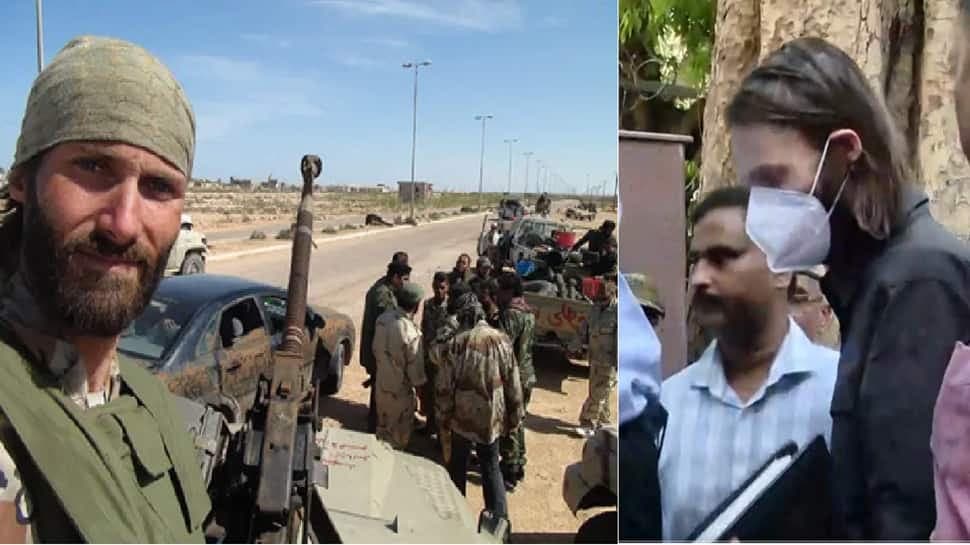
The arrested individuals have been identified as Matthew Aaron Van Dyke, a 39-year-old American national, and six Ukrainian citizens: Petro Hurba, Taras Slyviak, Ivan Sukmanovskyi, Marian Stefankiv, Maksim Honcharuk, and Viktor Kaminskyi.
Van Dyke is described as a self-described security analyst, war correspondent, and documentary filmmaker who first gained prominence during the 2011 Libyan Civil War when he joined rebel fighters and was subsequently imprisoned.
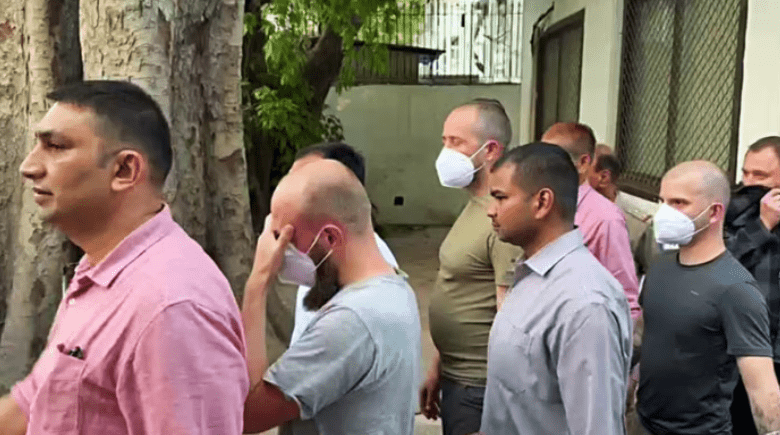
He later founded Sons of Liberty International (SOLI), which offers military training and strategic advice to local armed groups in conflict zones.
According to reports, Van Dyke has worked in deadly global hotspots for over a decade, including Syria and Libya, and has fought against ISIS in Iraq while also training Ukrainians amid the war against Russia.
The Ukrainian nationals were part of a larger group of 14 Ukrainian citizens who entered India separately on tourist visas before traveling to Guwahati and then Mizoram.
Allegations and Investigation
Indian authorities allege that the arrested group was involved in a sophisticated cross-border terror network focused on supplying advanced military technology to insurgent groups.
“The National Investigation Agency (NIA) has taken seven foreign nationals, including six Ukrainians and one US citizen, into 11-day custody for questioning over alleged illegal entry into India and suspected links to terror activities in the northeast”
The NIA claims that the suspects illegally imported large consignments of drones from Europe to Myanmar via India for use by ethnic armed groups (EAGs) operating in Myanmar's border regions.
These groups are reportedly known to support Indian insurgent organizations by supplying weapons, training them in drone warfare, operations, assembly, and jamming technology.
Investigators have stated that the EAGs targeted the Myanmar Junta and that the suspects conducted training sessions for these groups on multiple occasions.
The NIA further alleges that the accused were in direct contact with unidentified terrorists carrying AK47 rifles and admitted to their involvement in terrorist activities.
Preliminary findings indicate that drone consignments were routed through India and delivered to the region as part of this suspected cross-border terror network.
Legal Proceedings
The seven accused have been formally charged under Section 18 of India's Unlawful Activities (Prevention) Act (UAPA), which deals with conspiracy or attempts to commit terrorist acts.
Following their arrests on March 13, the suspects were initially remanded to police custody for three days before being produced before a Special NIA Court at Patiala House Courts in Delhi.

On March 16, the court granted the NIA's request for 11 days of custody to continue their investigation, though the agency had initially sought 15 days.
During the court proceedings, the NIA argued that they needed custody to collect more evidence, unearth the overall conspiracy, identify the route taken by the accused, and apprehend their unknown associates who are likely to surface after technical analysis of their data and social media accounts.
The accused are scheduled to be produced in court again on March 27, 2026, when the next judicial decision regarding their custody and the investigation's progress will be made.
Diplomatic Reactions
The arrests have drawn diplomatic responses from both the United States and Ukraine, with each country expressing different levels of concern about the situation.
“On March 13, 2026, India’s National Investigation Agency (NIA) arrested seven foreign people, six Ukrainians and one US citizen, in a major counter-terrorism operation”
The US embassy in India stated it was "aware of the situation" but declined to comment further on the case involving their citizen due to privacy reasons.
In contrast, the Ukrainian government issued a more detailed statement expressing several concerns about the handling of the case.
Ukraine acknowledged that there are "no established facts proving the involvement" of its citizens in unlawful activities in India or Myanmar, while criticizing what it described as "distorted interpretations" and "manipulative" reporting in some Indian and Russian media outlets.
The Ukrainian embassy emphasized that they had provided legal aid and defense counsel to the detained citizens during court proceedings and expressed frustration that they had not received official notification from Indian authorities regarding the detention.
Ukraine has demanded "immediate provision of unimpeded consular access" to the detainees, stating that the embassy was not granted the opportunity to communicate directly with them during the March 16 court hearing.
Security Implications
The case raises significant security concerns for India's northeastern region and highlights the complex geopolitical dynamics in the Myanmar border area.
Myanmar's border regions host several ethnic armed groups fighting the country's military junta, with some groups operating close to India's northeast and having historical ties to insurgent organizations active in the region.
Indian authorities view the drone supply network as particularly threatening, as advanced drone technology could be used for surveillance, attacks, and other military purposes by insurgent groups targeting India's security infrastructure.
The NIA's investigation has revealed that the arrested Ukrainian nationals were part of a larger 14-member group, with seven other associates still at large who investigators are trying to locate.
This suggests a more extensive transnational network operating across multiple countries.
The case underscores how India's porous borders and the ongoing conflict in Myanmar create vulnerabilities that can be exploited by foreign actors seeking to support insurgent activities in the region, making it a critical security challenge for Indian counter-terrorism efforts.
More on Crime

Dallas police kill Rep. Jasmine Crockett's security guard during standoff.
12 sources compared

Kouri Richins Convicted of Aggravated Murder in Fentanyl Poisoning of Husband
63 sources compared

Emirates Flight EK533 Returns to Kochi After Dubai Airport Security Incident
21 sources compared

Dallas SWAT Officers Fatally Shoot Mike King in Parking Garage Standoff
10 sources compared