
North Carolina musician Michael Smith Pleads Guilty to AI-Driven Streaming Royalty Fraud.
Key Takeaways
- Michael Smith of Cornelius, North Carolina pleaded guilty to conspiracy to commit wire fraud.
- Uploaded AI-generated songs to major platforms using automated systems to inflate streams.
- Illicit proceeds estimated at eight to ten million dollars.
Landmark AI Fraud Conviction
North Carolina musician Michael Smith has become the first person in the United States to plead guilty to a federal charge of AI-assisted music streaming fraud.
“North Carolina musician Michael Smith has pleaded guilty to collecting over $10 million in royalty payments through a massive streaming royalty fraud scheme on Spotify, Apple Music, Amazon Music, and YouTube Music”
The 54-year-old Smith, who operated from Charlotte, admitted to orchestrating a sophisticated scheme that generated over $10 million in fraudulent royalty payments.
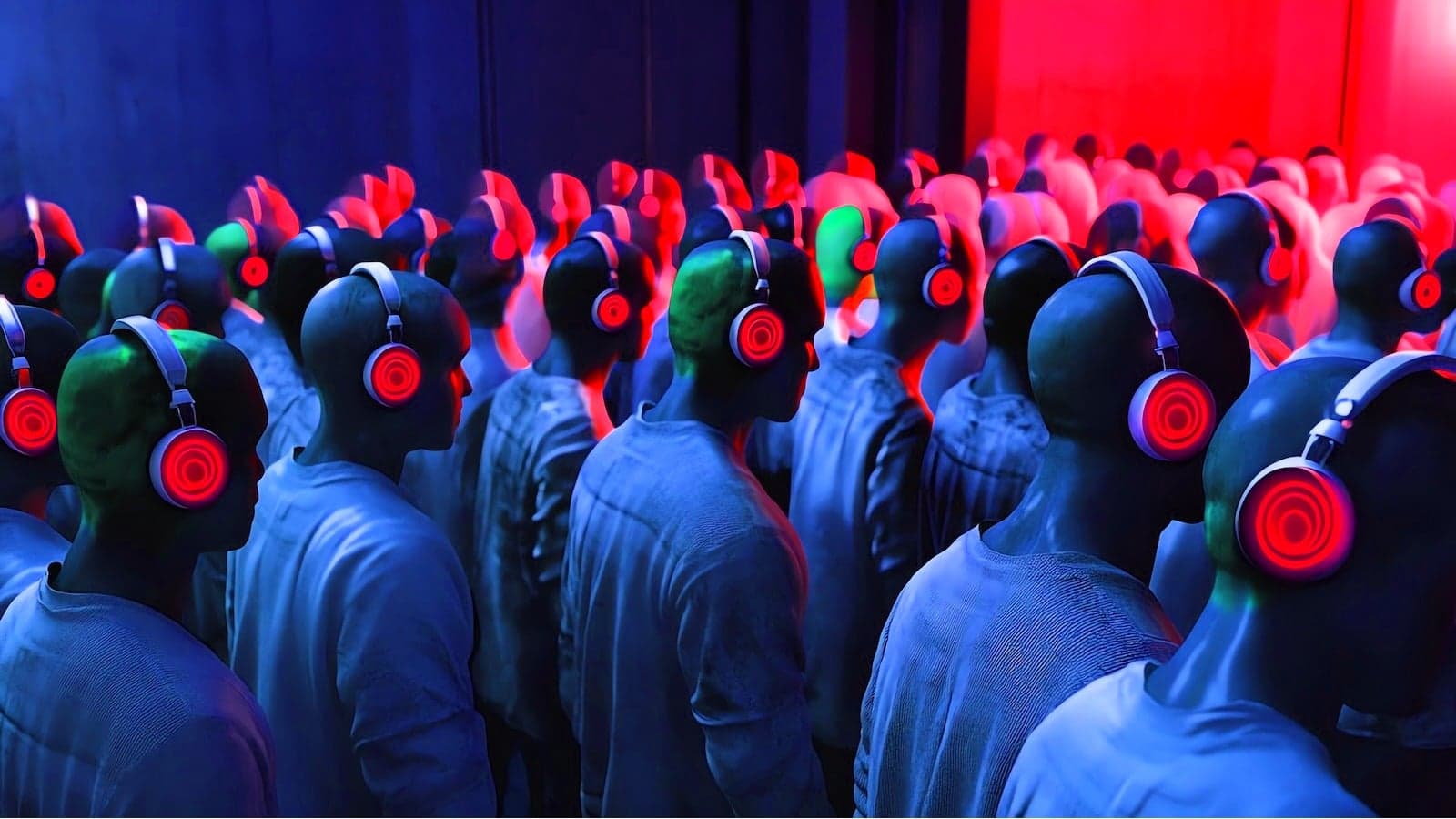
Smith used AI to create hundreds of thousands of songs and deployed automated bots to stream them billions of times across major platforms including Spotify, Apple Music, Amazon Music, and YouTube Music.
The operation ran from 2017 to 2024, according to court documents unsealed when he was charged in September 2024.
Prosecutors noted that although the songs and listeners were fake, the millions of dollars he stole was real money that should have gone to legitimate artists and rights holders.
Fraud Mechanics and Scale
The mechanics of Smith's elaborate fraud scheme reveal a sophisticated operation that combined cutting-edge AI technology with systematic automation.
Smith purchased hundreds of thousands of AI-generated songs from an accomplice, the CEO of an AI music company identified as Alex Mitchell from Boomy.
He uploaded these songs to streaming platforms under fake artist names like 'Calm Force' and 'Calorie Event'.
To avoid detection, he deployed over 1,000 bot accounts that accessed streaming platforms using virtual private networks (VPNs).
Emails showed he maintained 52 cloud service accounts, each containing 20 bot accounts.
At its peak, the operation generated approximately 661,440 streams per day, with each bot streaming around 636 songs daily.
Dual Life and Background
Smith maintained a dual life that contrasted his legitimate music industry connections with his secret criminal enterprise.
“Tonight, in “Damn, those folks at the Crime Factory sure do love to whip up something new, huh”
Before becoming a federal convict, Smith lived the quintessential suburban life in a sprawling house in Charlotte with his wife and six children.
He had established credibility in the music industry through legitimate channels, owning a string of medical clinics, judging the reality show 'One Shot,' and even writing a self-help book.
His musical connections included working with prominent artists like RZA and Snoop Dogg.
He had taken '20 hours' of musical training sessions with Jonathan Hay, a publicist offering consulting to aspiring musicians.
Beneath this surface of respectability lay his massive digital architecture designed to siphon money from the industry's royalty pools.
Legal Consequences and Industry Impact
Smith's guilty plea carries significant legal consequences while highlighting broader industry concerns about AI-generated content.
He has agreed to forfeit $8,091,843.64 in illicit gains and faces a maximum sentence of 5 years in prison after pleading guilty to one count of conspiracy to commit wire fraud.
U.S. Attorney Jay Clayton emphasized the seriousness of the crime, stating that 'Michael Smith generated thousands of fake songs using artificial intelligence and then streamed those fake songs billions of times.'
The plea comes amid heightened industry anxiety about AI-generated tracks, with Sony reporting having to remove 135,000 deepfakes of songs by its artists from various streamers.
Industry groups are continuing to call for more protections against both the creation and fraudulent streaming of AI content.
System Vulnerabilities and Future Implications
The case exposes critical vulnerabilities in streaming platform royalty systems and raises fundamental questions about the future of music distribution in the AI era.
“North Carolina musician Michael Smith has pleaded guilty to collecting over $10 million in royalty payments through a massive streaming royalty fraud scheme on Spotify, Apple Music, Amazon Music, and YouTube Music”
Smith's scheme demonstrated how easily automated systems could be manipulated to exploit the per-stream royalty model.
His internal emails showed deliberate strategy to 'get a TON of songs fast to make this work around the anti fraud policies these guys are all using now.'
Unlike deepfake imitations of specific artists, Smith focused on creating generic electronica tracks with nonsensical names to avoid immediate detection.
The scale of his operation—generating over 4 billion streams and $12 million in royalties since 2019—suggests streaming platforms' anti-fraud measures were insufficient.
This landmark case serves as both a warning and a catalyst for the industry to develop more robust systems to distinguish between legitimate and artificially inflated streaming activity.
More on Crime

Barcelona Police Say University of Alabama Student's Death in Spain Was Likely an Accident
36 sources compared

James Gracey Dies in Barcelona; Police Say Accident, Footage Shows He Fell Into Sea
98 sources compared

Epstein manipulated Norway's Crown Princess Mette-Marit
11 sources compared

Epstein's Former Attorney Darren Indyke Says He Had No Knowledge of Epstein's Crimes Against Women
10 sources compared