Oil prices fall and stocks rise after Trump says Iran war 'very complete'
Key Takeaways
- Donald Trump said the war in Iran would end 'very soon'.
- Oil prices fell from almost $120 to about $93 per barrel after his comments.
- Stock markets rose following the drop in oil prices.
Markets react to Trump's comments
Oil prices fell sharply and global stock markets rebounded after US President Donald Trump said the war in Iran would come to an end 'very soon' and that 'the war is very complete, pretty much.'
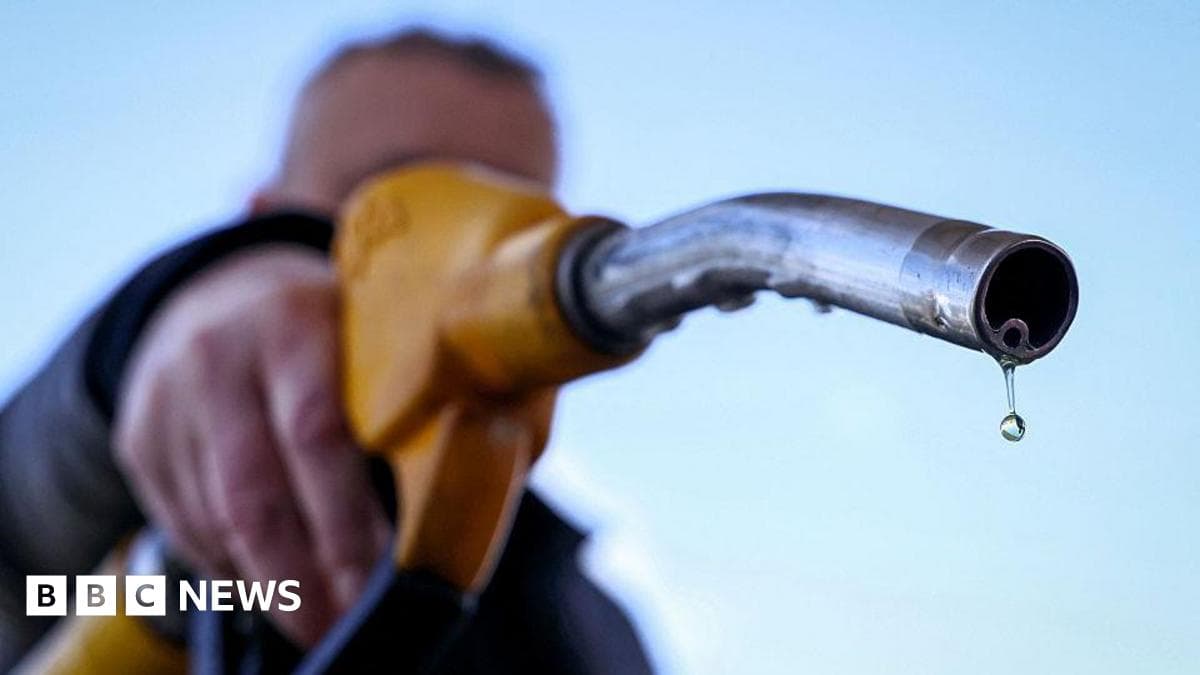
“- Published The price of oil has fallen sharply after US President Donald Trump said that the war in Iran would come to an end "very soon"”
Oil had reached almost $120 a barrel on Monday over fears of lengthy supply disruption.
It dropped back to around $93 following Mr Trump's comments.
Brent briefly fell below $84 a barrel before rebounding to $93.76, and US West Texas Intermediate fell 4% to $90.96.
London's FTSE 100 opened up 1.3%, Japan's Nikkei 225 closed up 2.9% and South Korea's Kospi gained 5.4%.
UK gas month-ahead prices fell by more than 10% to 123p a therm from Monday's peak of 171p.
Middle East oil tensions
The Islamic Revolutionary Guard Corps responded to Mr Trump's remarks by saying 'in response to Trump's nonsense' Iran's armed forces will 'not allow the export of a single litre of oil from the region.'
The Strait of Hormuz, through which around a fifth of the world's oil passes, has seen traffic all but halted since the war started more than a week ago.
Amin Nasser, the boss of Saudi Arabia's Aramco, warned of 'catastrophic consequences' for oil markets if the route remains blocked and said global stocks were at their lowest for five years.
He added: 'The longer the disruption goes on... the more drastic the consequences for the global economy.'
Energy market volatility
Analysts warned markets remain volatile.
“- Published The price of oil has fallen sharply after US President Donald Trump said that the war in Iran would come to an end "very soon"”
Alberto Bellorin of InterCapital Energy said traders could "exhale" briefly but energy markets remain in a state of "total tug-of-war" and oil trading will "remain incredibly twitchy."
He said prices are likely to spike if the conflict escalates and fall if it seems to be easing.
Park Kee Hyun of the S Rajaratnam School of International Studies noted prices are still around 20% higher than before the US and Israel launched airstrikes on Iran just over a week ago and said prices will remain "volatile" as firms charge a risk premium.
G7 leaders said they were ready to take "necessary measures" to address global energy supply but a meeting with the IEA ended without a final decision on releasing stockpiles.
UK Chancellor Rachel Reeves said the UK urged "immediate de-escalation," guaranteed security for vessels and that she "stand[s] ready to support a co-ordinated release of collective IEA oil reserves."