Pakistan Hosts Quadrilateral Talks With Turkey, Egypt, Saudi Arabia to End Iran War
Key Takeaways
- Pakistan hosted four-way talks with Saudi Arabia, Egypt, and Turkey on ending Iran's war.
- Discussed ending the war quickly and permanently through Pakistan's mediation between US and Iran.
- Pakistan signaled hosting Iran-U.S. talks in coming days.
Pakistan-Led Mediation
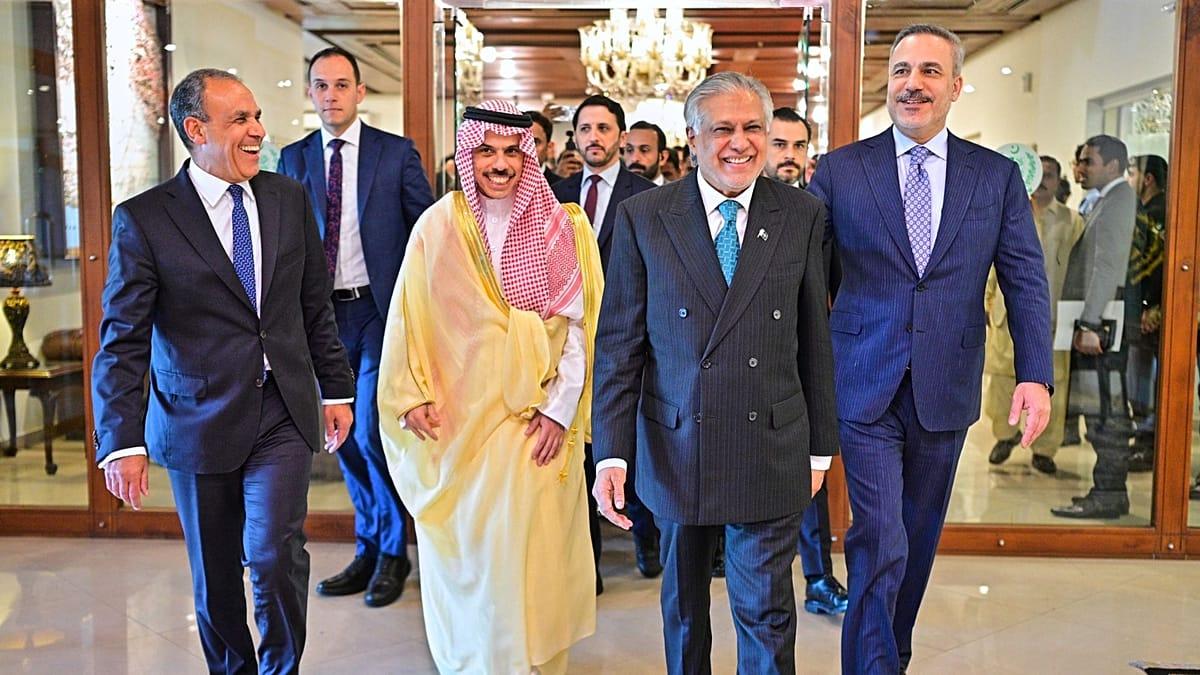
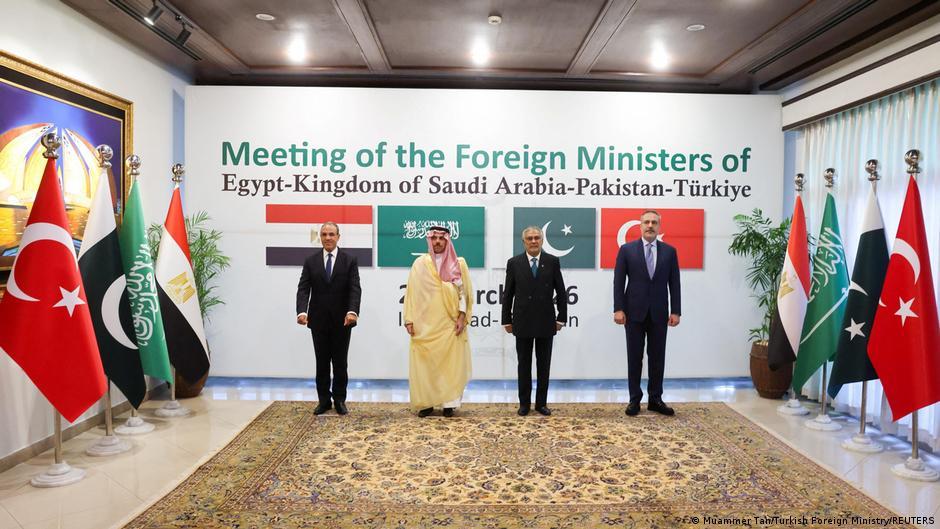
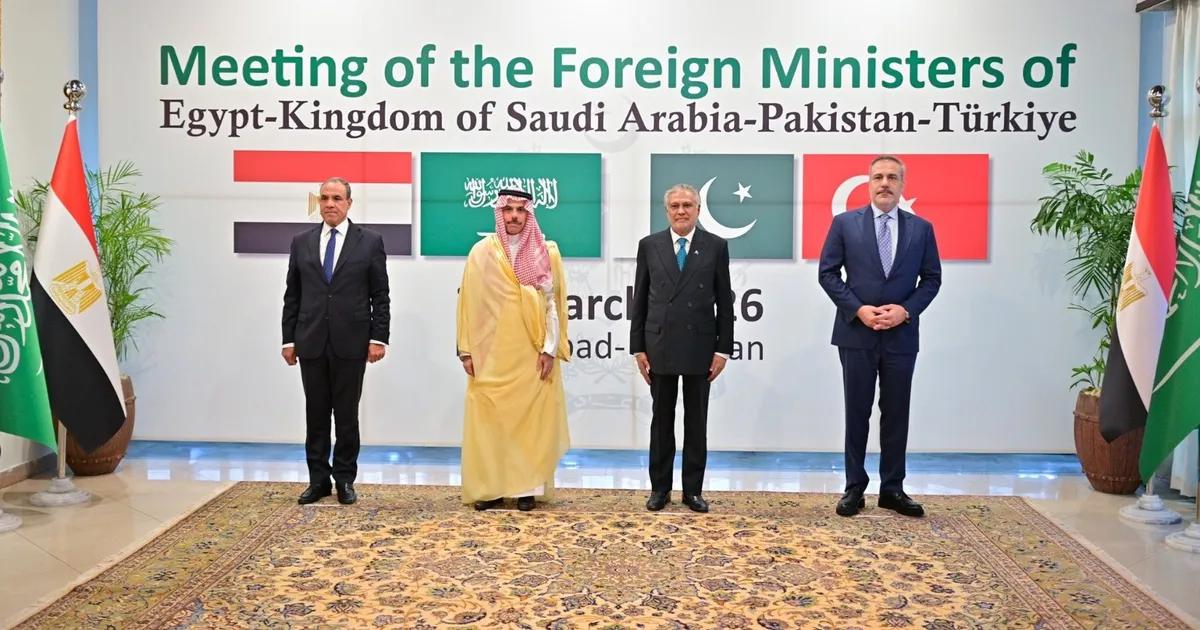
Pakistan hosted a quadrilateral meeting with Saudi Arabia, Turkey, and Egypt to mediate an end to the Iran war.
“Pakistan hosted, on Sunday, March 29, talks with Turkey, Egypt and Saudi Arabia as part of its efforts to mediate to end the Iran war, with initial discussions focusing on proposals to reopen the Strait of Hormuz to maritime traffic”
The meeting lasted several hours under tight security with no American, Israeli, or Iranian officials present.
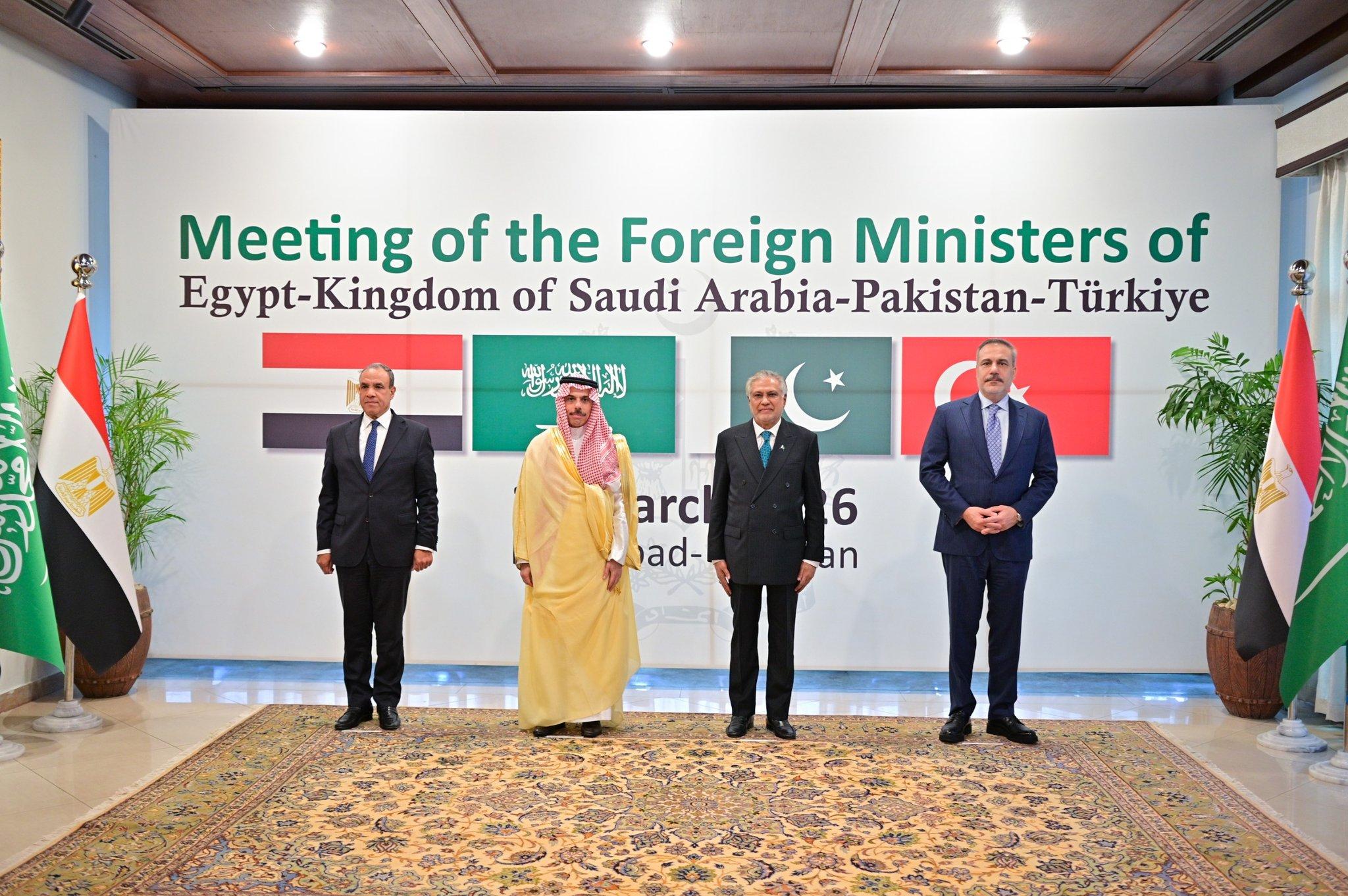
All parties expressed confidence in Pakistan's mediation efforts and China fully supports the initiative.
The meeting included consultations with Pakistan's Army Chief who has close ties to President Trump.
Proposed Iran-US Talks in Islamabad
Pakistan announced it is ready to host direct talks between Iran and the United States in Islamabad.
Ishaq Dar stated that Pakistan welcomes Iran's and the United States' trust in its mediating role.
Multiple sources confirmed the two sides had conveyed messages through Pakistan.
The Council on Foreign Relations described this as a significant shift toward diplomacy.
Regional Dynamics and Energy Impact
The quadrilateral discussed the broader regional and economic ramifications of the conflict.
“Skip to main content March 24, 2026 | Real Clear World Turkey’s Mission to Put an End to the Iran War Sinan Ciddi Senior Fellow Ahmad Sharawi Senior Research Analyst March 24, 2026 | Real Clear World Turkey’s Mission to Put an End to the Iran War Sinan Ciddi Senior Fellow Ahmad Sharawi Senior Research Analyst Turkey’s Foreign Minister Hakan Fidan did not Turkey, a strategic ally of the United States and a member of NATO has thus far avoided drawing the ire of Iran’s regime, despite sharing a 350-mile border with the Islamic Republic”
Hakan Fidan emphasized that the new multipolar world order requires a solution to protect energy and trade routes.
The Egyptian Foreign Ministry noted concerns about the serious economic repercussions.
Iran's closure of the Strait of Hormuz triggered immediate economic shockwaves.
Turkey's Calculus and Domestic Pressures
Turkey's involvement reflects its unique position as a NATO member not yet targeted by Iran.
Erdogan faces mounting domestic pressures with the war straining Turkey's economy.
Rising consumer prices and potential refugee flows are central concerns.
Turkey has thus far avoided drawing Tehran's ire, allowing it to emerge as a credible mediator.
More on Iran

Trump Claims Negotiations with Iran's Ghalibaf as Israel Invades Lebanon
16 sources compared
Trump Delivers NIAC Speech: Admits War Failed, Threatens to Take Iran's Oil
11 sources compared
US-Israeli Forces Bomb Natanz Uranium Facility, Iran Retaliates on Dimona
14 sources compared

Trump Claims Iran Asked Ceasefire; Iran Denies as Hormuz Closure Ballooning
39 sources compared