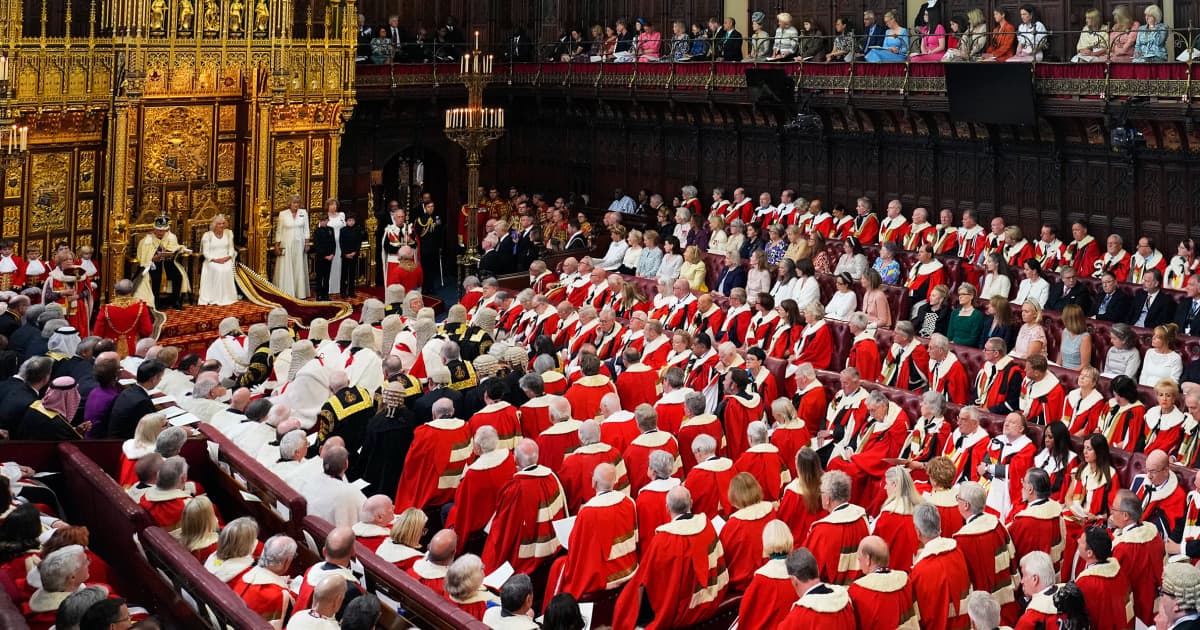
Parliament Ejects Hereditary Nobles From House of Lords After 700 Years
Key Takeaways
- Members voted to remove hereditary aristocrats from the unelected upper chamber
- Measure ends roughly 700 years of hereditary parliamentary seats within weeks
- Peers dropped objections to Commons-passed legislation ousting dozens of dukes, earls, viscounts
Vote ends hereditary seats
Parliament voted to remove the remaining hereditary peers from the unelected House of Lords, ending a centuries-old tradition within weeks after members of the upper chamber dropped objections to legislation passed by the House of Commons.
“Lords a-leaving: Britain is ejecting hereditary nobles from Parliament after 700 years Lords a-leaving: Britain is ejecting hereditary nobles from Parliament after 700 years LONDON (AP) — Centuries of British political tradition will end within weeks after Parliament voted to remove hereditary aristocrats from the unelected House of Lords”
The bill will become law once King Charles III grants royal assent, a formality, and the hereditary peers are set to leave at the end of the current parliamentary session this spring.
The change completes a political process begun 25 years earlier when most hereditary peers were evicted in 1999, and marks the imminent removal of dozens of dukes, earls and viscounts who inherited seats.
Government rationale and debate
Government ministers framed the change as correcting an 'archaic and undemocratic principle,' with minister Nick Thomas-Symonds saying the reform ends a system where titles handed out centuries ago could ‘hold power over the will of the people.’
Proponents argued the Lords should be a place where talent and merit matter rather than inherited privilege, and Labour said the move advances an eventual plan to replace the House of Lords with a more representative second chamber.
Critics, however, warned the changes were negotiated and would allow some hereditary peers to remain through compromise.
Role, size, controversies
The upper chamber’s defenders and critics both pointed to the Lords’ prominent but controversial role: it scrutinizes Commons legislation but has grown unwieldy, with more than 800 members making it the world’s second-largest legislative chamber after China’s National People's Congress.
“Lords a-leaving: Britain is ejecting hereditary nobles from Parliament after 700 years Lords a-leaving: Britain is ejecting hereditary nobles from Parliament after 700 years LONDON (AP) — Centuries of British political tradition will end within weeks after Parliament voted to remove hereditary aristocrats from the unelected House of Lords”
The Lords’ composition has shifted over time from mostly hereditary aristocrats to a majority of life peers appointed for service, but roughly one in 10 members remained hereditary until this vote.
High-profile scandals, such as the resignation from the Lords of Peter Mandelson after revelations about his friendship with Jeffrey Epstein, intensified scrutiny of behaviour and appointments in the chamber.
Compromise and future reform
The Lords resisted the measure and forced a compromise that allows an undisclosed number of hereditary members to be 'recycled' into life peers, sparing some from immediate removal.
Opposition leader in the Lords Nicholas True acknowledged the long service of hereditary peers while Labour said the reform is only a step toward slower, broader change; past reform efforts suggest further changes to the chamber will be gradual.
Parliament expects the departure of many hereditary peers this spring, but the overall shape and timing of a fully reformed second chamber remain uncertain.
More on Britain

DoJ Releases Photos of Former Prince Andrew, Peter Mandelson in Bathrobes With Jeffrey Epstein
13 sources compared
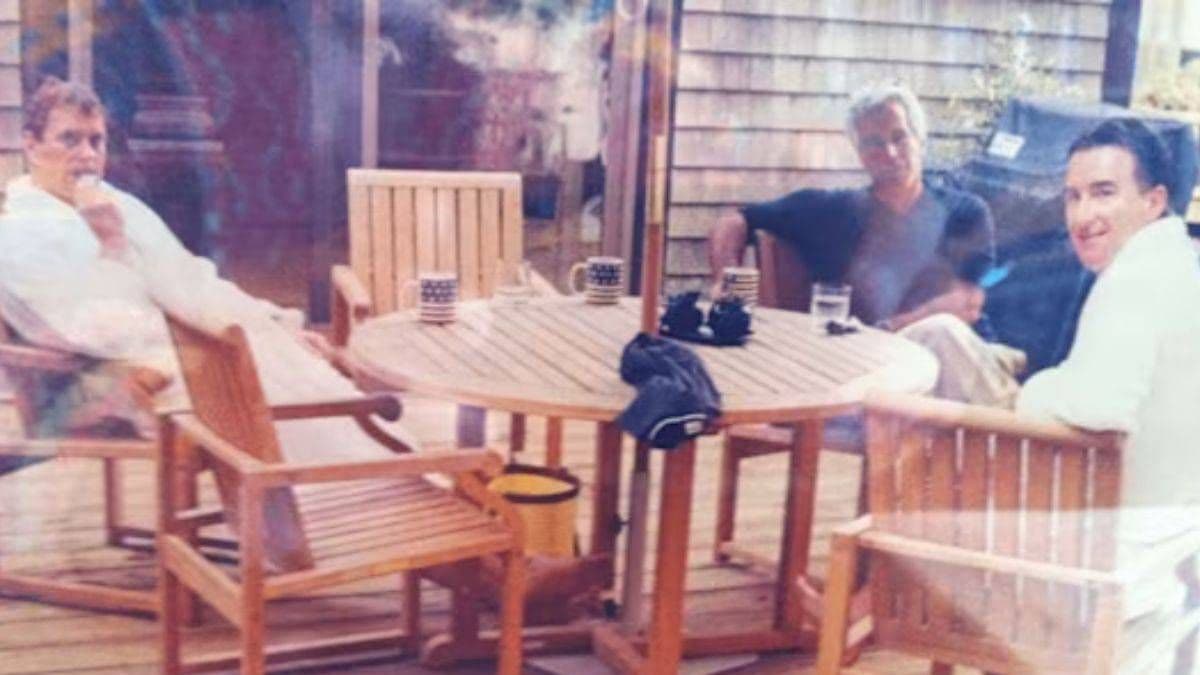
DOJ Releases First Known Photo Showing Andrew Mountbatten-Windsor and Peter Mandelson With Jeffrey Epstein
17 sources compared

Jonathan Powell Warned Prime Minister Keir Starmer About Mandelson’s Ties To Jeffrey Epstein, Documents Show
16 sources compared

Prime Minister Keir Starmer Ignored Warnings and Appointed Epstein Pal Peter Mandelson as U.S. Ambassador
50 sources compared