Pentagon Seeks $200 Billion for Iran War, Awaiting Congressional Approval
Key Takeaways
- Pentagon seeks about $200 billion in additional funding for the Iran war.
- Congress must approve any new funding for the Iran war.
- Funds would cover operations and replenish U.S. weapons stockpiles.
Pentagon Funding Request
The Pentagon has submitted a request for $200 billion in additional funding to sustain the ongoing war with Iran.
This marks a massive financial escalation for Operation Epic Fury as it enters its third week of combat operations.

Defense Secretary Pete Hegseth confirmed the request during a Pentagon press briefing.
Hegseth bluntly stated 'It takes money to kill bad guys' while acknowledging the figure 'could move' depending on evolving needs.
The funding would cover replenishment of depleted weapons stockpiles, continued military operations, and preparation for future deployments.
Senior officials noted that U.S. forces have already struck over 7,000 targets across Iran and its military infrastructure.
The military has used overwhelming force including 5,000-pound bunker-buster bombs against underground storage facilities.
Budget Context
The $200 billion request comes against a backdrop of staggering budgetary context and mounting congressional scrutiny.
The Pentagon's annual budget already exceeds $800 billion for fiscal year 2026.

An additional $150 billion was allocated through last year's tax cuts bill.
The administration is seeking another massive supplemental funding package on top of these existing allocations.
The Congressional Budget Office projects a $1.9 trillion annual deficit this year.
This deficit figure doesn't account for any war-related spending.
The Pentagon has acknowledged the Iran conflict is costing at least $1 billion per day in direct operational costs.
This unprecedented spending level has drawn immediate attention from lawmakers across the political spectrum.
Congressional Response
Congressional reaction to the $200 billion funding request reveals deep partisan divisions.
“Pentagon seeks $200 billion in additional funds for the Iran war, AP source says Pentagon seeks $200 billion in additional funds for the Iran war, AP source says WASHINGTON (AP) — The Pentagon is seeking $200 billion in additional funds for the Iran war, a sizable amount that is certain to be met with questions from Congress, which would need to approve any new money”
Significant procedural hurdles exist for passage of this massive spending package.
Some Republican defense hawks like Rep. Ken Calvert argue the funding is essential for national security.
Calvert stated it's 'important that we get this done' despite peripheral concerns.
Many lawmakers express serious concerns about the staggering cost.
There's also concern about the lack of congressional authorization for the conflict.
Democrats have been particularly vocal in their opposition.
Rep. Betty McCollum declared 'This is not going to be a rubber stamp for the president of the United States'.
She's demanding more details about how the funds would be used.
Rep. Rosa DeLauro called the $200 billion price tag 'outrageous'.
Congress is still waiting for explanations about previously allocated defense spending.
Approval Path Uncertain
The path to congressional approval for the $200 billion war funding remains highly uncertain.
This uncertainty stems from procedural challenges and political calculations.
The Senate likely requires 60 votes to overcome a filibuster.
The House operates with a narrow Republican majority.
Republican leaders face difficult choices in how to proceed.
They could attempt to push the package through on party-line votes.
This would likely use the budget reconciliation process.
Some Republicans remain wary of pursuing another reconciliation bill.
Alternatively, they could negotiate a bipartisan deal with Democrats.
Such a deal would likely include Democratic priorities and increase overall costs.
House Speaker Mike Johnson called it a 'dangerous time' and said the country must 'adequately fund defense.'
House Majority Leader Steve Scalise acknowledged negotiations ahead on the exact amount.
Trump's Defense Position
President Trump has sought to frame the massive war funding request as necessary for maintaining U.S. military superiority.
“We have a clear set of objectives," he concluded”
He dismissed the $200 billion figure as 'a small price to pay' to ensure America 'stays on top.'

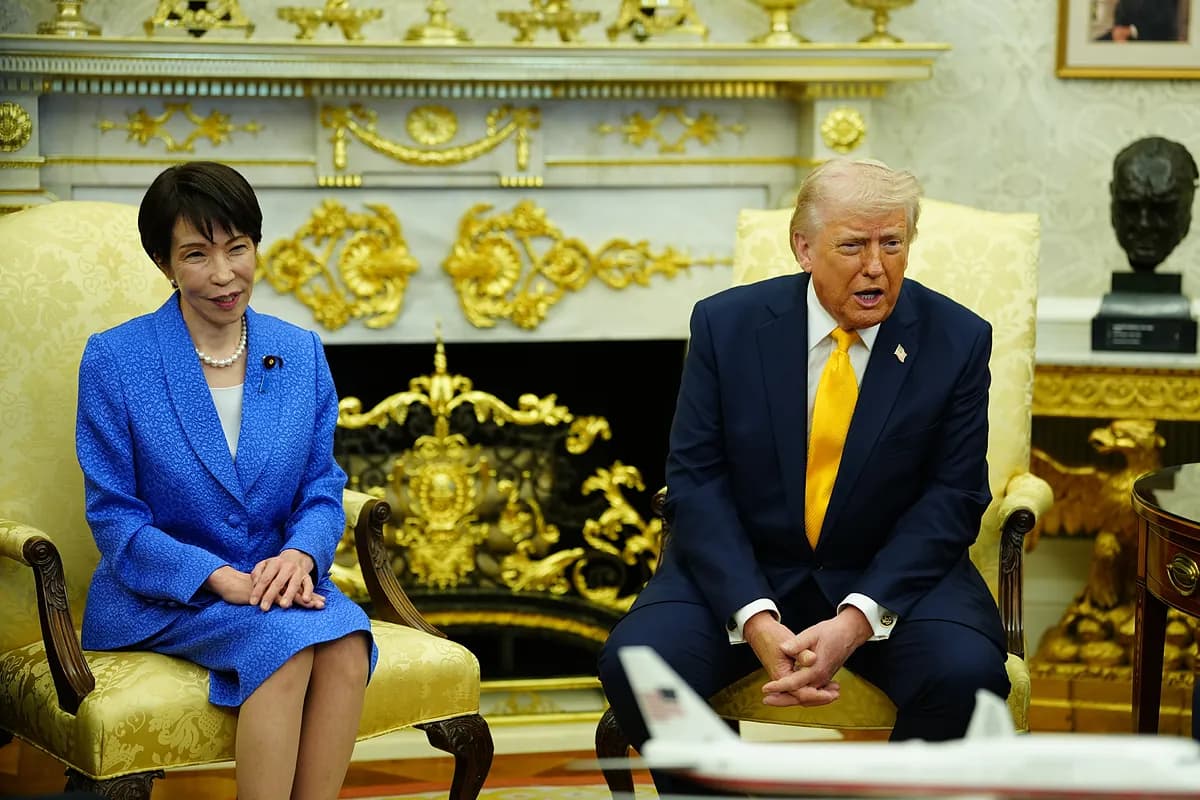
Trump spoke at an Oval Office briefing alongside Japanese Prime Minister.
He highlighted the success of U.S. defensive systems in intercepting Iranian rockets.
Trump stated: 'We have the most powerful army in the world... The other night, they launched 114 rockets at a specific location, high-tech rockets... every single one of them was intercepted with our equipment.'
However, the administration's approach has created tensions with allies.
Allies are suffering deep impacts on their energy facilities due to the conflict.
Trump is pressuring them to join an international initiative to secure the Strait of Hormuz.
He uses a combination of diplomatic pressure and public criticism.
Trump has toned down his somewhat confrontational rhetoric with allies in recent days.
More on Iran

Israel Attacks Iran's South Pars Gas Field, Sparks Regional Escalation
10 sources compared

Iran Hits Bazan Refineries in Haifa Bay with Missiles, Triggers Hazard Assessment
14 sources compared

Iran Attacks Gulf Energy Facilities After South Pars Gas Field Strike
16 sources compared

Trump jokes about Pearl Harbor during Oval Office meeting with Japan's Prime Minister Sanae Takaichi
36 sources compared