
USA · 03 May, 2026 · 7 min read
Pentagon Withdraws About 5,000 U.S. Troops From Germany After Trump Threat
Pentagon to withdraw about 5,000 U.S. troops from Germany within 6–12 months. Trump later said the withdrawal would be a lot further than 5,000 troops.
The Pentagon’s rationale for withdrawal (posture review vs. implied punishment/strategy).
10 of 11 outlets skipped it: DW links the issue to a broader challenge for European defense and quotes a military analyst on the capability gap Germany can’t fill quickly..
15outlets compared
Same story, two versions
tap a side to read it in full
Al Jazeera
“Merz said on Sunday that US plans to withdraw troops have “no connection” to the rift with President Donald Trump over his strategy in Iran.”Read the original ↗
BBC
“Washington's move comes after Trump criticised German Chancellor Friedrich Merz for saying the US had been “humiliated” by Iranian negotiators in the ongoing war.”Read the original ↗
This affects interpretation of causality: Al Jazeera reports Merz denying linkage, while BBC frames the drawdown as following the Iran-spat-triggered controversy.
Troop pullout escalates
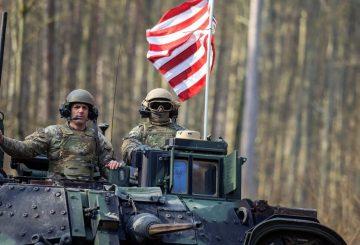
The United States will withdraw about 5,000 troops from Germany in the next six to 12 months, the Pentagon said Friday, fulfilling President Donald Trump’s threat as he clashes with Chancellor Friedrich Merz over the U.S. war with Iran.
“The United States will withdraw about 5,000 troops from Germany in the next six to 12 months”
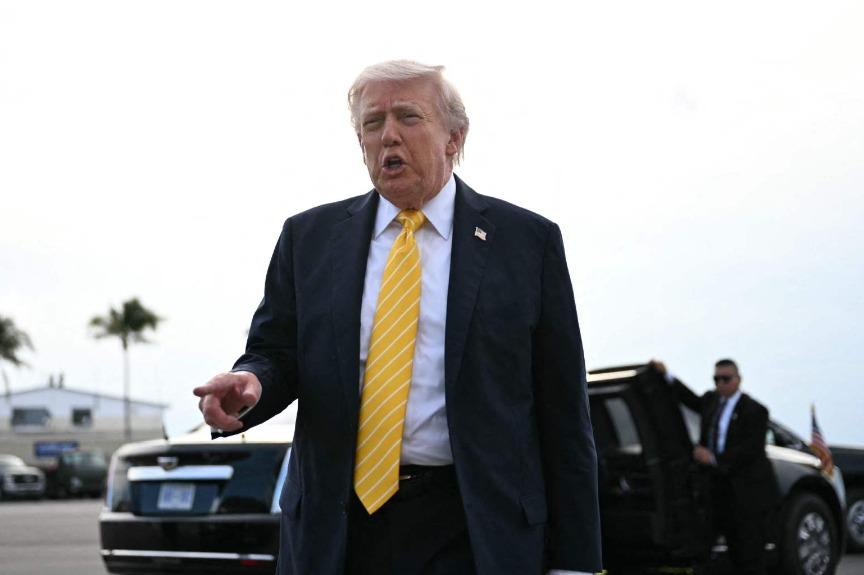
Trump told reporters in Florida, “We’re going to cut way down, and we’re cutting a lot further than 5,000,” escalating the dispute after the initial announcement.

The Pentagon said the decision followed “a thorough review of the Department’s force posture in Europe and is in recognition of theater requirements and conditions on the ground,” with Pentagon spokesman Sean Parnell repeating that expectation to NPR: “We expect the withdrawal to be completed over the next six to twelve months.”
Germany’s Defense Minister Boris Pistorius said the drawdown was “foreseeable,” and stressed, “The presence of American soldiers in Europe, and especially in Germany, is in our interest and in the interest of the US.”
Multiple outlets put the remaining U.S. presence in Germany at roughly 30,000 troops after the first cut, with the BBC reporting “30,000 US troops still in the country” and NPR saying the withdrawal would leave “more than 30,000 U.S. troops in Germany.”B
The Times of Israel, citing the Pentagon’s earlier figure, described the 5,000 as about “one-seventh of the 36,000 American service members stationed in the country,” while PBS reported the departing number would be “14% of the 36,000 American service members stationed there.”
Iran spat and NATO friction
The troop decision is tied to a broader dispute between Washington and European allies over the war in Iran, with Merz’s comments to students acting as a spark.
Al Jazeera said “Trouble started last Monday” when Merz appeared to criticise Trump’s actions in Iran, where “the US and Israel started a war without consulting Washington’s NATO allies,” and Merz warned that Washington did not have a clear path out of the conflict.A
Merz’s language was repeated across outlets, including the BBC’s account that he said “the Iranians are obviously very skilled at negotiating, or rather, very skillful at not negotiating, letting the Americans travel to Islamabad and then leave again without any result.”B
The Guardian added that Merz said “An entire nation is being humiliated by the Iranian leadership,” and NBC News described the same dispute as capping “weeks of President Donald Trump’s frustration” over European allies not doing enough for the Iran crisis.
Trump responded by scolding Merz and threatening to withdraw American soldiers, with Al Jazeera reporting Trump said the German leader “doesn’t know what he is talking about” and threatening to withdraw American soldiers.A
The Pentagon’s stated rationale, however, remained focused on force posture and conditions on the ground, with the Pentagon spokesperson Sean Parnell saying the decision followed “a thorough review of the Department’s force posture in Europe.”
Even as the Pentagon emphasized theater requirements, the dispute widened into NATO politics, with NATO spokesperson Allison Hart posting on X that the alliance was “working with the US to understand the details of their decision.”
Officials, lawmakers, and critics
German officials sought to project calm while insisting the relationship with the U.S. remained beneficial.
““The presence of American troops in Europe, and particularly in Germany, lies in our interest and in the interest of the US,””
Pistorius told dpa, “The presence of American soldiers in Europe, and especially in Germany, is in our interest and in the interest of the US,” and NPR reported he added that Germany must strengthen the European pillar within NATO.
At the same time, Pistorius told the DPA news agency that the decision was “anticipated,” and DW quoted him saying the announced withdrawal “was to be expected.”
In Washington, bipartisan resistance emerged from congressional leaders, with the BBC reporting that “Roger Wicker and Mike Rogers” said they were “very concerned by the decision to withdraw a US brigade from Germany.”B
The Guardian quoted their joint statement that “Prematurely reducing America's forward presence in Europe before those capabilities are fully realised risks undermining deterrence and sending the wrong signal to Vladimir Putin.”
Democrats also criticized the move, with PBS quoting Sen. Jack Reed saying the withdrawal “suggests American commitments to our allies are dependent on the president's mood,” and saying the president should “immediately cease this reckless action before he causes irreversible consequences for our alliances and long-term national security.”
A Republican lawmaker, Clay Higgins, appeared to support the administration’s move while mocking Congress, saying on X, “Pulling 5K American troops from the arrogant Germans. Maybe we should send them the Senate.”
The dispute also drew warnings from NATO-adjacent political figures, with NBC News quoting Polish Prime Minister Donald Tusk: “The greatest threat to the transatlantic community are not its external enemies, but the ongoing disintegration of our alliance.”
Different frames across outlets
Coverage diverged on how to interpret the same troop cut, with some outlets emphasizing deterrence and alliance cohesion while others foregrounded the president’s leverage and the possibility of further reductions.
The BBC and Guardian both centered the argument that withdrawing forces could “send the wrong signal to Vladimir Putin,” with the BBC quoting Wicker and Rogers warning that “Prematurely reducing America's forward presence in Europe” risks undermining deterrence.
NBC News similarly framed the move as part of a “disastrous trend,” quoting Tusk’s warning about “the ongoing disintegration of our alliance,” and it also included a BBC interview in which Keir Starmer said Europe was “not strong enough,” and “it falls on us as leaders to step up into that space.”B
By contrast, Time Magazine and CNBC highlighted the president’s own language about cutting “a lot further than 5,000,” with Time quoting Trump: “We’re going to cut way down,” and CNBC repeating “We’re going to cut way down. And we’re cutting a lot further than 5,000.”
Al Jazeera and DW placed the dispute in a wider political context, with Al Jazeera describing the “rift with President Donald Trump” and DW reporting that the blog roundup included analysis from a “military analyst at King's College London” who said there was “no way that Germany and other European countries which will be affected by this withdrawal” could fill the gap quickly.A
The Times of Israel and PBS both stressed the Pentagon’s process and the lack of details, with PBS noting the Pentagon offered few details about which troops or operations would be affected and quoting Pentagon spokesman Sean Parnell’s review language.
Meanwhile, the Italian-language AGI report framed the same developments as Trump telling allies they had “Non ci avete aiutato” and as “possibile ritiro truppe da Italia, Spagna e Germania,” linking the troop issue to European non-cooperation in Middle East operations.
Across these accounts, the shared factual core remained the 5,000 figure, the six to 12 month timeline, and Trump’s Florida remarks, but the emphasis shifted between alliance deterrence, presidential escalation, and broader European defense capacity.
What comes next
The next phase of the dispute centers on whether additional troop reductions will follow and how NATO and European governments will respond.
““And we’re cutting a lot further than 5,000.””
Trump’s Saturday remarks left open the possibility of cuts beyond the initial 5,000, with Time Magazine reporting he said “And we’re cutting a lot further than 5,000,” and Al Jazeera describing that he tried to downplay tensions while insisting the U.S. withdrawal had “no connection” to the rift with President Donald Trump over Iran strategy.A

The Pentagon’s timeline remains the same across outlets, with NPR quoting Sean Parnell: “We expect the withdrawal to be completed over the next six to twelve months,” and PBS stating the withdrawal would occur “in the next six to 12 months.”
NATO’s response has been to seek clarification, with NATO spokeswoman Allison Hart posting on X that the alliance is “working with the US to understand the details of their decision,” and the Times of Israel quoting Hart saying the alliance was “working with the US tounderstandthe details of their decision on force posture in Germany.”
European leaders and lawmakers tied the troop drawdown to defense spending and deterrence, with the Guardian quoting Wicker and Rogers that “Rather than withdrawing forces from the continent altogether, it is in America's interest to maintain a strong deterrent in Europe by moving these 5,000 U.S. forces to the east.”
The stakes also include the possibility of weapons and readiness delays, with Time Magazine reporting that the Pentagon told NATO allies across Europe to expect weapons delays as the U.S. works to replenish its own stockpiles used during the Iran war.
PBS added that the withdrawal would reverse a buildup that began under President Biden after Russia’s full-scale invasion of Ukraine in 2022, while DW warned that the German military “cannot fill this gap very quickly, even if money is invested.”
In parallel, the dispute could extend beyond Germany, with the Times of Israel describing Trump’s tariff escalation and with Time Magazine noting Trump threatened that “he would ‘probably’ pull back troops from Spain and Italy too,” while AGI reported “possibile disimpegno militare” and “probabile” withdrawal from Italy and Spain.