Petersen Automotive Museum Announces Fast & Furious 25th Anniversary Exhibit of Screen-Used Cars
Key Takeaways
- Petersen Automotive Museum is hosting a 25th anniversary Fast & Furious exhibit
- Exhibit displays authentic screen-used vehicles and production prototypes from the films
- Exhibit highlights the franchise’s influence on modern tuner and car culture
Exhibit announcement
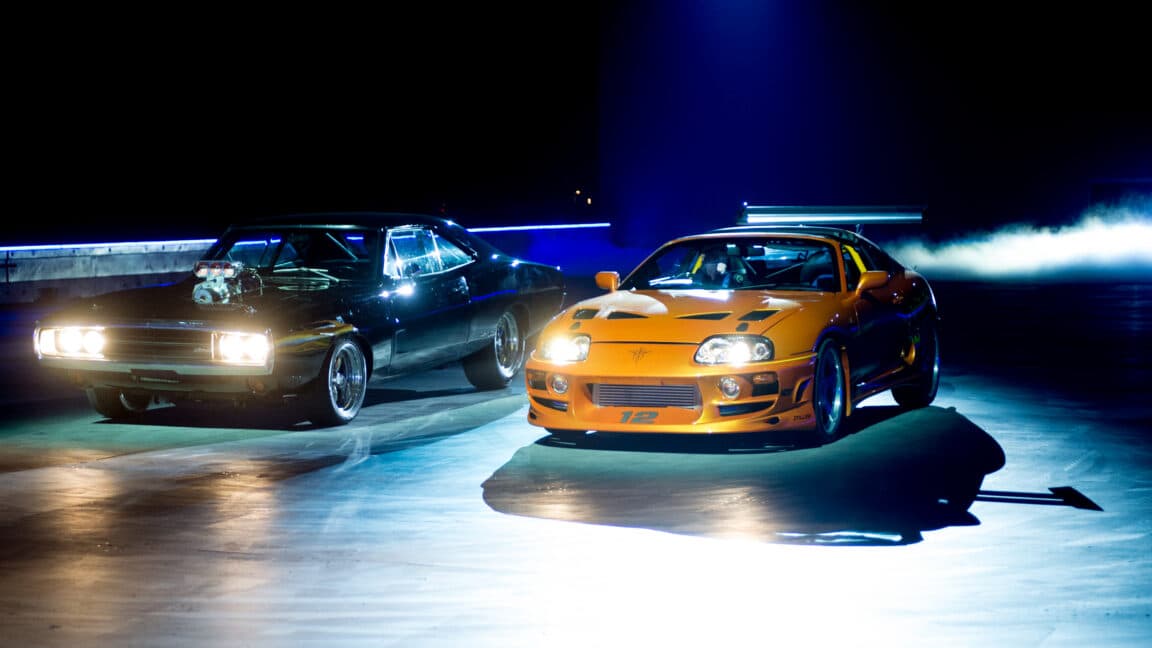
The Petersen Automotive Museum in Los Angeles has announced a major exhibit titled “A Fast & Furious Legacy: 25 Years of Automotive Icons,” presenting a curated, large-scale celebration of the Fast & Furious franchise and its cars.
“The Fast and Furious franchise has come a long way in the quarter-century since the first film’s release”
The museum is dedicating two of its premier spaces—the Propulsion Gallery and the Ross and Beth Myers Galleries—to the exhibition, which the museum developed in collaboration with Universal Pictures.
The announcement frames the event as an “ultimate tribute” that brings screen-used vehicles and production prototypes together to trace the franchise’s evolution and influence on car culture.
Featured vehicles
The exhibit assembles an unusually comprehensive roster of screen-used hero cars and stunt machines, headlined by high-profile pieces such as the Candy Orange 1993 Toyota Supra associated with Paul Walker’s Brian O’Conner, the acid‑green 1995 Mitsubishi Eclipse, Vin Diesel’s 1968 Dodge Charger R/T and other franchise staples like the 1993 Mazda RX‑7, Michelle Rodriguez’s 1997 Nissan 240SX, and Devon Aoki’s pink 2001 Honda S2000.
Organizers and reporting emphasize that many of the vehicles are authentic, screen-used examples—some labeled as specific stunt units—and that the assembly is one of the most complete publicly displayed collections of Fast & Furious cars.
Curatorial approach
Curators and reporters stress that the display intentionally juxtaposes hero cars—detailed, camera-ready “hero” builds—with reinforced stunt vehicles to illuminate how the films were made.
“HOME ABOUT SUBMIT ADVERTISE CONTACT Photos courtesy of Petersen Automotive Museum Table of Contents Show 1”
The Petersen’s curatorial team noted the research challenge of sourcing film cars and the varied ownership histories behind them; many cars are owned by private collectors who buy, restore, and maintain these well-known machines.
Presenting hero and stunt cars side-by-side is framed as an educational choice to give visitors insight into both the glamour and the practical, hard-won production work that created the franchise’s most memorable sequences.
Cultural impact
Reporting on the exhibit highlights the franchise’s outsized cultural impact: journalists and the museum describe Fast & Furious as a major driver of modern tuner culture that introduced turbocharged imports, NOS effects, and visual styling to mainstream audiences,
and the cars themselves are said to be “nearly as famous as the human stars.”
The exhibit is presented as both a fan celebration and a retrospective on how a 2001 film helped reshape enthusiast communities, aftermarket demand, and the global visibility of import tuning.
Visitor experience
Museum staff and curators position the exhibit as a significant institutional moment and a rare public chance to see those cars curated together;
“# Petersen Automotive Museum Announces Epic 'Fast & Furious' 25th Anniversary Exhibit ## Celebrating 25 years of the iconic film franchise with a display of authentic screen-used vehicles and production prototypes”
the Petersen’s executive leadership described the show as years in the making and a defining museum moment, while curators emphasized the research and sourcing work behind assembling privately owned film cars.
For visitors and collectors alike, the exhibit is framed as a unique opportunity to see restored, screen-used hero and stunt cars that otherwise circulate among private owners and enthusiast communities.
More on Entertainment

FBI Investigates Hacker Who Uploaded Malware-Laced Games to Steam
12 sources compared

Netflix Confirms KPop Demon Hunters Sequel With Directors Maggie Kang, Chris Appelhans Returning
12 sources compared

SNL Mocks Kristi Noem's Firing With 'I Self-Deported' Cold Open
69 sources compared

Concord Police Arrest Elijah Blue Allman at St. Paul's School on Assault and Trespass Charges
17 sources compared