Pope Leo XIV Condemns Trump Administration as “Handful of Tyrants” During Africa Tour
Key Takeaways
- Pope Leo XIV denounced a handful of tyrants spending billions on wars.
- Remarks occurred during Africa tour, including Algeria and Cameroon, in transit aboard plane.
- He urged peace and dialogue, condemning manipulation of religion for military gain.
Pope Leo vs Trump
Pope Leo XIV escalated his public feud with the Trump administration during his Africa tour, using remarks in Cameroon to condemn leaders who invoke religion to justify violence and to denounce what he called “a handful of tyrants.”
In Bamenda, Pope Leo told a gathering at Saint Joseph Cathedral that “Woe to those who manipulate religion and the very name of God for their own military, economic and political gain, dragging that which is sacred into darkness and filth,” and he added that “The world is being ravaged by a handful of tyrants, yet it is held together by a multitude of supportive brothers and sisters.”

The comments came as the pope’s standoff with the White House over the US-Israel war on Iran intensified, with the Guardian describing the remarks as “another sharp escalation” in an “almost week-long feud with the White House.”
The BBC reported that Pope Leo criticised leaders who “turn a blind eye to the fact that billions of dollars are spent on killing and devastation, yet the resources needed for healing, education and restoration are nowhere to be found.”
The dispute has been driven by the pope’s repeated calls for peace and his direct challenge to the idea that God endorses war, including his earlier line that “He does not listen to the prayers of those who wage war, but rejects them.”
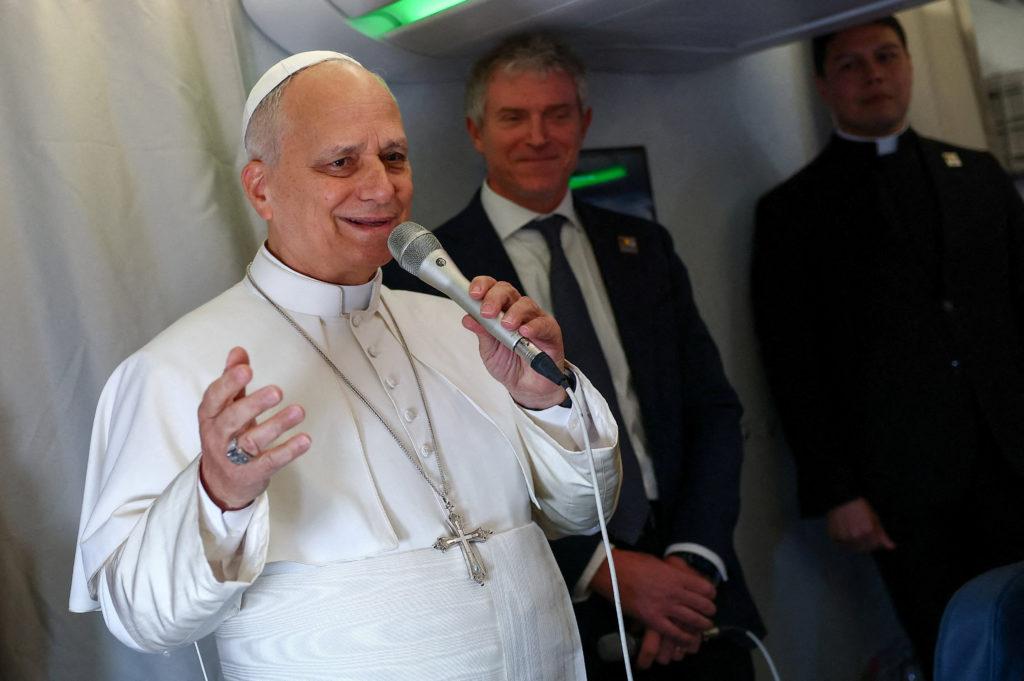
CNN framed the pope’s approach as a decision to “call out the Trump administration” after Donald Trump’s “extraordinary overnight social media tirade against him,” with Pope Leo telling reporters on the papal plane that “I do not think the message of the Gospel should be abused, as some are doing.”
The confrontation has also been shaped by the pope’s insistence that he does not fear the administration, with the Guardian quoting him saying, “I do not see my role as that of a politician. I am not a politician and I do not want to enter a debate with him.”
Escalation timeline
The standoff has unfolded across a sequence of public statements and social-media clashes, with the pope’s Africa travel repeatedly intersecting with Trump’s attacks over the war in Iran.
CNN described how Pope Leo, “Flying to Algeria at the start of his landmark Africa tour on Monday,” faced a choice to ignore Trump’s “extraordinary overnight social media tirade against him” or respond directly, and it said he chose the second option by calling out the Trump administration.
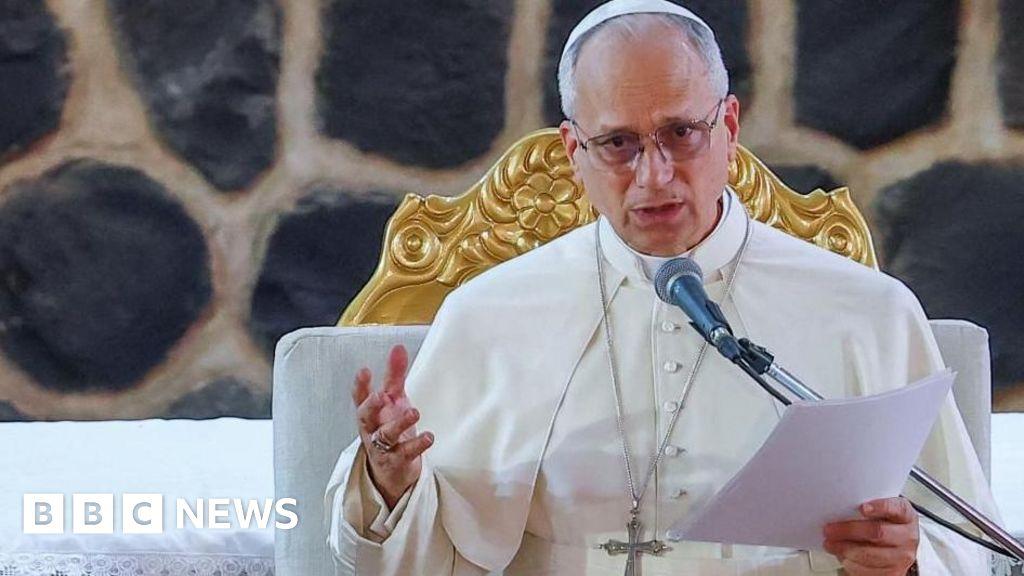
The Guardian reported that Trump’s attacks came after the pope spoke out against the Iran war, and it noted that the pope’s comments in Cameroon were delivered “on Thursday” during an 11-day tour of Africa.
The BBC said the pope’s remarks came “just days after a high-profile spat with US President Donald Trump,” in which Trump posted a lengthy attack on the pope and portrayed himself as a Jesus-like figure.
The Hill and NPR both tied the escalation to the pope’s criticism of war and his assertion that God does not bless those who drop bombs, with the Hill reporting that Trump’s comments began after the pope “asserted that God doesn’t bless those who drop bombs.”
NPR added that the “recent back and forth started with Leo's calling for peace in response to the war in Iran,” and it described how it continued with Leo warning of the “delusion of omnipotence” and writing that “God does not bless any conflict.”
The BBC also anchored the conflict in the pope’s earlier remarks about the US-Israeli attacks on Iran, including the pope’s Palm Sunday statement in St Peter’s Square that “This is our God: Jesus, king of peace, who rejects war, whom no one can use to justify war.”
In the same BBC account, Trump’s response included a threat framing, with the BBC quoting Trump saying it was important the pope understand that Iran was a “threat to the world,” especially if it gained a nuclear weapon.
PBS, quoting Associated Press reporting, described how Pope Leo “doubled down” as Trump’s criticism showed no sign of letting up, insisting that the message “the world needs to hear today” is one of peace and dialogue.
Voices on both sides
The dispute has featured direct statements from Pope Leo XIV, Donald Trump, and US Catholic leadership, alongside support from other Christian figures and commentary from academics.
“Flying to Algeria at the start of his landmark Africa tour on Monday, Pope Leo had a choice”
Pope Leo told reporters aboard the papal plane that “I do not fear the administration and would continue to speak strongly against war,” and he added, “too many innocent lives have been lost… I believe someone must stand up and say there is a better way.”
The Guardian reported that Pope Leo also said, “I do not see my role as that of a politician. I am not a politician and I do not want to enter a debate with him,” while PBS described him “doubled down” on the message “the world needs to hear today” as peace and dialogue.
Trump’s public attacks included describing the pope as “WEAK on Crime and terrible for Foreign Policy,” and the BBC quoted Trump saying, “The Pope can say what he wants - and I can disagree,” outside the White House.
The BBC also reported that Trump had posted a Jesus-like image and that he wrote, “Leo should get his act together as Pope,” while the Hill described Trump’s accusations that the pope was “weak on crime and a captive to the left.”
Vice President JD Vance, a converted Catholic, weighed in by telling a Turning Point USA event at the University of Georgia that “When the pope says that God is never on the side of people who wield the sword, there is more than a 1,000-year tradition of just war theory,” and the Guardian quoted the US bishops’ response that Vance had mis-stated Leo’s position.
In the Guardian’s account of the bishops’ statement, James Massa said, “For over a thousand years, the Catholic Church has taught just war theory,” and he added that “He does not listen to the prayers of those who wage war.”
The Archbishop of Canterbury, Sarah Mullally, publicly backed Pope Leo, with USA Today quoting her saying, “I stand with my brother in Christ, His Holiness Pope XIV, in his courageous call for a kingdom of peace,” and the BBC reported she said she stood with him in his “courageous call for a kingdom of peace.”
NPR brought in a university voice, quoting Christopher White of Georgetown University saying Trump’s attack was “clearly meant to intimidate the pope,” while adding that “the pope's response shows he is undeterred by the president's broadside.”
How US coverage diverges
US outlets and international outlets framed the same feud through different lenses, with some emphasizing theology and war ethics while others highlighted political fallout among Catholic voters and the mechanics of Trump’s social-media provocations.
The Guardian foregrounded the pope’s escalation in Cameroon and tied it directly to the US-Israel war on Iran, writing that the comments would be seen as “another sharp escalation” in the feud and noting that the pope “did not mention Donald Trump by name.”

CNN, by contrast, emphasized the pope’s personal decision-making and the unusual directness of his response, describing how he “decided to name Trump personally” and how his remarks appeared to “allude to US Defense Secretary Pete Hegseth’s eagerness to frame the conflict in the Middle East in religious terms.”
The BBC highlighted both the pope’s message and the political context of Trump’s attacks, saying the pope’s remarks came “just days after a high-profile spat” and quoting Trump’s earlier Truth Social line that “a whole civilisation will die” if Iran did not agree to US demands.
The Hill and NPR leaned into domestic electoral implications, with the Hill reporting a poll showing Trump’s approval rating among Catholic voters dropped to 48% with 52% disapproving, and NPR describing the exchange as “unparalleled in modern history” and focusing on how Trump’s insults were “without precedent.”
USA Today framed the pope’s remarks around the word “Tyrants,” quoting Pope Leo’s line “The world is being ravaged by a handful of tyrants” and placing it alongside Trump’s posts on April 12 and April 14, including “WEAK on Crime” and a defense of his war in Iran.
The New York Times treated the standoff as a direct confrontation over the legitimacy of American attacks in Iran, describing the pope’s speech as “woe to those who manipulate religion” and noting that the pope’s words seemed “as directed at the Trump administration as they were at separatist leaders.”
PBS and CNN both described the pope’s insistence on peace and dialogue, but PBS, quoting Associated Press, stressed that he “made no mention of Trump's latest social media post” and that he “took no questions,” while CNN stressed that he “chose the second option” by addressing Trump’s tirade head-on.
Even when discussing the same religious language, the outlets differed in emphasis: the Guardian and BBC centered the “just war theory” debate, while the Hill and NPR centered the political consequences for Catholic voters and public perception.
Stakes and next steps
The stakes of the feud extend beyond rhetoric, with the sources describing potential shifts in Catholic political support, institutional responses from bishops, and even administrative actions affecting Catholic charities.
“Nicole Winfield, Associated PressNicole Winfield, Associated Press Leave your feedback ABOARD THE PAPAL PLANE (AP) — Pope Leo XIV on Wednesday doubled down as President Donald Trump's criticism showed no sign of letting up, insisting that the message "the world needs to hear today" is one of peace and dialogue”
The Hill reported that a poll found Trump’s approval rating among Catholic voters dropped to 48%, with 52% expressing disapproval, and it said Trump’s attacks on Leo began after the pope amplified criticism of war and asserted that God doesn’t bless those who drop bombs.
NPR quoted Christopher White of Georgetown University saying Trump’s attack was “clearly meant to intimidate the pope,” and it added that “the pope's response shows he is undeterred by the president's broadside and won't be distracted from his efforts to push for peace.”
The Guardian described the US Conference of Catholic Bishops offering “full-throated support” to the head of the Catholic church, and it included a statement attributed to James Massa that “A constant tenet of that thousand-year tradition is a nation can only legitimately take up the sword ‘in self-defense, once all peace efforts have failed’.”
In the same Guardian account, the bishops said Vance had mis-stated Leo’s position and quoted the pope’s line: “He does not listen to the prayers of those who wage war.”
CNN and PBS both emphasized that Pope Leo would continue speaking against war, with CNN quoting him saying, “I do not think the message of the Gospel should be abused, as some are doing,” and PBS describing him insisting the message “the world needs to hear today” is one of peace and dialogue.
The Guardian also introduced a separate development involving the Miami Herald, saying the Trump administration was ending funding for a Catholic church-based charity in the city that shelters immigrant children, with Catholic Charities of the Archdiocese of Miami saying the White House pulled a longstanding $11m contract from the Office of Refugee Resettlement (ORR).
The Guardian quoted Thomas Wenski saying, “The US government has abruptly decided to end more than 60 years of relationship … and [the services] will be forced to shut down within three months,” and it reported that Emily Hilliard said the average daily population of unaccompanied migrant children during Trump’s second term was about 1,900 and “significantly lower” than it was under the previous term.
Even outside the US, the BBC described the war in Iran as increasingly placing the pope and the Trump administration at odds, and it quoted the pope’s Palm Sunday warning that Jesus “rejects war, whom no one can use to justify war.”
Taken together, the sources portray a conflict in which Pope Leo’s peace messaging, Trump’s social-media attacks, and institutional Catholic responses are all moving in parallel, with no sign in the reporting that either side is stepping back.
More on USA

Acting ICE Director Todd Lyons Resigns After DHS Secretary Markwayne Mullin Sets May 31 Exit
13 sources compared
Hennepin County Prosecutors Charge ICE Officer Gregory Donnell Morgan Jr. With Felony Assault
24 sources compared
Analilia Mejia Defeats Joe Hathaway in New Jersey 11th District Special Election
16 sources compared

Homeland Security Secretary Markwayne Mullin Announces Acting ICE Director Todd Lyons Resignation May 31
13 sources compared