Africa16 April, 20267 min read
Pope Leo XIV Condemns Tyrants, Warns Against Using Religion To Justify Violence In Bamenda
Pope condemns rulers who manipulate religion for military or political gain. The people suffer wars ordered by the powerful; religion must not justify conflict.

Pope’s Africa message
Pope Leo XIV used his Africa trip to condemn global leaders he described as “ravaging the world” and to denounce the use of religion to justify violence, speaking in Cameroon’s Bamenda during a “Meeting of Peace” at Saint Joseph Cathedral. In remarks reported by NPR, he said, “The world is being ravaged by a handful of tyrants,” and he framed the conflict as both spiritual and political, adding that the “masters of war pretend not to know that it takes only a moment to destroy, yet often a lifetime is not enough to rebuild.” The Washington Post described the pope’s appeal for peace and his condemnation of “a handful of tyrants” during a speech on Thursday during a trip to four countries in Africa.
The Guardian likewise reported that Leo told a gathering at Saint Joseph Cathedral in Bamenda, “Woe to those who manipulate religion and the very name of God for their own military, economic and political gain, dragging that which is sacred into darkness and filth.” In the same speech, the pope also said, “The world is being ravaged by a handful of tyrants, yet it is held together by a multitude of supportive brothers and sisters,” a line echoed across multiple outlets.

PBS reported that Leo traveled to the western Cameroon city of Bamenda and preached the message of peace in the “epicenter of a separatist conflict,” while also warning against allowing religion to enter conflicts. Across the coverage, the pope’s remarks were tied to his broader standoff with Washington over the war in Iran, with NPR saying the comments came amid a dispute with President Trump and the ongoing war in Iran.
Cameroon’s conflict backdrop
The pope delivered his message in Bamenda, a region described by multiple outlets as the center of Cameroon’s separatist conflict and a place where violence has persisted for years. The New York Times reported that he spoke in a region of Cameroon where separatists have been clashing with the government “for a decade,” and it described Bamenda as an English-speaking region led by a French-speaking national government. PBS said the separatist conflict in Cameroon’s two Anglophone regions is “considered one of the world’s most neglected crises,” and it described Leo’s visit as highlighting violence that “has traumatized this region for nearly a decade.”
The conflict’s roots were described by PBS as colonial history, when the country was divided between France and Britain after World War I, and it said English-speaking regions joined French Cameroon in a 1961 U.N.-backed vote. PBS reported that in 2017 English-speaking separatists launched a rebellion to break away from the French-speaking majority and establish an independent state, and it said the conflict has killed “more than 6,000 people” and displaced “over 600,000 others,” citing the International Crisis Group.
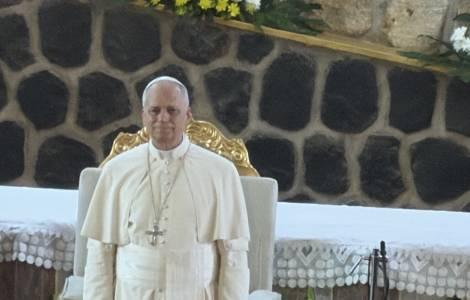
RFI described Bamenda as the capital of the anglophone Northwest Region and said the territory has been affected by the “Anglophone Crisis” since 2017, with civilians among the first victims. Agenzia Fides placed the pope’s meeting in Bamenda on April 16, 2026, and said the region has been “ravaged by a separatist conflict since 2017,” while also describing the “English-speaking region of Cameroon” and the “capital of the English-speaking region of Cameroon.”
Trump feud and Vatican response
The pope’s Cameroon speech landed amid a widening dispute with the Trump administration over the legitimacy of American attacks in Iran, and multiple outlets described how President Trump and Vice President JD Vance responded to Leo’s peace calls. NPR said Pope Leo XIV’s remarks came amid a growing public dispute with President Trump over the ongoing war in Iran, and it reported that the pope’s calls for peace drew “sharp criticism from the White House.” It also described Trump’s attacks on the pope, including that Trump attacked Leo as “weak on crime and soft on foreign policy,” and it said Trump shared an AI-generated image of himself as Christ before deleting it.
The New York Times reported that Leo had “no fear” of the Trump administration and would continue to protest war and speak out “loudly about the message of the Gospel,” after Trump attacked him on social media as “terrible on foreign policy.” The Guardian described how JD Vance assailed Leo for speaking out against the war, telling the pope to “stay out of politics” and “stick to matters of morality,” and it quoted Vance challenging Leo’s benchmark for a “morally justifiable” war.
In the Guardian’s account, Vance told a Turning Point USA event at the University of Georgia that “When the pope says that God is never on the side of people who wield the sword, there is more than a 1,000-year tradition of just war theory.” The Guardian also reported a response from the US Conference of Catholic Bishops, including a statement attributed to James Massa that said, “For over a thousand years, the Catholic Church has taught just war theory,” and it quoted the pope’s line that “He does not listen to the prayers of those who wage war.”
Interfaith peace meeting details
In Bamenda, the pope’s message was delivered through an interfaith peace meeting that brought together religious leaders and people affected by the conflict, with outlets describing both the participants and the structure of the event.
Chicago Catholic reported that Pope Leo traveled to Bamenda on his second day in Cameroon, met with local authorities at the airport, and then went to the Cathedral of St. Joseph for a “Meeting of Peace.”
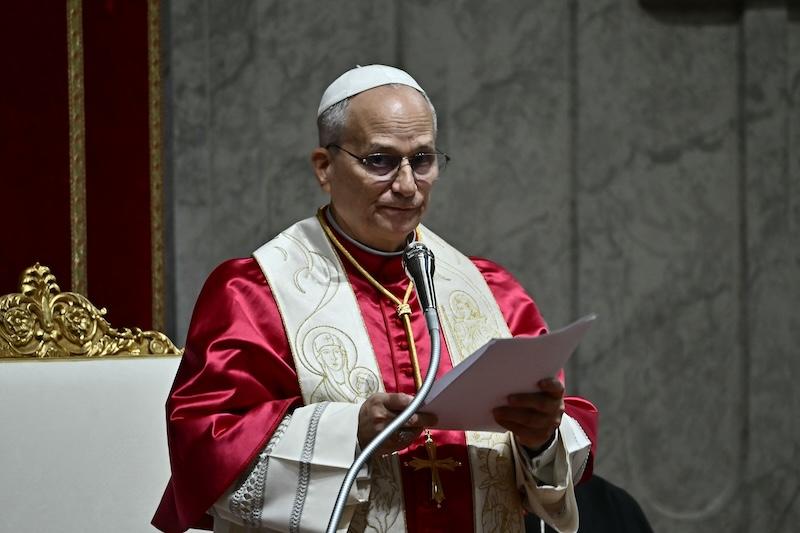
It said the peace meeting began with prayer in the Chapel of the Blessed Sacrament and that the pope and Archbishop Andrew Nkea Fuanya of Bamenda entered the cathedral after a hymn and greeting.
Chicago Catholic listed testimonies from the Supreme Traditional Chief of Mankon, Fon Fru Asaah Angwafor IV; the emeritus moderator of the Presbyterian Church, Fonki Samuel Forba; the imam of the Central Mosque of Buea, Mohammad Abubakar; and Sister of St. Anne Carine Tangiri Mangu, along with a family of internally displaced persons: Denis Salo, his wife, and their three children.
It also quoted the pope’s remarks, including “Because,” he stressed, “it is true: I am here to proclaim peace,” and it included the warning, “But woe to those who manipulate religion and the very name of God for their own military, economic orpolitical gain, dragging that which is sacred into darkness and filth.”
Agenzia Fides described the pope’s meeting with religious leaders in Bamenda on April 16 and quoted him saying, “Dear brothers, I am here to proclaim peace,” and “Yet I find it is you who are proclaiming peace to me, and to the entire world.”
The same Fides account said the region’s religious leaders had come together to establish a “Movement for Peace” to mediate between opposing sides, and it quoted Fonki Samuel Forba saying, “one of the positive consequences of this crisis that has shaken our regions of Cameroon is that it has brought Christian churches and the Muslim faith closer together than ever before.”
Local hopes and international stakes
The visit was also framed by outlets as a moment of hope for residents in Bamenda and as a high-stakes diplomatic and moral intervention, with multiple reports describing both the security environment and the conflict’s human toll.
RFI said residents interviewed placed “a great deal of hope” in the arrival of Pope Leo XIV and quoted Florence saying, “I am so happy that he chose Bamenda after all these years of crisis. By stepping on Bamenda's soil, I know he will bring us peace.”
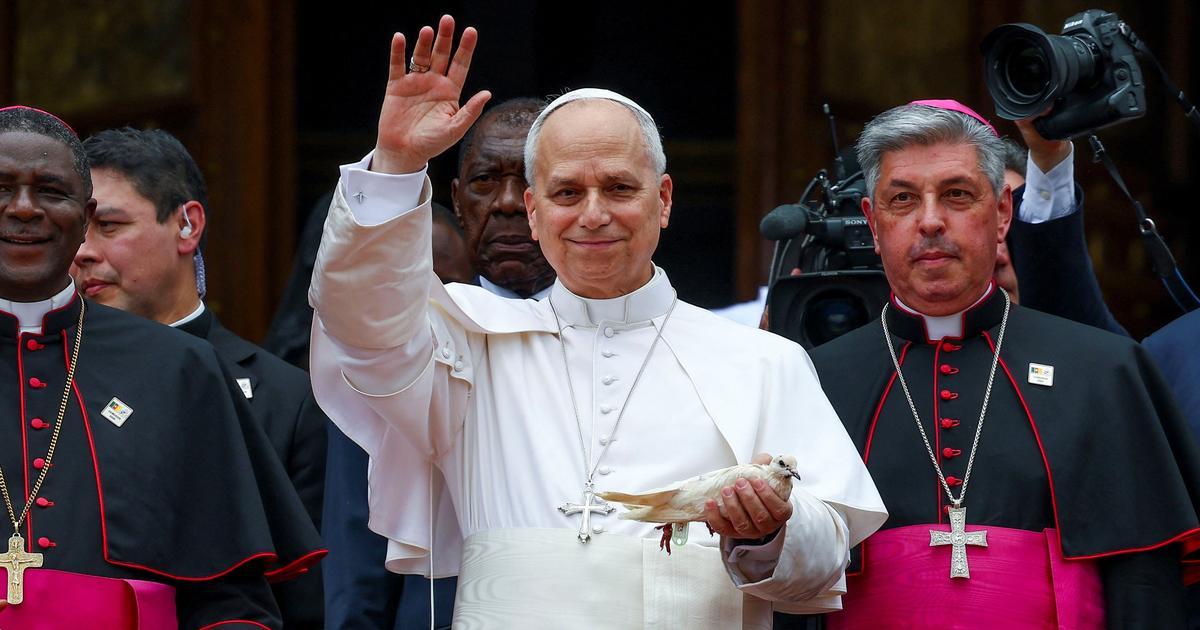
RFI also quoted Leonard saying, “Some of us may seem free, but fear is always there,” and it described how residents hoped the pope would address authorities, with Edwin saying, “For nine years, Bamenda's population has not known peace.”
The same RFI report said separatists had announced a three-day ceasefire to allow residents to attend the Mass at Bamenda’s airport, and it described the visit as taking place under tight security.
PBS reported that thousands gathered on the Bamenda airfield for Leo’s afternoon Mass and said it was “celebrating before returning to the capital Yaounde,” while also noting that it wasn’t immediately clear if separatist fighters attended.
The New York Times described the pope’s broader political posture, saying he traveled to Cameroon after Trump’s Sunday broadside and that on Monday he said he had “no fear” and would continue to protest war.
The Guardian added that the pope’s remarks came as US bishops offered support and as JD Vance questioned Leo’s “morally justifiable” war benchmark, while it also reported a separate development involving Catholic Charities of the Archdiocese of Miami and an “$11m contract” pulled from ORR.