President Donald Trump Weighs Possible US Troop Deployment to Iran as War Enters Fourth Week
Key Takeaways
- U.S. considers deploying ground troops to Iran to seize uranium stockpiles.
- Marine units have already been sent as part of stepped-up regional preparations.
- As the war enters its fourth week, discussions cover options reviewed daily.
Military Planning Underway
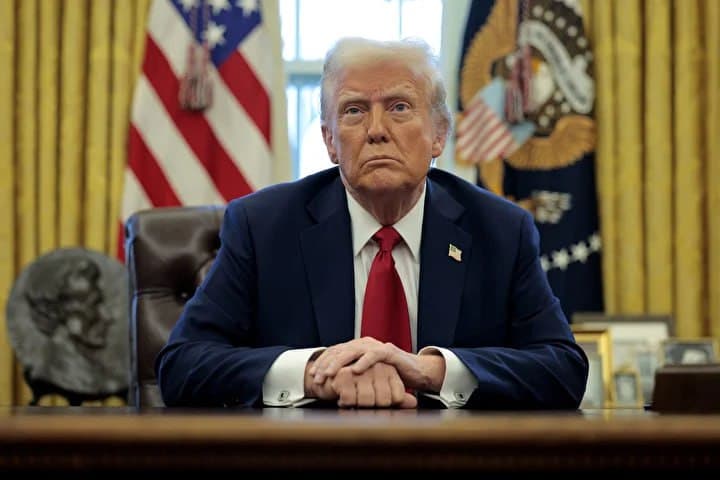
As the US-Iran conflict enters its fourth week, President Donald Trump is weighing the possibility of deploying American ground troops to Iran, despite public statements suggesting otherwise.
“As the US-Israel war on Iran enters its fourth week, the administration of U”
Multiple sources report that senior US military commanders have submitted detailed requests to prepare for such a deployment scenario.

CBS News and CNN both confirm that Pentagon officials have made comprehensive preparations for deploying ground forces, with sources briefing on discussions indicating this is a serious consideration.
While Trump told reporters in the Oval Office, "No, I'm not putting troops anywhere," he added, "If I were, I certainly wouldn't tell you," leaving the door open for potential future action.
White House Press Secretary Karoline Leavitt clarified that these are standard contingency preparations, noting "It's the job of the Pentagon to make preparations in order to give the Commander in Chief maximum optionality" but emphasized "it does not mean the President has made a decision."
Military Buildup Intensifies
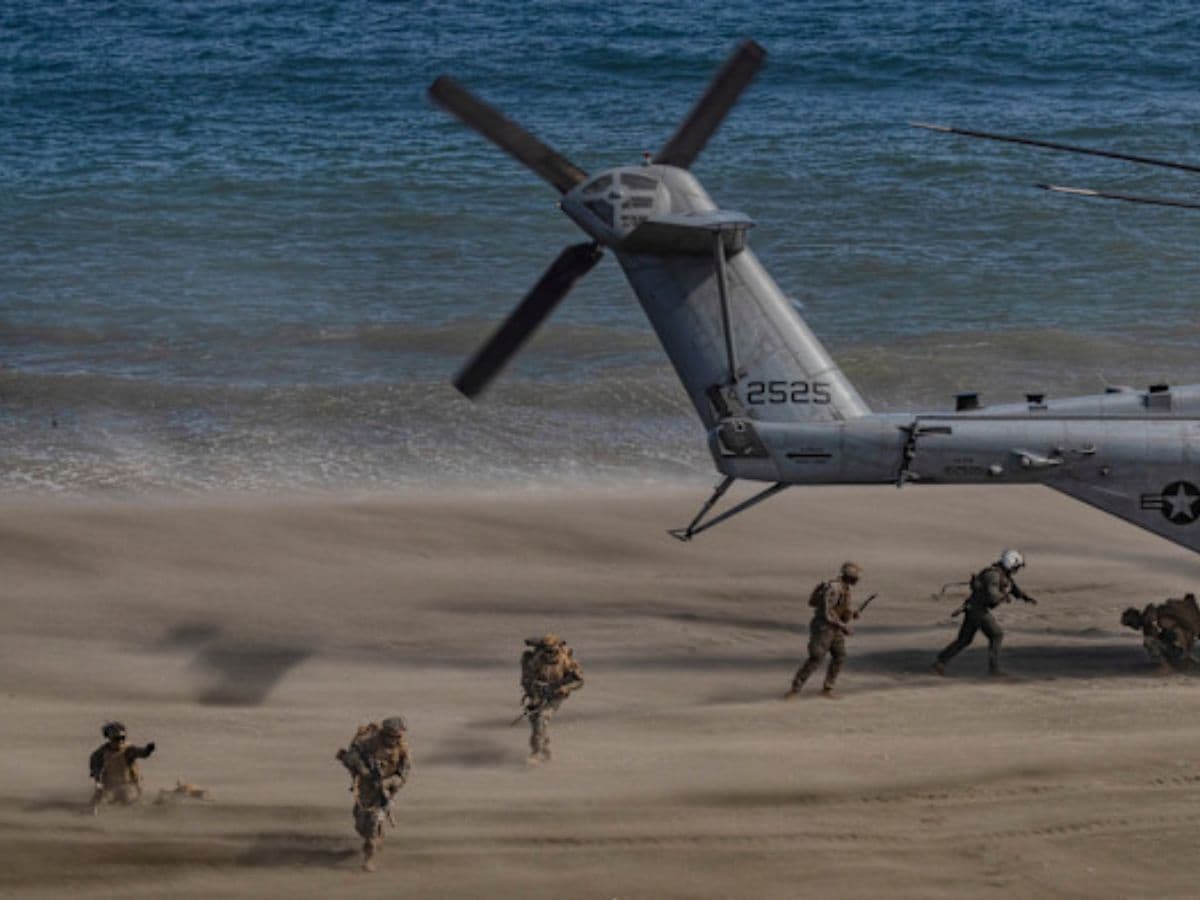
Concrete military movements are signaling the Pentagon's preparation for potential ground operations in Iran.
The Daily Beast reports that amphibious warships carrying roughly 4,000 service members, including about 2,500 Marines, have left California aboard the USS Boxer, USS Portland, and USS Comstock, with additional amphibious groups en route, bringing the total expected deployment to as many as 8,000 personnel.
The Sunday Guardian corroborates this movement, noting the amphibious assault ship USS Tripoli is heading toward the conflict zone, carrying around 2,200 Marines from a Marine Expeditionary Unit specifically trained for rapid-response missions and amphibious assaults.
This buildup of forces equipped with F-35 fighter jets and amphibious assault vehicles capable of supporting ground offensives suggests the military is preparing for multiple scenarios.
The Sunday Guardian also mentions that the 82nd Airborne Division, one of the US military's premier rapid-response units, has had its headquarters abruptly cancel a training exercise earlier this month, fueling internal speculation it could be tapped for a potential ground operation.
Strategic Targets Identified
Strategic objectives in the conflict are increasingly focused on securing critical infrastructure and addressing Iran's nuclear capabilities.
“It was the second such Marine unit sent since the war began, and it could be a few weeks before it's in place”
Multiple sources indicate that among the options under discussion is a potential operation targeting Iran's Kharg Island, a strategic hub that handles roughly 90% of the country's oil exports, according to Egypttoday and Reuters sources cited in that publication.
However, officials caution that any such move would carry significant risks as Iran has the capability to strike the island using missiles and drones.
Telegraph India provides particularly detailed analysis of the nuclear dimension, reporting that Trump faces "the most daunting question of the war with Iran" - whether to put US troops on the ground to secure some 970 pounds of enriched uranium that Tehran could potentially use to build nuclear weapons.
The article notes that much of this material is believed to be buried under the rubble of facilities pummelled in US bombings last June, with experts suggesting securing it would require troops on the ground.
Political Divergences Emerge
Political implications and international perspectives reveal significant tensions and divergent objectives.
CNN reports a growing divergence between US and Israeli objectives, with Israeli officials understanding that "Trump's political timeline is considerably shorter than the one Israel's Prime Minister Benjamin Netanyahu has for ending the conflict."

One Israeli official told CNN, "There's no doubt that his political clock is shorter and sharper than ours... The moment he decides to stop, he'll stop, say, 'We won,' and that's it."
Netanyahu has openly stressed the need for a ground component in warfare, as reported by The Sunday Guardian.
Meanwhile, Trump's Republican allies in Washington are reportedly concerned about the political fallout, with CNN noting that for many Trump allies, "the deployment of thousands of US troops to the Middle East would mean the swift end of their public support for the war—and likely threaten the administration's ability to deliver the hundreds of billions of dollars in supplemental funding the White House will soon seek."
Senator Richard Blumenthal expressed particular concern, telling reporters that "some of the objectives that he continues to espouse simply cannot be achieved without a physical presence there."
Economic Fallout Mounts
Economic repercussions and timeline concerns are mounting as the conflict approaches its fourth week.
“News Business Arts & Culture Our Magazine Sports ET Scenes Haya Karima News Business Arts & Culture ET Scenes Our magazine Sports Trump weighs possible US troop deployment to Iran as war enters fourth week BY Egypt Today staff - Sat, 21 Mar 2026 - 02:45 GMT BY Egypt Today staff Sat, 21 Mar 2026 - 02:45 GMT”
CNN reports that Iran's decision to close the Strait of Hormuz has sent "economic shockwaves around the world" and led to criticisms that Trump's decision to attack Iran "wasn't fully thought through."

US officials are described as "furiously trying to avert a potential monthslong closure" and privately acknowledge that reopening the key waterway is "a problem without a clear solution— and dependent at least in part on what lengths Trump is willing to go to force the Iranian regime's hand."
Egypttoday adds that this economic dimension is particularly significant given that Kharg Island handles roughly 90% of Iran's oil exports.
Despite these challenges, Trump appeared to acknowledge mounting pressure on Friday evening when he said he would "consider winding down" the war soon, even as new Marine units were headed toward the region.
The Daily Beast notes that Trump posted on Truth Social boasting that the US was "very close to meeting our objectives" in Iran and that he is considering "winding down our great military efforts," while also stating that "The Hormuz Strait will have to be guarded and policed, as necessary, by other Nations who use it — the United States does not!"
More on USA

Trump threatens to deploy ICE agents to US airports amid DHS funding standoff
46 sources compared

ICE Detainee Royer Perez-Jimenez Dies in Florida Detention Center; Officials Suspect Suicide
10 sources compared
Elon Musk Offers to Pay TSA Salaries During Partial Government Shutdown
50 sources compared

California lawmakers rename Cesar Chavez Day to Farmworkers Day amid sexual abuse allegations.
17 sources compared