Iran05 March, 20263 min read
President Trump Demands U.S. Choose Iran's Next Leader After Khamenei Assassination
This article is an automated aggregation of coverage from news outlets. Our editorials offer in-depth analysis curated by the NewsCord team.
Trump told Axios he insists the United States should influence Iran's leadership succession Trump rejected Mojtaba Khamenei, calling him unacceptable and a 'lightweight'
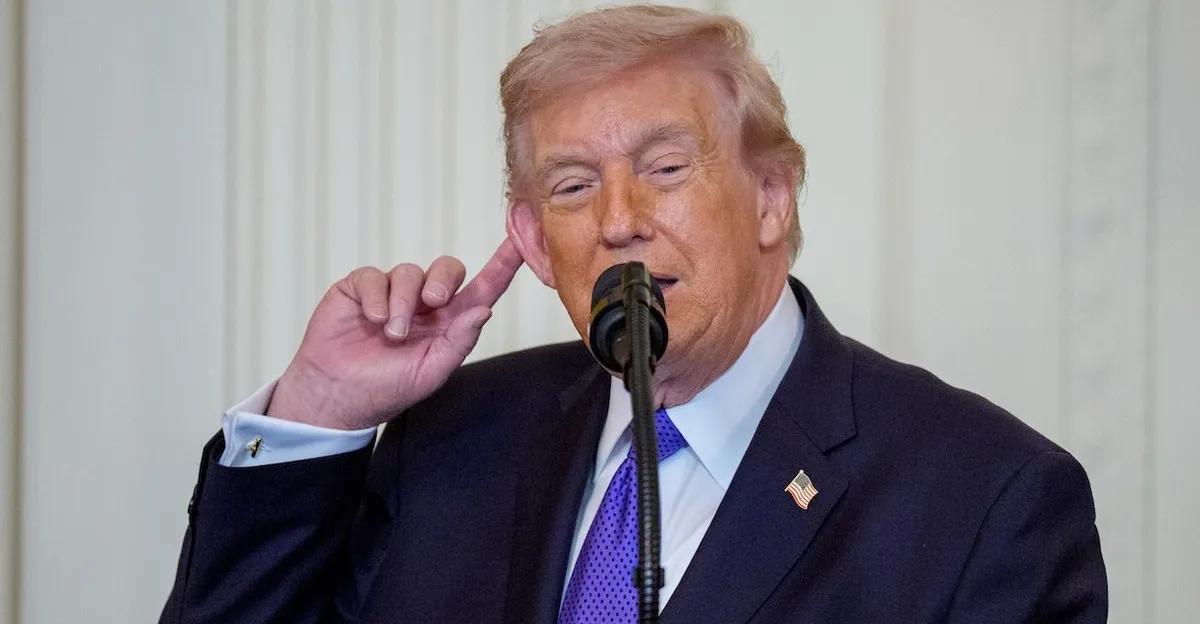
Trump on Iran succession
President Donald Trump told multiple outlets that he insists the United States should play a direct role in selecting Iran's next supreme leader following reports that Ayatollah Ali Khamenei had been killed. He explicitly said he must be involved and compared the effort to alleged U.S. influence in Venezuela. Axios reported: 'In an exclusive Axios interview, President Trump said he must be personally involved in choosing Iran's next supreme leader, likening it to his role in Venezuela.'
“In an exclusive Axios interview, President Trump said he must be personally involved in choosing Iran’s next supreme leader, likening it to his role in Venezuela.”
PBS summarized similar language, saying he must be 'involved in the appointment' of Ayatollah Khamenei's successor. Newser quoted President Trump directly: 'I should be involved in that appointment, like with Delcy in Venezuela.'

Debate over Iran succession
Many analysts and regional observers warn that Washington’s demand to dictate Iran’s succession is unrealistic and faces constitutional and practical barriers, particularly amid active hostilities. Al Jazeera reported that "Analysts say it’s unrealistic for the U.S. to dictate who will succeed Iran’s supreme leader."
TRT World noted that Trump "criticized reported frontrunner Mojtaba Khamenei as 'a lightweight,' said he would not accept a successor who continued the late Ali Khamenei’s policies (warning such continuity could lead to U.S. involvement in another war within five years), and said he wants someone who will bring 'harmony and peace.'" The BBC commented that Trump "is now openly saying he wants to pick who will rule Iran after the reported assassination of Supreme Leader Ayatollah Ali Khamenei and other clerics and commanders," underlining how striking the demand is given Iran’s deeply anti-American political system.

Iran succession developments
Multiple outlets report Mojtaba Khamenei is widely seen as the likely successor, but formal confirmation by the Assembly of Experts has been postponed and the situation remains volatile after strikes that reportedly killed senior figures. ColombiaOne summarized that 'Mojtaba Khamenei, the supreme leader's son and a conservative backed by the IRGC, was named yesterday as the likely successor, but formal confirmation by the Assembly of Experts is pending and a provisional council has been formed.'
“Mojtaba Khamenei, the supreme leader’s son and a conservative backed by the IRGC, was named yesterday as the likely successor, but formal confirmation by the Assembly of Experts is pending and a provisional council has been formed.”
Kurdistan24 reported that President Donald Trump said Iran's military leadership had been 'completely destroyed,' warned more fighting could follow, and told Axios he wants a role in selecting Iran's next supreme leader, calling Mojtaba Khamenei 'unacceptable.' i24NEWS recorded the explicit U.S. formulation, reporting Trump said 'the United States will help in choosing Iran's new Supreme Leader.'
Conflict escalation overview
Trump’s remarks come as the wider conflict has already escalated across multiple fronts, with heavy casualties and international military movements that have raised fears of a broader war.
PBS reported that “Iran accused the U.S. Navy of sinking the Iranian frigate IRIS Dena in the Indian Ocean, saying at least 87 people were killed; the Iranian foreign minister called it an 'atrocity,' and an ayatollah issued a rare public call for violence, urging the shedding of Israeli and 'Trump’s' blood.”

The Los Angeles Times described “A rapid, dangerous escalation between Israel and Iran — including strikes on an Iranian‑linked leader and reciprocal attacks by Iran and allied militias — [that] has spread fighting across multiple fronts and prompted broader international military responses.”
AP News warned “Military leaders warn the conflict could broaden, say diplomatic de‑escalation has stalled, and report they have prepared for a substantial troop surge.”
U.S. stance on Iran succession
Domestically in the U.S. and among international partners, the idea of Washington shaping Iran's succession has provoked political and diplomatic pushback, even as some officials defend a robust posture. KIVI-TV noted congressional action, reporting that "Attempts in Congress to halt U.S. strikes on Iran failed — the House rejected a resolution to stop the bombardment after the Senate had already voted down a similar measure."
“Attempts in Congress to halt U.S. strikes on Iran failed — the House rejected a resolution to stop the bombardment after the Senate had already voted down a similar measure.”
AP News said the comments "broke diplomatic norms, drew criticism and fueled fears the U.S. may be seeking regime change." Bloomberg summarized the diplomatic stakes: "President Trump said the United States should help choose Iran's next leader, arguing U.S. involvement is needed to shape Tehran's future and protect American interests."
