President Trump Insists U.S. Has Ample Munitions to Pummel Iran as War Depletes Stocks
Key Takeaways
- President Trump said the United States had no shortage of munitions to pummel Iran
- He met with defense contractors at the White House, who committed to increase production
- Concern grew that the Middle East war was depleting U.S. munitions stocks
U.S. weapons production pledge
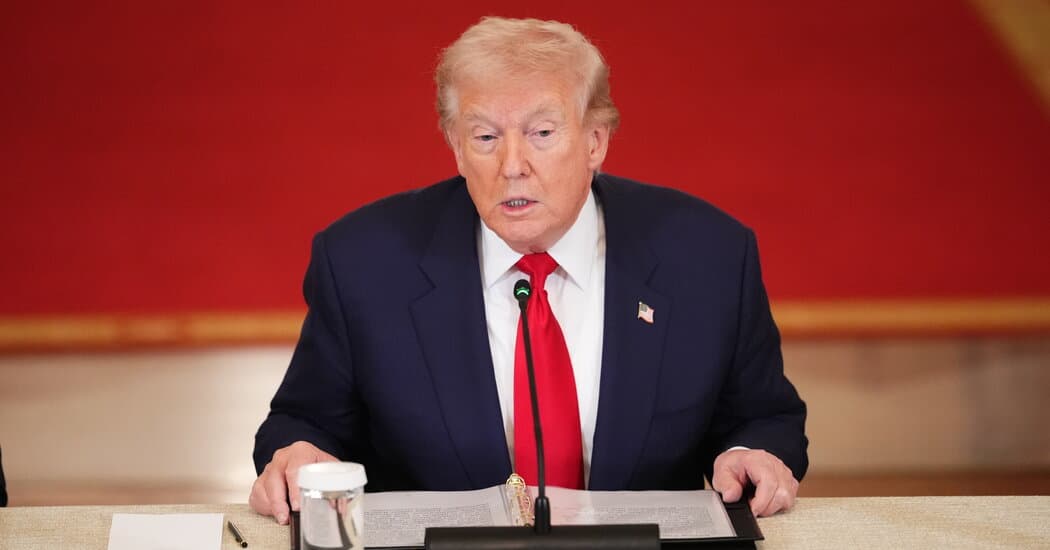
President Trump announced at a White House meeting with executives from seven major defense contractors that the companies had committed to "greatly increase production" of what he called "Exquisite Class" weapons.
“War in theMiddle East Advertisement Supported by After meeting with defense contractors at the White House, President Trump said the companies were all committed to increasing production”
The reporting treats the phrase as an apparent reference to sophisticated air defenses and cruise missiles.
He also asserted that the United States had "no shortage of munitions for strikes on Iran."
This framing presents the administration's message as both a reassurance about U.S. stockpiles and a public push to boost industrial output in the face of sustained conflict.
Mr. Trump munitions claims
Mr. Trump went further, saying defense firms would "quadruple" output and claiming the U.S. possesses a "virtually unlimited supply" of medium and upper-medium grade munitions.
Those strong public assertions are presented in the reporting alongside caveats about how rhetoric may outpace industrial and logistical realities, leaving open questions about whether those production targets are realistic or already reflected in an earlier initiative.
Munitions strain and urgency
The article underscores uncertainty about how quickly production could actually be ramped up and how the latest pledge differs in practice from a similar administration initiative announced in January.
“War in theMiddle East Advertisement Supported by After meeting with defense contractors at the White House, President Trump said the companies were all committed to increasing production”
It signals that operational constraints and prior promises complicate the picture.
The article documents how Iran’s large-scale use of drones and missiles has rapidly depleted U.S. and allied interceptor stocks.
It also notes that U.S. strikes using Tomahawk cruise missiles have dented inventories of costly, time-consuming-to-produce weapons, facts that help explain the administration’s urgency.
Munitions and readiness risks
National security experts cited in the reporting warn that heavy use of sophisticated munitions in a prolonged conflict with Iran risks diverting stocks and industrial capacity that the U.S. relies on to deter other challenges, notably China over Taiwan, and that the Pentagon may ultimately need supplemental funding from Congress to replenish depleted inventories.
The piece thus frames the administration’s pronouncements as both a strategic signal to adversaries and a possible prelude to budgetary and industrial strains if fighting continues.