South America07 March, 20262 min read
President Trump Offers Missiles to Latin America to Destroy Cartels
Convened more than a dozen Latin American leaders, launching a regional counter-cartel coalition. Offered U.S. military support, including missiles and authorizing strikes against cartel leadership.

Anti-cartel coalition plan
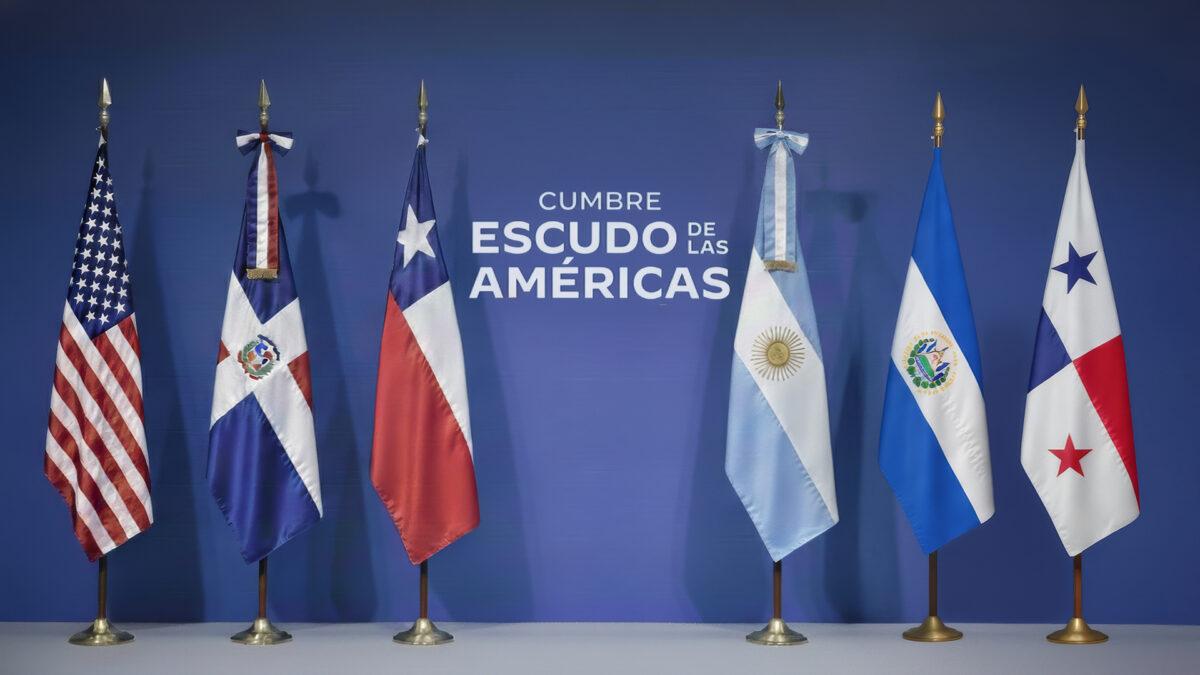
At a "Shield of the Americas" summit held at his Doral golf club, President Donald Trump unveiled and signed a proclamation creating a regional, military-style coalition to target drug cartels. He repeatedly framed the plan around the use of lethal force and even missiles.
“Former President Donald Trump launched a 17‑nation ‘counter‑cartel’ coalition — billed at a ‘Shield of the Americas’ summit at his Doral golf club — and urged Latin American and Caribbean governments to use military force against drug cartels, including the possibility of U.S. support for missile strikes on narco kingpins.”
Coverage reports Trump urged partners to deploy militaries against cartels and described using missile strikes, with one outlet transcribing his onomatopoeic missile mimic: "Piu, right into the living room" and "That's the end of that cartel person." Multiple accounts say the meeting was billed as a hard‑power hemispheric initiative and that Trump likened it to past multinational campaigns against groups such as ISIS.
Coalition attendance discrepancies
Reporting differs on the coalition’s size and membership: some outlets describe a 12-country gathering while others report 17 countries or as many as 19 leaders attending. The guest list reported across outlets includes a bloc of right-leaning leaders such as Argentina’s Javier Milei, El Salvador’s Nayib Bukele and Ecuador’s Daniel Noboa. Media note that several major regional powers — notably Mexico, Brazil and Colombia — did not participate, and these discrepancies in counts and attendance are documented across the coverage.
Hemispheric security pact
Kristi Noem was appointed the coalition's special envoy. Officials tied the initiative to senior figures including Marco Rubio and Pete Hegseth. The White House and coalition allies described the pact as a new hemispheric security priority.
“Senior officials named as involved included Kristi Noem, Marco Rubio, Pete Hegseth and Scott Bessent.”
Some outlets called it a 'Trump Corollary' or a 'Donroe Doctrine'‑style move echoing the Monroe Doctrine. Coverage portrayed the coalition as an instrument to project U.S. power and counter rival influence in the region.
U.S. operations and scrutiny
The summit followed a string of high-profile U.S. operations and raids that officials and Trump cited as justification for the tougher posture. Coverage links the event to U.S. strikes in the Caribbean and Pacific, a January operation various outlets report as involving an attempted capture of Nicolás Maduro, and a recent raid in Jalisco that wounded and preceded the in-transit death of CJNG boss Nemesio "El Mencho".
At the summit Trump was reported to claim: "We went right into the heart and took him out." At the same time, investigative reporting and declassified assessments quoted in some outlets note the administration "has not publicly released comprehensive evidence linking many strike victims to criminal networks" and families and local sources say some victims were civilians.
Criticism of security initiative
The initiative drew immediate criticism and concern. Analysts and regional observers said the summit's limited participation and exclusion of major powers made it a narrow effort rather than a broad hemispheric consensus. Opponents warned the approach risks deeper militarization and human-rights abuses.
“International-law experts argue that drug trafficking alone does not legally justify cross‑border military aggression, and human-rights groups warn that regional ‘mano dura’ crackdowns have produced abuses, mass incarceration and suspension of civil liberties.”
International-law experts noted that drug trafficking alone "does not legally justify cross-border military aggression." Coverage also flagged that some attendees praised or adopted repressive measures, for example citing El Salvador's "mega-prison." Commentators framed the move as part of a broader U.S. push to counter Chinese influence in Latin America.
