Iran05 March, 20265 min read
President Trump Recruits Iranian Kurds, Offers U.S. Air Cover To Foment Uprising Against Tehran
President Trump contacted Kurdish leaders and offered U.S. air cover to support operations inside Iran The CIA held talks to arm Iraqi-based Kurdish militias to spark an uprising inside Iran
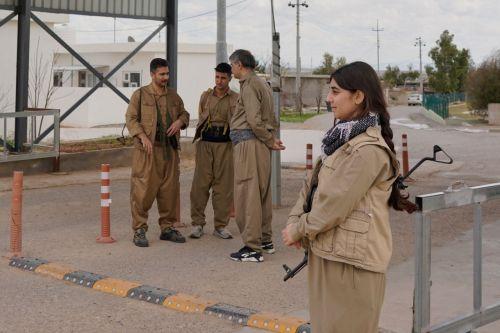
President Trump contacts Kurds
Multiple news reports say President Trump has directly engaged Kurdish leaders as part of U.S. deliberations over how to increase pressure on Tehran. The Washington Post reports that “President Trump has called leaders of Iraq’s Kurdish parties and Iranian Kurdish opposition figures, offering ‘extensive U.S. aircover’ and logistical help and urging the Iraqi Kurds not to block mobilization of Iranian Kurdish forces from Iraqi territory.” i24NEWS echoed those accounts, saying officials described calls in which Trump “offered ‘extensive US air cover’ and other backing for anti‑regime Iranian Kurdish groups to seize parts of western Iran.”
“President Trump has called leaders of Iraq’s Kurdish parties and Iranian Kurdish opposition figures, offering ‘extensive U.S. aircover’ and logistical help and urging the Iraqi Kurds not to block mobilization of Iranian Kurdish forces from Iraqi territory.”
Al Jazeera states the contacts fit into broader reporting that “the Trump administration and the CIA have held talks with several Kurdish groups about arming or otherwise supporting operations inside Iran” and that some Israeli officials pushed for closer U.S.–Kurd engagement. Asharq Al‑Awsat cites Reuters sources saying a Kurdish militia coalition has “consulted with the United States about mounting attacks on Iranian security forces and has asked for U.S. military and possible CIA assistance, including weapons.” WION reports that Trump “pressed Kurdish leaders to choose alignment with the United States and Israel over Iran.”

Kurdish coordination and readiness
Reporting across the region describes a newly coordinated Kurdish effort and combat-ready forces based in Iraq's autonomous Kurdistan region, though leaders of the groups publicly deny any immediate offensive. A military magazine reported that 'Kurdish Iranian dissident groups based in Iraq's semi-autonomous Kurdistan region have positioned forces near the Sulaymaniyah border and are on standby for a possible cross-border operation into Iran; they are considered the best-organized segment of Iran's fractured opposition and may include thousands of trained fighters.' The Atlantic summarized that five (later six) Iranian Kurdish parties with armed wings 'have formed a joint Coalition of Political Forces of Iranian Kurdistan,' led by the PDKI.
Silicon Canals noted the groups 'have recently formed a new coalition to coordinate possible action against Iran.' The BBC inspected strike sites and reported that 'six Kurdish groups have formed a coordinating coalition but say no immediate offensive is planned,' underscoring the gap between reported preparation and public denials.

U.S. denials on Kurdish arming
Official U.S. spokespeople and other accounts emphasize denials, caveats, and longstanding Kurdish mistrust of Washington. The Washington Post notes the White House denied reports that the U.S. has agreed to arm Kurdish fighters. The Washington Post also reports the CIA declined comment and U.S. officials cautioned that Kurdish cooperation is uncertain given Washington’s history of using—and at times abandoning—Kurdish partners.
“The White House denied reports that the U.S. has agreed to arm Kurdish fighters, the CIA declined comment, and U.S. officials cautioned that Kurdish cooperation is uncertain given Washington’s history of using—and at times abandoning—Kurdish partners.”
아시아경제 reports that U.S. officials have publicly denied any policy of arming Kurdish insurgents in Iran. 아시아경제 quotes Defense Secretary Pete Hegseth saying the U.S. military does not supply weapons to insurgent forces. 아시아경제 quotes White House spokesperson Karoline Leavitt saying President Trump has spoken with Kurdish leaders but did not agree to an uprising.
The New York Times snippet likewise says the White House denied reports that it had agreed to a plan involving Kurdish forces. Ynetnews reports that U.S. intelligence reportedly judges Iranian Kurdish groups currently lack the influence and resources to mount a successful uprising. Ynetnews adds that Kurdish leaders want political guarantees from the Trump administration before agreeing to take part.
Risks of arming Kurdish groups
Analysts and regional reporting warn the plan carries high strategic and humanitarian risks, and multiple outlets highlight how it could destabilize neighboring states and erode Iraqi sovereignty. Al Jazeera quotes analysts who warn the plan is risky and seemingly poorly planned: it could inflame internal Iranian conflict, deepen Kurdish divisions, antagonize neighboring states (Türkiye, Syria, Iraq), and leave local partners exposed if U.S. backing falters. Asharq Al‑Awsat stresses that an armed Kurdish uprising could destabilize Iran and risk sparking separatist unrest among the Baluch minority (which Pakistan would oppose), while Türkiye strongly opposes arming Kurdish groups near its borders.
Raw Story highlights concerns that such operations could erode Iraqi sovereignty and empower unaccountable militias, leading to unpredictable and potentially severe consequences. Times Now places this in Washington's credibility context, noting U.S. ties with Kurdish forces have become strained, highlighted by Defense Secretary Jim Mattis's resignation in protest of President Trump's decision to withdraw troops from Syria—an action critics say abandons Kurdish allies. Gulf News adds reporting that covert support has been discussed even as the White House says no specific insurgency plans are approved.

Iran-Iraq strike reports
The situation has already produced violent reprisals and a swirl of unverified claims, increasing regional volatility even as core facts remain contested. Multiple outlets report Iran struck Kurdish opposition bases in northern Iraq. The BBC said it inspected strike sites where a ballistic missile hit a Peshmerga base (four wounded, one later died) and a double drone strike hit a KDPI base (a civilian reportedly wounded), and overall the BBC confirmed at least one death and three wounded from attacks this week.
“The BBC inspected strike sites where a ballistic missile hit a Peshmerga base (four wounded, one later died) and a double drone strike hit a KDPI base (a civilian reportedly wounded); overall the BBC confirmed at least one death and three wounded from attacks this week.”
Silicon Canals likewise reported that Iran launched missile and drone strikes this week on the headquarters and bases of Iranian Kurdish opposition groups in northern Iraq’s Kurdistan region, killing at least one fighter and wounding several others. 아시아경제 noted Iran struck headquarters of Kurdish organizations in Iraqi Kurdistan on March 4 and warned separatist groups against rash actions. At the same time, several outlets recorded unverified or disputed claims about leadership deaths and escalatory messaging.
PBS reported President Trump posted claims that Iran’s Supreme Leader had died following strikes but said the claims remain unverified, and The Presidential Prayer Team repeated unverified assertions while noting the claim that Khamenei was killed has not been independently verified and contradicts available public information. These competing reports illustrate how rapidly contested and uncertain the ground truth remains.