Finance06 May, 20268 min read
Record Public Debt in United States, Royaume-Uni, France, Italie, and Japon Threatens Global Growth
This article is an automated aggregation of coverage from news outlets. Our editorials offer in-depth analysis curated by the NewsCord team.
House of Lords Economic Affairs Committee: Reeves budget rules fail to curb long-term UK debt. US public debt stands around $38 trillion, with major foreign holders.

Debt, rates, and constraints
A record level of public debt in major economies is increasingly framed as a threat to global growth, with La Presse pointing to the “dette insoutenable de certains pays riches” that “menace l’économie mondiale.” The article places the focus on the United States, Royaume-Uni, France, Italie et Japon, saying their “dette record menace de paralyser la croissance mondiale et de déclencher des crises financières.” It also describes how debt service “grève le budget” and “privant d’argent” that could have financed “hôpitaux, routes, logement social, recherche ou éducation.”
La Presse links the debt build-up to higher borrowing costs, noting that “Les taux des prêts commerciaux, hypothécaires, automobiles et autres suivent et dopent l’inflation.” It adds that even in countries with “une économie plutôt saine et un chômage faible – comme aux États-Unis,” rising debt “réduit la marge de manœuvre des États quand les choses se gâtent.”

The piece traces the spiral to “la crise financière de 2008,” when governments supported households and tax revenues fell, and says pandemic spending under “COVID-19” raised debt levels while “les taux d’intérêt augmentaient.” It then quantifies the scale, stating that “dans six pays du G7, la dette nationale égale ou dépasse la production économique annuelle, selon le Fonds monétaire international.”
UK fiscal rules under strain
In the United Kingdom, the debate over how to manage debt is being sharpened by criticism of the government’s fiscal framework, with two outlets describing the same conclusion from the House of Lords Economic Affairs Committee. MarketScreener España reports that the Lords’ committee said Reeves’s fiscal rules “are not strict enough to prevent public debt from rising as a share of the economy in the long term.” It quotes Stewart Wood, chair of the committee and a member of Reeves’s Labour Party, saying “The United Kingdom’s fiscal framework is fragile” and that “Government’s behavior must change, making much larger fiscal cushions the norm.”
The Zonebourse version repeats the same core language, including “The United Kingdom's fiscal framework is fragile” and the warning that headroom “should no longer be used as a piggy bank from which to dip.” Both accounts describe how the rules have been in place since 2010, when the Office for Budget Responsibility took over fiscal forecasts from the Treasury, and both say the rules have been periodically tweaked while aiming for medium-term balance and debt reduction relative to GDP. MarketScreener España provides the debt trajectory, saying net public sector debt rose from “61% of GDP in 2009/10” to a projected “95% of GDP in 2025/26,” driven “mainly due to the sharp increases recorded during the COVID-19 pandemic and the global financial crisis.”
It also highlights a specific structural weakness, noting that “by requiring debt to fall in the third year of a rolling forecast, the supplementary target can still be met through promises of policy measures that never come to fruition.” Finally, it quantifies the government’s preferred metric and the limited buffer, stating that net financial liabilities are “on track to rise from 82.4% of GDP in 2025/26 to 82.9% in 2028/29,” with “room for maneuver… stands at 0.7% of GDP.”
Local pressures in Sheppey
The BBC’s reporting grounds the UK debt story in everyday local impacts, describing how a council’s decision to charge for parking is tied to balancing budgets in a community already strained by insolvencies and debt advice needs. The programme opens with Queenborough’s main street “clogged with parked cars,” but contrasts it with “an empty car park” on the Isle of Sheppey in Kent, where residents say even emergency vehicles have sometimes been unable to get through. It says that “Until the beginning of April, it used to be free to park there,” but then Swale Borough Council brought in charges “to bring the affected sites in line with other car parks across the borough.”
The BBC reports that locals are furious and have been boycotting the car park, while businesses fear the charges will lose trade, and it quotes Matthew Nichol, barman at The Flying Dutchman pub: “It's always been free [and] it's been free for a reason - for local business to have a chance of thriving,” and “It's not fair.” The BBC links the policy to financial stress at the local level, saying “Swale Borough Council and Kent County Council - which also covers the area - are in debt and need to balance their books by increasing charges and cutting services.” It then describes Sheppey’s scale of hardship, saying “for its 47,000 residents, financial problems are everywhere you look,” and that the most common complaint is “there's no money here.”
In a Citizens Advice drop-in clinic, the BBC includes a man who says he is “£20,000 in debt,” and it quotes Blake Harmer, the Citizens Advice supervisor, saying “We get lots of clients coming in struggling with credit cards, loans, overdrafts, council tax, their rent, mortgage.” The BBC also reports personal consequences, including Shania, a “22-year-old” who says she has been evicted after complaining about mould and is hoping to find somewhere else for “£1,000 per month,” while Nick says he “hasn't had a holiday in six years” despite working “60 hours a week.”
Trump, creditors, and Treasury yields
Internationally, the debt discussion is being pulled into geopolitics through the question of who holds U.S. Treasury securities and how that concentration could be used in disputes.
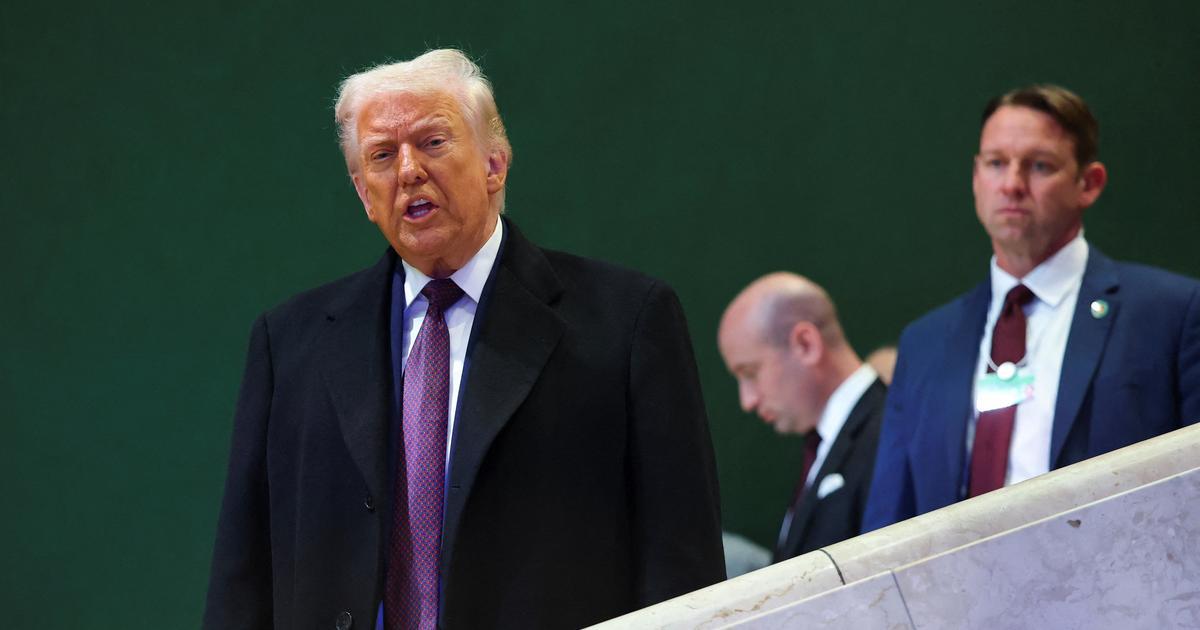
Le Figaro frames the issue around the United States’ “$38 trillion in public debt,” saying the country “depends more than ever on its creditors, including foreign ones,” and it reports that since Davos, Donald Trump has sharpened his rhetoric by threatening “massive reprisals” against European countries that would sell U.S. Treasury securities to pressure Washington.

It adds that the threat is taken seriously as trade tensions with the European Union, which “refuses to cede Greenland to Washington,” have pushed “the yields on U.S. Treasury bonds to new highs.”
Le Figaro also says that “As the U.S. public debt reached the historic high of $38 trillion at the start of 2026,” the White House sought to issue a warning to foreign creditors, and it asks “But who are they really?”
La Razón similarly ties the Greenland diplomatic dispute to a renewed debate about U.S. dependence on major foreign holders, stating that “the United Kingdom, Japan, and China remain the largest holders of U.S. Treasury bonds.”
It quotes Trump’s framing that “the world trusts the U.S. economy,” and it says this message is used to shore up his position in the Greenland dispute, where Washington seeks to broaden strategic influence.
La Razón also presents the counter-reading in Brussels and Copenhagen, saying that “the concentration of debt in foreign powers' hands is seen as a structural vulnerability that could, in theory, become a tool of diplomatic pressure.”
It provides a hierarchy of holders, saying “Japan heads the list with more than a trillion dollars in Treasury bonds,” followed by China, “whose volume has declined but remains decisive for market stability,” and the United Kingdom, “thanks to the City of London's influence,” ranking third.
The article adds that “In Europe, some diplomats acknowledge that, although a coordinated debt sale is highly unlikely,” the mere mention of the possibility in technical talks reflects discontent with U.S. pressure in the Arctic.
It closes by describing the interdependence as a seam in the global system, saying the concentration of Treasury bonds “exposes the seams of a global financial system where U.S. debt is both a symbol of power and a weak point.”
Reform proposals and the next cycle
Beyond immediate market and political pressures, Bretton Woods Project argues that the United Kingdom’s role in global finance gives it leverage to change how debt and tax rules operate, while warning that the current system drains wealth from poorer countries. It says “Developing countries lose billions annually through debt payments and tax avoidance facilitated by global financial rules,” and it argues that the UK has “extraordinary structural influence over the systems that shape development.” The outlet quantifies the imbalance, saying “African nations spend on average fifty times more on external debt payments than they receive in aid from the UK,” and it adds that “private lenders extracted USD 141 billion from low-income countries” while earning “more in profits than they lent between 2022 and 2024.”
It also states that “Developing economies lose USD 46 billion each year due to corporate tax avoidance,” and that “for every dollar of aid received, ten are lost through illicit financial flows.” Bretton Woods Project then connects this to legal power, saying “Ninety percent of the debts of low-income countries to private creditors… are governed by English law,” and it argues that “Under current UK law, private creditors can simply refuse to participate in debt relief negotiations and instead sue indebted countries before British courts.” It proposes a “single piece of legislation” that “could require private creditors operating under English law to cooperate in debt negotiations,” and it claims such a law “would cost the Treasury nothing” while “release billions for low-income countries to invest in essential services, climate resilience, and development.”
The outlet also points to tax secrecy, saying Britain and its Overseas Territories facilitate “about a quarter of global tax avoidance: more than USD 100 billion a year,” and it calls for “Publicly accessible beneficial ownership registers across all Overseas Territories.” Finally, it situates the agenda in a timeline, saying the UK’s G20 presidency “will begin in December 2026” and describing it as “a historic opportunity… to fix the system,” while arguing that the UK can use its shareholder power to demand reforms at the IMF and World Bank. In the same breath, it warns that current lending conditions “prioritize austerity over development” and that “rescue packages too often channel public funds toward repayment to private lenders rather than strengthening long-term resilience.”