
Red Hat Engineer Sally O’Malley Releases Tank OS To Secure OpenClaw Enterprise Deployments
Key Takeaways
- Sally O’Malley released Tank OS on Tuesday as an open-source OpenClaw tool.
- Tank OS packages OpenClaw in a secure, self-contained environment and delivers a ready-to-boot system image.
- It simplifies deployment and management of OpenClaw agents, aiming for significantly safer enterprise deployments.
Tank OS for safer OpenClaw
Red Hat principal software engineer Sally O’Malley released an open source tool called Tank OS on Tuesday, aiming to make enterprise deployments of OpenClaw “a lot safer” by packaging OpenClaw agents into a secure, self-contained environment.
“Red Hat principal software engineer and OpenClaw maintainer Sally O’Malley released a new open source tool called Tank OS on Tuesday”
TechCrunch describes Tank OS as a way to deploy and manage OpenClaw agents more safely, and says O’Malley built it after deciding what would happen “when OpenClaw invades an enterprise.”

The tool is designed for power users running OpenClaw on their own computers and for IT pros managing fleets of corporate OpenClaw agents, and it “makes OpenClaw safer and easier to maintain en masse.”
TechCrunch also frames O’Malley’s position as an OpenClaw maintainer, meaning she is among the select software engineers working with creator Peter Steinberger to decide which features and bugs get worked on.
In the TechCrunch account, Tank OS loads OpenClaw onto Red Hat’s Fedora Linux OS in a Podman container and makes that container a bootable image that will run and launch OpenClaw when the computer starts.
Decrypt similarly says Tank OS packages OpenClaw inside a secure, self-contained environment and delivers it as a ready-to-boot system image that can be pushed to a “cloud server, a virtual machine, or physical hardware.”
Both outlets emphasize that Tank OS is built around container isolation and that Podman runs without administrator privileges, with Decrypt stating that “even if something goes wrong inside the container, it can't touch the rest of the machine.”
Isolation, images, and keys
Tank OS’s core design, as described by TechCrunch and Decrypt, revolves around running OpenClaw inside containers and turning that container into a bootable image so deployments can be standardized rather than manually assembled on each machine.
TechCrunch explains that containers run apps separately from the underlying computer, with everything the app needs to run bundled together, and it highlights Podman’s “rootless” approach as a security feature because it “doesn’t give the containers any privileges from the underlying machine.”
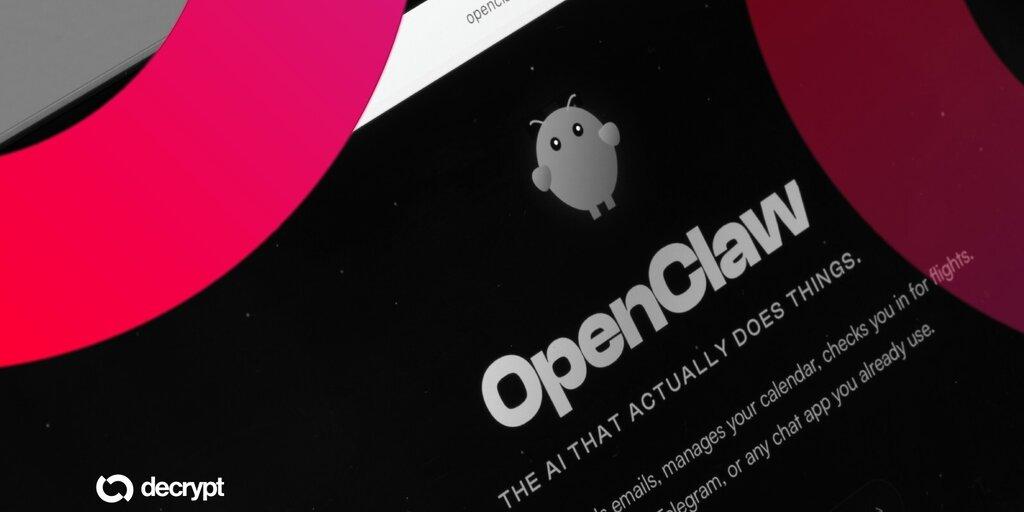
Decrypt adds that instead of manually installing OpenClaw on each computer and hoping someone configured it correctly, Tank OS lets users “publish one image—a complete snapshot of the operating system plus the agent—and every machine that boots from it gets the exact same setup.”
In Decrypt’s description, updates work by swapping the image and rebooting, “done,” rather than relying on manual patching, and it frames the isolation as containing mistakes within “it’s fine” territory.
Both outlets describe per-instance separation of credentials, with TechCrunch saying Tank OS includes features like state and the ability to store API keys, and that users can run multiple Tank OS instances “never sharing passwords or credentials between them.”
Decrypt is more explicit about the credential boundary, stating that “API keys—the “passwords” that connect OpenClaw to services like email or Slack and make it possible for your machine to communicate with all those services—are stored separately per instance.”
Decrypt also states that “One agent can't see another's credentials” and that “Nothing inside the container can reach the host system,” tying the safety layer directly to container boundaries.
Why it was built
The reporting ties Tank OS to a specific enterprise problem: O’Malley’s view that OpenClaw’s power makes it “dangerous” if not configured properly, and that enterprise adoption creates a new scale of risk.
“On Tuesday, Red Hat principal software engineer Sally O’Malley released a new open source tool called Tank OS to make it easier to deploy and manage OpenClaw agents more safely”
TechCrunch quotes O’Malley saying she joined OpenClaw because she sees it working to “enable everyone to run AI in a safe way, that’s open,” but she then “got to thinking about what will happen when OpenClaw invades an enterprise.”
In TechCrunch’s account, she built Tank OS because she wanted to give it “to the masses,” while also acknowledging that it is “not a tool that you can use easily unless you do have some sort of technical experience.”
Decrypt similarly frames Tank OS as an “enterprise safety layer” that most enterprise IT teams “don't know they have yet,” and it describes the tool as reflecting where someone inside the project thinks enterprise hardening actually needs to go.
Decrypt also connects the need for hardening to the reality that “now just about everyone is using these tools,” while “not many know what they actually do to operate,” which it presents as an “open-door invitation” for attackers.
To ground that risk, Decrypt cites a disclosed vulnerability, saying security researcher Mav Levin of DepthFirst disclosed CVE-2026-25253 in late January, and it describes the flaw as “a one-click attack” where “visiting the wrong webpage while OpenClaw was running was enough to hand an attacker your login credentials and full control of your computer.”
Decrypt adds that “The fix shipped January 30,” and that “More than 17,500 exposed instances were vulnerable before it did.”
Enterprise roles and governance
The sources also describe Tank OS in the context of OpenClaw governance and Red Hat’s enterprise ecosystem, emphasizing that O’Malley is not just a developer but an OpenClaw maintainer working alongside creator Peter Steinberger.
TechCrunch says O’Malley is among “the select software engineers working with creator Peter Steinberger to decide which features and bugs get worked on,” and it adds that she focuses on making OpenClaw work better in enterprise use cases and with Red Hat’s various flavors of the Linux operating system.
Decrypt likewise states that O’Malley is an OpenClaw maintainer, “meaning she helps creator Peter Steinberger decide which features ship and which bugs get fixed,” and it reiterates her focus on enterprise use cases and Red Hat’s Linux ecosystem.
TechCrunch adds that while Steinberger was hired by OpenAI, he still leads the independent open source OpenClaw project, and it uses that relationship to explain why Tank OS is positioned as a project-aligned safety layer rather than a random third-party patch.
In TechCrunch’s telling, Tank OS is geared toward IT pros managing fleets of corporate OpenClaw agents and supports scaling by letting them update agents the same way they already manage other containers.
Decrypt describes the same scaling logic by saying the tool “packages OpenClaw” into a secure environment and delivers it as a ready-to-boot system image that can be pushed to a range of deployment targets.
Across the outlets, O’Malley’s quoted interest in scaling out is consistent, with TechCrunch quoting her: “How it’s going to look scaled out when there are millions of these autonomous agents talking to one another.”
Competing approaches and next steps
Finally, the sources place Tank OS alongside other OpenClaw container approaches and competing alternatives, while also describing how the tool is meant to be used by different audiences.
“Red Hat principal software engineer Sally O'Malley spent a weekend solving a problem most enterprise IT teams don't know they have yet”
TechCrunch notes that there is “a growing number of startups building competing claw alternatives that they say are safer (like NanoClaw),” and it contrasts those efforts with Tank OS’s focus on enterprise use cases and Red Hat’s Linux ecosystem.
TechCrunch also says Tank OS is “not the only OpenClaw implementation working in containers,” and it points to NanoClaw doing something similar with “well-known container company Docker.”
Decrypt, in turn, emphasizes that Tank OS is not a third-party patch and that it is aimed at Red Hat’s customer enterprises, while still describing the idea of running agents in containers as advice even for home users.
The Bitcoin World account likewise frames Tank OS as a “safer approach” for enterprise AI agents and repeats that it simplifies deploying and managing OpenClaw agents within containerized environments.
Decrypt provides a concrete availability detail, stating that “Tank OS is available now at github.com/LobsterTrap/tank-os,” and it also includes the vulnerability context that motivated the hardening, including CVE-2026-25253 and the “fix shipped January 30.”
Across the accounts, O’Malley’s own framing is that Tank OS is intended to help make OpenClaw safer in enterprise settings while acknowledging that it is not a tool for novices, with TechCrunch saying it “is not a tool that you can use easily unless you do have some sort of technical experience.”
More on Technology and Science

U.S. Export-Control Directive Forces Anthropic To Disable Claude Fable 5 And Mythos 5
12 sources compared

Scientists Map Global Underground Fungal Network Stretching 110 Quadrillion Kilometres Across Earth
13 sources compared

SpaceX IPO Debuts On US Markets, Making Elon Musk The World’s First Trillionaire
30 sources compared

Google Sues China-Based Outsider Enterprise for Gemini-Driven Phishing Scams in New York
11 sources compared