
Richard Leon Orders Trump To Halt Above-Ground White House East Wing Ballroom Construction
Key Takeaways
- Judge Richard Leon halted above-ground construction; underground bunker work may continue.
- Congress must authorize the project for any above-ground construction to resume.
- National-security justification rejected; only underground work allowed to continue.
Judge draws line on ballroom
A federal judge ordered that above-ground work on the White House East Wing ballroom must stop, while allowing underground construction for a presidential bunker to continue.
U.S. District Judge Richard Leon said above-ground construction must stop, but he allowed “above-ground construction strictly necessary to cover, secure, and protect such facilities” underground and permitted work “provided that any such construction will not lock in the above-ground size and scale of the ballroom.”
Leon’s revised order also allowed “Waterproofing, water management, structural reinforcement and sealing off exposed construction areas,” according to the CBS News account.
The order was set to be enforced starting April 14, but a three-judge panel from the U.S. Court of Appeals for the District of Columbia extended the stay three days to allow the administration to seek Supreme Court review.
In the same period, the Justice Department argued Leon’s ruling “would imperil the President and national security and indefinitely leave a large hole beside the Executive Residence,” while also saying the East Wing plan “advances critical national-security objectives.”
Leon rejected the administration’s attempt to treat the entire project as covered by a national security exception, writing that “national security is not a blank check to proceed with otherwise unlawful activity.”
President Donald Trump responded on Truth Social, calling Leon “This highly political Judge, and his illegal overreach, is out of control, and costing our Nation greatly,” and saying, “The Ballroom is deeply important to our National Security, and no Judge can be allowed to stop this Historic and Militarily Imperative Project.”
How the legal fight escalated
The ballroom dispute has unfolded through a series of court orders that Leon revised after appeals court instructions, with the underlying question centered on whether Congress authorized the project.
CBS News described that Leon clarified his order Thursday after a federal appeals court “clarified his order Thursday after a federal appeals court the national security implications of halting the construction,” and CNBC similarly said Leon’s revised order came after the Court of Appeals told him to clarify the scope of an order issued on March 31.
CNBC reported that the appeals court had told Leon to reconsider “the potential national security implications of blocking the construction,” and it noted that Leon’s March 31 injunction blocked the Trump administration from taking any action to build the planned $400 million, 90,000-square-foot ballroom where the White House’s East Wing once stood.
The BBC described the earlier lawsuit context, saying the National Trust for Historic Preservation argued the White House broke the law by beginning construction without filing plans with the National Capital Planning Commission, by not seeking an environmental assessment of the project, and by declining to seek authorisation from Congress.
In the same BBC account, Leon wrote that “National security is not a blank cheque to proceed with otherwise unlawful activity,” and it said the Justice Department filed a notice of an appeal.
CBS News added that Leon’s March order said no law “comes close” to giving Trump the power to build such a structure at the White House without authorization by Congress, while also excluding work “strictly necessary to ensure the safety and security of the White House and its grounds, including the ballroom construction site.”
The timeline also included a stay: Leon’s order stopping construction was set to be enforced starting April 14, but the appeals court extended the stay three days, and CBS News said Leon’s new order has been stayed for seven days to allow the government to appeal.
NBC News described that Leon’s ruling came after the White House said the project would not be finished until 2028, and Leon wrote that the planned security features were “still months, if not years, away from being realized.”
Trump, Leon, and the Justice Department
The court’s latest limits triggered sharp, direct responses from President Donald Trump and from the Justice Department, while Leon’s written reasoning emphasized that national security could not override the injunction’s limits.
CBS News quoted Trump’s Truth Social response calling Leon “This highly political Judge, and his illegal overreach, is out of control, and costing our Nation greatly,” and Trump added, “The Ballroom is deeply important to our National Security, and no Judge can be allowed to stop this Historic and Militarily Imperative Project.”
CNBC similarly reported Trump “raged about Leon's order in a Truth Social post,” including the line that “A Trump Hating, Washington, D.C. District Court Judge, a man who has gone out of his way to undermine National Security, and to make sure that this Great Gift to America gets delayed, or doesn't get built.”
In contrast, Leon’s revised order rejected the administration’s attempt to treat the entire project as inseparable from security features, with Leon writing, “Defendants argue that the entire ballroom construction project, from tip to tail, falls within the safety-and-security exception and therefore may proceed unabated,” and adding, “That is neither a reasonable nor a correct reading of my Order!”
Leon also wrote, “national security is not a blank check to proceed with otherwise unlawful activity,” and he said belated assertions that the above-ground ballroom was “inseparable” were not grounds to revisit the preliminary injunction.
The Justice Department’s arguments, as described by CBS News, framed the construction halt as a threat to the president and national security, saying Leon’s ruling “would imperil the President and national security and indefinitely leave a large hole beside the Executive Residence.”
CNBC reported the administration’s appeal position that Leon’s injunction was “threatening grave national-security harms to the White House, the President and his family, and the President's staff,” and it quoted Leon’s response that the court had taken national security “seriously throughout this case.”
Leon also said he included a “safety-and-security exception” in his original order, but he insisted that the exception did not authorize above-ground construction beyond what was “strictly necessary to cover, secure, and protect such national security facilities.”
What Leon says can proceed
Leon’s amended injunction drew a specific boundary between underground and above-ground work, and multiple outlets described how that boundary was applied to the proposed ballroom.
CNBC said Leon’s order “allows the administration to continue below-ground construction, including work related to national security facilities,” while also allowing above-ground construction only if it is “strictly necessary to cover, secure, and protect such national security facilities,” and only if it does not “lock in the above-ground size and scale of the ballroom.”
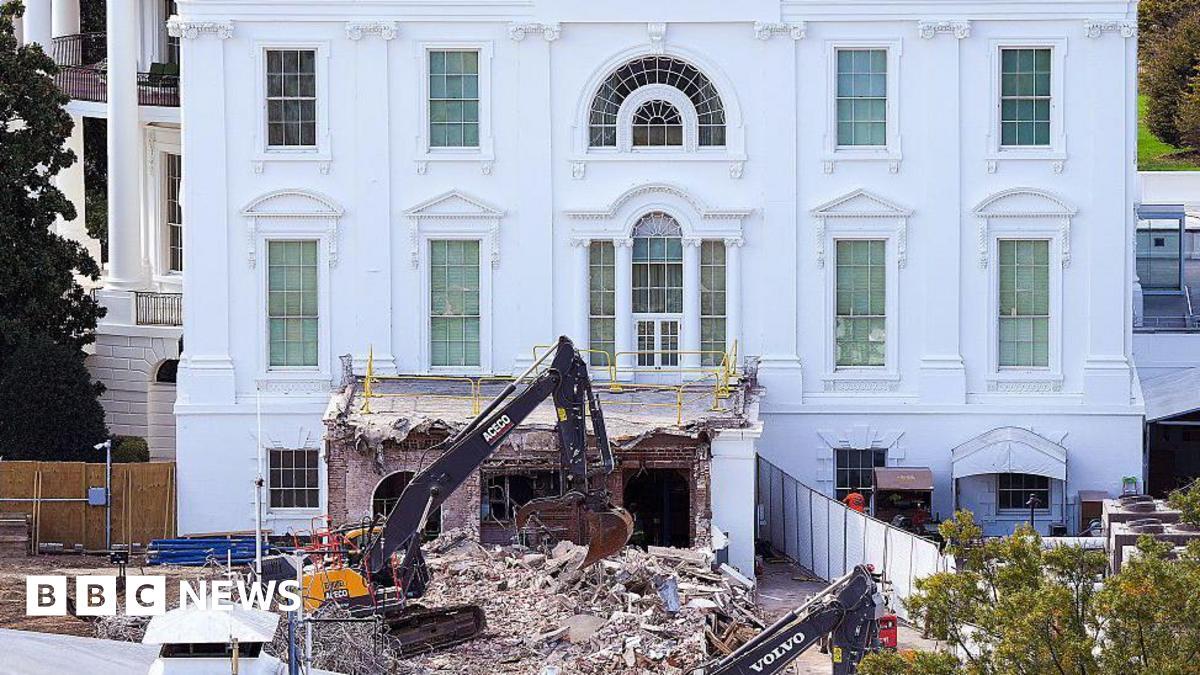
BBC reported that Leon wrote Congress must approve the project and said Trump was trying to side-step a previous court order by reclassifying the ballroom plans as vital for national security, while also allowing the underground bunker to proceed.
NBC News emphasized that Leon’s earlier order halted the $400 million project until it got approved by Congress, but it included an exception for “actions strictly necessary to ensure the safety and security of the White House and its grounds,” including an underground bunker and security measures under the former East Wing structure.
The AP-based Channel 3000 account likewise said Leon’s latest ruling continues to block above-ground construction of a $400 million White House ballroom while allowing only below-ground work on a bunker and other “national security facilities.”
Leon also reiterated limits on the administration’s interpretation, writing, “Defendants argue that the entire ballroom construction project, from tip to tail, falls within the safety-and-security exception and therefore may proceed unabated,” and “That is neither a reasonable nor a correct reading of my Order!”
In the same AP account, Leon said he is ordering a stop only to the above-ground construction of the planned ballroom, apart from work needed to cover or secure that part of the project, and otherwise the administration is free to proceed with “excavations, bunkers, military installations, and medical facilities below the ballroom.”
CBS News added that Leon allowed “above-ground construction strictly necessary to cover, secure, and protect such facilities” underground and allowed construction on national security facilities located underneath the ballroom “provided that any such construction will not lock in the above-ground size and scale of the ballroom.”
National Trust and future steps
The National Trust for Historic Preservation and its president and CEO Carol Quillen framed Leon’s ruling as a victory that halted above-ground construction until Congress approves the project, while the administration pursued further review.
Channel 3000 quoted Quillen as saying the group is pleased with the court’s ruling, and NBC News and CNBC both reported Quillen’s statement that she was “pleased the court upheld the preliminary injunction and halted above-ground construction of the White House ballroom until Congress approves the project.”

CNBC also said the National Trust is suing to block the ballroom from being built, and it noted that Leon had declined requests by that group in two prior decisions but issued the March 31 injunction.
The BBC described the National Trust’s legal arguments in the underlying lawsuit, including claims that the White House violated the U.S. constitution by starting construction without Congress authorization, quoting that the constitution “reserves to Congress the right to dispose of and make all rules regarding property belonging to the United States.”
The stakes described by the outlets included the possibility of Supreme Court review and the question of whether any above-ground work during the stay might need reversal.
CBS News said Leon’s new order has been stayed for seven days to allow the government to appeal, and it reported that a three-judge panel extended the stay three days to allow Supreme Court review.
NBC News added that Leon warned the White House that any above-ground work that happens during that period may need to be reversed depending on how the case plays out, and it quoted Leon saying, “I have no desire or intention to be dragooned into the role of construction manager.”
The BBC also reported that Trump wrote on social media that the ballroom was “needed now” and that “no judge can be allowed to stop” it, while the BBC said the East Wing was demolished in October to make way for the project.
In the broader legal posture, the Justice Department filed appeals, with the BBC saying it filed a notice of an appeal and CNBC saying the administration quickly appealed to the U.S. Circuit Court of Appeals for the District of Columbia Circuit.
The next step, across outlets, was continued appellate review, with CBS News describing Supreme Court review as the immediate possibility and Channel 3000 saying the administration filed a notice that it will ask the U.S. Court of Appeals for the District of Columbia Circuit to review Leon's latest decision as well.
More on USA
Hennepin County Prosecutors Charge ICE Officer Gregory Donnell Morgan Jr. With Felony Assault
24 sources compared

Analilia Mejia Defeats Joe Hathaway in New Jersey 11th District Special Election
16 sources compared
U.S. Senate Blocks Bernie Sanders Resolutions Halting Weapons Sales to Israel
13 sources compared

U.S. Commission of Fine Arts Advances Trump’s Triumphal Arch Design in Washington, D.C.
11 sources compared