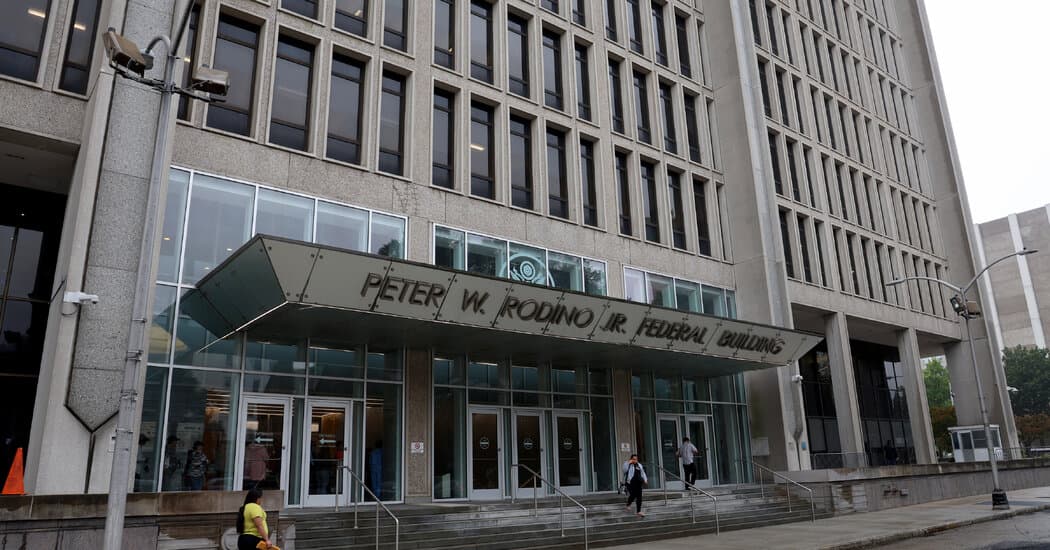
Robert Frazer Appointed U.S. Attorney in New Jersey, Replacing Habba
Key Takeaways
- Robert Frazer appointed New Jersey U.S. attorney effective March 23.
- Replaces Alina Habba as U.S. attorney for New Jersey.
- Judges ended standoff after interim appointments deemed unlawful.
Leadership Crisis Resolution
Federal judges in New Jersey appointed Robert Frazer as the new U.S. Attorney, ending an eight-month leadership crisis that threatened to derail federal criminal prosecutions in the state.
“A federal trial court has come to terms with the Justice Department on appointing a career prosecutor as New Jersey’s US attorney, substituting him for the Trump administration’s three-person leadership structure that’s been ruled illegal”
The appointment came after a series of legal battles over who rightfully should lead the U.S. Attorney's Office for the District of New Jersey.

Frazer, a career prosecutor with over two decades of experience in the office, was selected through a rare consensus between federal judges and the Trump administration's Justice Department leadership.
This resolution marked a significant development in what had become a contentious standoff between the judiciary and executive branches over the proper interpretation of federal statutes governing U.S. attorney appointments.
Frazer's Qualifications
Robert Frazer brings extensive prosecutorial experience to the role, having worked as a prosecutor for more than twenty years and most recently serving as senior trial counsel for litigation matters in the office's organized crime and gangs unit.
His appointment represents a departure from the Trump administration's pattern of firing all other U.S. attorneys appointed by judges during President Trump's second term.

Unlike previous selections, Frazer's appointment was welcomed by Justice Department officials, with a spokesman thanking the panel of judges for working with the agency to appoint a new leader so that 'criminal prosecutions can resume without needless challenge or delay.'
This cooperative approach enabled Frazer to step into a role that had been destabilized by months of uncertainty and legal challenges.
Legal Controversy
The leadership crisis originated in July 2025 when Alina Habba's 120-day interim appointment as U.S. attorney expired without her winning Senate confirmation.
“A federal judge installed Robert Frazer as U”
This triggered federal statutes that require district judges to appoint a successor.
The judges initially selected first assistant U.S. attorney Desiree Grace, but Trump immediately fired Grace and purported to reappoint Habba.
Federal Judge Matthew Brann subsequently ruled that Habba had 'no legal authority' to preside over the office, a decision upheld by the Third Circuit Court of Appeals in December 2025.
When Habba resigned, the Trump administration installed a trio of lawyers—Philip Lamparello, Jordan Fox, and Ari Fonticchio—but Judge Brann ruled earlier in March 2026 that this alternative leadership structure was also unlawful, as Bondi lacked the authority to create it.
These rulings established that the administration's attempts to circumvent senatorial advise and consent violated established federal procedures.
Reactions and Implications
The appointment of Robert Frazer was met with positive reactions from both legal and political figures, including Alina Habba herself, who congratulated Frazer on social media.
Habba, now a senior adviser to Bondi after resigning as U.S. attorney, stated that 'New Jersey deserves a great chief federal law enforcement official who is in line with President Trump's agenda of making this country safe and NJ great!'

She also emphasized that 'THINGS GET DONE' when judges work with Attorney General Pam Bondi and Deputy Attorney General Todd Blanche.
The Justice Department's cooperative response to Frazer's appointment stood in contrast to previous tensions, with officials welcoming the selection and criminal prosecutions expected to resume without further legal challenges.
This resolution temporarily eased broader tensions between the Trump administration and federal courts in New Jersey, though the underlying constitutional questions about appointment powers remained unresolved.
Broader Context
The saga over control of New Jersey's U.S. Attorney's Office occurred within a broader national context where several of Trump's preferred U.S. attorney picks have faced challenges in other districts as their Senate confirmations have stalled, resulting in disqualifications.
“Skip to Main Content Judges appoint career prosecutor as New Jersey US attorney in apparent end to standoff The appointment will not expire unless and until a presidentially-nominated successor is confirmed”
This has pitted the courts against the Trump administration, as federal vacancy law leaves the task of appointing U.S. attorneys up to district judges when positions become vacant.
The administration has maintained that Trump alone has the authority to select U.S. attorneys, even after their temporary terms expire, while Trump and his allies have blamed the Senate blue slip process that allows home-state senators to veto presidential nominees.
The resolution in New Jersey provided a template for potential compromises in other jurisdictions, though the fundamental constitutional questions about separation of powers and appointment authorities remained contentious issues likely to continue shaping federal prosecutorial appointments throughout Trump's presidency.
More on USA

Trump Delays Strikes on Iranian Energy Infrastructure Amid Talks With Iran.
43 sources compared

Senate confirms Markwayne Mullin as Homeland Security secretary
13 sources compared

Supreme Court appears poised to limit late-arriving mail-in ballots.
23 sources compared
US Senate confirms Mullin as Secretary of the Department of Homeland Security
24 sources compared