RSF Orders Mass Graves Outside El Geneina, Sudan, UN News Says
Key Takeaways
- 87 people buried in a mass grave outside El Geneina, Darfur.
- BBC reports a Darfur witness saw bodies dumped in a mass grave.
- UN says credible information links the grave to killings last month.
Mass graves in Darfur
In Sudan, fighting that began in mid-April 2024 between the Rapid Support Forces (RSF) and the army has left families searching for missing people amid provisional or unmarked graves and damaged records, with the Sudanese Red Crescent and the International Committee of the Red Cross handling more than 11,000 missing persons cases as of late March 2026.
“At a time when Sudan is witnessing a wave of escalating violence against the backdrop of intensified fighting in several areas between the Rapid Support Forces and the Sudanese army, and the accompanying displacement of millions of people according to UN reports, a shocking video clip emerged claiming to document the burial of Sudanese alive”
The BBC reported testimony from Maalim, who said he was part of a group tasked with removing bodies from the streets and burying them in mass graves in Darfur, showing photos and videos of corpses in El Geneina.

Maalim told the BBC, "We went to the forest cemetery to bury the bodies," but "security forces did not allow us to do so," and he said a truck driver was ordered to dump bodies into a grave.
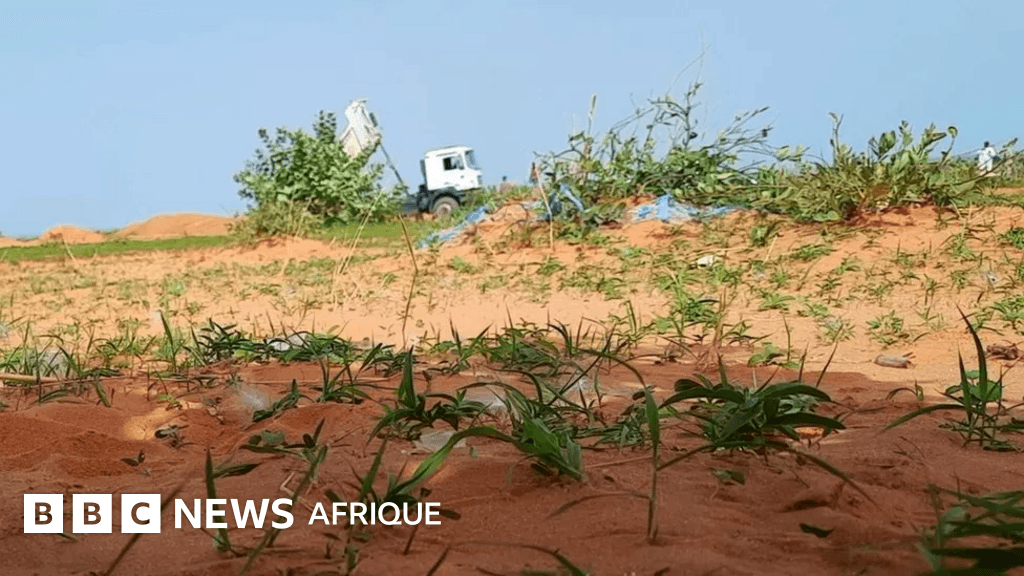
A UN News report said bodies of at least 87 members of the Masalit ethnic group and others were buried in a mass grave outside El Geneina on the orders of the RSF, with OHCHR saying local residents were forced to throw the bodies into the grave.
The UN News account added that at least 37 bodies were buried on June 20 and fifty more on June 21 in an open area called Al-Turab Al Ahmar (Red Soil), about two to four kilometers northwest of the headquarters of the Central Reserve Police in western El Geneina.
Witnesses, UN pressure
The BBC described Maalim’s account of bodies dumped from a truck into a mass grave, and he said, "Under orders from security forces, the truck driver was ordered to dump the bodies into a grave," while also saying the security forces insisted the bodies be dumped "like garbage."
Maalim told the BBC that he was afraid because "on several occasions, they searched people who were carrying mobile phones on them while they were cleaning," and the BBC said it asked the RSF to comment on allegations but it did not respond.
UN News quoted United Nations High Commissioner for Human Rights Volker Türk urging the RSF and other parties to authorize and facilitate the rapid search for the dead, their collection and evacuation without distinction, including on the basis of ethnicity.
Türk also said, "There must be a rapid, thorough and independent investigation into the killings, and those responsible must be held to account," and UN News said witnesses reported local mediation efforts to access and bury the dead had generally taken time.
The UN News report said one family had to wait 13 days before being allowed to retrieve the body of a Masalit elder killed on or around June 9, and it said OHCHR reported cases where the RSF allowed collection of the dead but refused to authorize transfer of the wounded to hospitals for treatment.
Missing, records, and risk
The crisis of names and identity in Sudan has been shaped by the difficulty of linking corpses to names because bodies were hastily buried without sufficient documentation, and the UN News and BBC accounts both describe how bodies were handled in ways that complicate identification.
“War in Sudan: a nation trapped War in Sudan: a nation trapped Published December 30, 2025 Published January 1, 2026 Published January 2, 2026 Published January 3, 2026 Published January 4, 2026 Published December 30, 2025 Published January 1, 2026 Published January 2, 2026 Published January 3, 2026 Published January 4, 2026 6 Episodes Published December 30, 2025 Published January 1, 2026 Published January 2, 2026 Published January 3, 2026 Published January 4, 2026 Reading time 10 min”
The UN News report said the people buried in the mass grave were killed by the RSF and their allied militias between June 13 and 21 in the Al-Madaress and Al-Jamarek districts in El Geneina, including victims of violence that followed the assassination of Khamis Abbaker, governor of western Darfur, on June 14 shortly after his arrest by the RSF.
In the same period, the BBC said Maalim’s photos and videos were taken between June 20 and 21, matching the dates cited in a UN report published on July 13.
The non-Arab communities and Masalit allegations described by the BBC included claims that RSF specifically targeted young men and boys from western Darfur and that families were too scared to say they were Masalit for fear of being killed.
Separately, Al-Jazeera Net reported that a widely circulated clip claiming to document "burying Sudanese alive" was verified as not real, with its Open Source unit finding strong indicators at 81.6% that the content is digitally created, and it said the clip was first published on Facebook on February 27, 2026.
More on Sudan

UN Warns Rapid Support Forces Could Commit Mass Atrocities In El Obeid, Sudan
27 sources compared

Sudan Attorney General Intisar Ahmed Abdel Aal Tells UN Human Rights Council of 2,200 Rape Cases
10 sources compared

UN Report Says Rapid Support Forces Used Sexual Violence as Weapon of War in Sudan
29 sources compared
U.S. Warns RSF Buildup Near El Obeid Could Trigger Mass Atrocities
11 sources compared