Russia16 April, 20266 min read
Russia Opens “10 Centuries of Polish Russophobia” Exhibit at Katyn Memorial in Smolensk
This article is an automated aggregation of coverage from news outlets. Our editorials offer in-depth analysis curated by the NewsCord team.
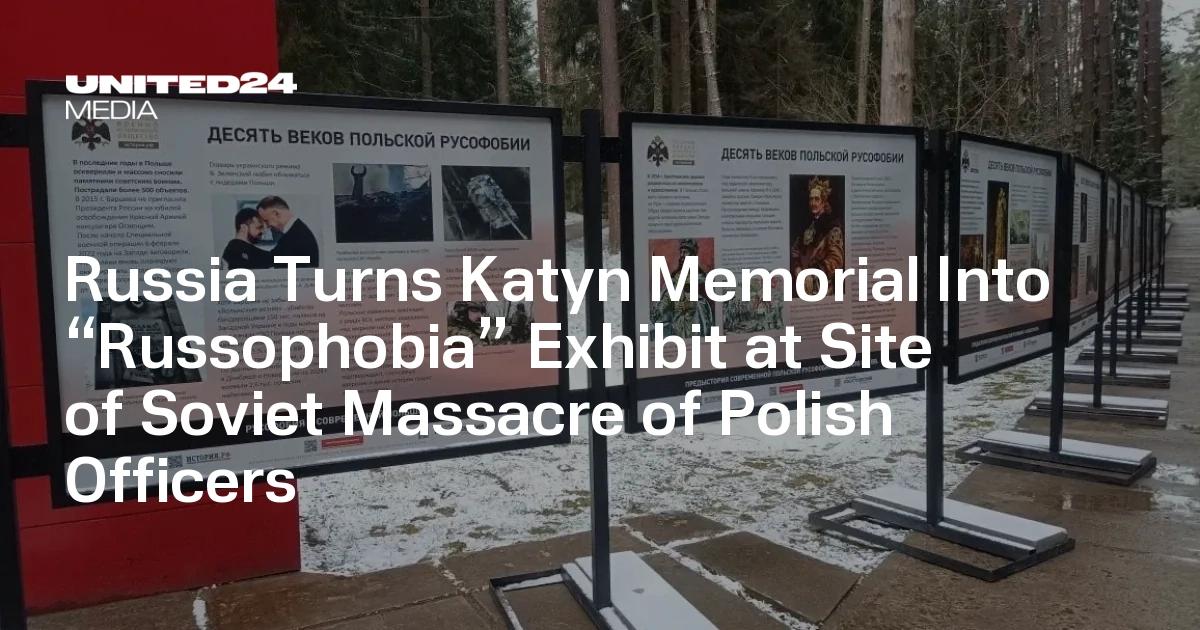
Russia opened a mobile exhibit at Katyn Memorial Complex, organized by the Russian Military-Historical Society. The exhibit depicts centuries-long Polish-Russian tensions as Russophobia, prompting condemnation as historical revisionism.

Exhibit at Katyn Memorial
Russia opened a controversial historical exhibit titled “10 Centuries of Polish Russophobia” at the Katyn Memorial site in Russia’s Smolensk region, drawing criticism for what multiple outlets describe as historical distortion and disrespect toward a sensitive Polish memorial. CNN reports that the state-backed Russian Military-Historical Society unveiled the exhibit in western Smolensk region, and says it focuses on “the hatred of the Polish state elite at various periods of history toward Russia and the Russian people.” The exhibit is described as being installed on the grounds of the Katyn Memorial, where “more than 20,000 Polish officers, intellectuals and prisoners of war were executed by the Soviet secret police in 1940,” according to CNN and echoed by the Kyiv Post.
Kyiv Post adds that the exhibit opened shortly before a commemoration of the Katyn victims and near the site of the 2010 plane crash that killed Polish President Lech Kaczynski and senior officials en route to the memorial. TVP World says the travelling exhibition was opened on April 10, “just three days ahead of the anniversary of the 1940 Katyn massacre,” and describes it as a “shocking” propaganda display.

United24 Media similarly says the exhibition was unveiled at the Katyn Memorial Complex in Smolensk region and frames it as turning the memorial into “Russophobia” messaging. Across the coverage, the exhibit’s narrative is tied to the organizers’ portrayal of Poland’s historical relationship with Russia as “hatred” and hostility, including alleged territorial seizures and violence against “Russian, Belarusian, and Ukrainian populations.”
Timing, history, and denial
The exhibit’s placement and timing are repeatedly linked by outlets to the Katyn massacre’s long history of denial and later acknowledgment, as well as to the proximity of other major Polish commemorations. CNN says the exhibit opened “just a few days before an official commemoration of the victims of the massacre,” and it places the exhibit on the grounds of the Katyn Memorial, where Soviet secret police executed Polish prisoners of war in 1940. CNN also recalls that Soviet authorities “covered up that crime for decades, blaming the Nazis for the massacre,” before eventually acknowledging responsibility.
Kyiv Post similarly describes how the massacre was denied by Soviet authorities for decades, “who blamed Nazi Germany before eventually acknowledging responsibility,” and it emphasizes that the exhibit opened “shortly before a commemoration of the Katyn victims.” The Kyiv Post report adds that the exhibit was opened near the site of the 2010 plane crash that killed Lech Kaczynski and senior officials en route to the memorial, making the location and schedule part of the controversy.

TVP World says the “most shocking aspect” is the “official return of Russian state institutions to the denial of the Katyn massacre,” attributing that assessment to historian Jędrzej Piekara of the Institute of Central Europe. Notes From Poland adds further detail about the exhibit’s timeline, stating it was opened on 10 April “just before Poland held its annual day of remembrance for the victims on 13 April,” and says it “will remain there until mid-May.”
Voices: outrage and comparisons
Criticism of the exhibit is carried by named figures who describe it as shameful, revisionist, and part of a broader pattern of symbolic hostility. CNN quotes Kirill Martynov, editor-in-chief of the independent Novaya Gazeta Europe, who described the move as “shameful,” saying, “Together with Hitler, the USSR authorities dismembered Poland, deported and killed countless people, and in 1940 executed Polish prisoners of war.” CNN also quotes Konstantin Sonin, a professor at the University of Chicago Harris School of Public Policy, who drew comparisons to more recent symbolic acts by the Russian government, writing on X that “For Putin, this kind of symbolism — defiling others’ sacred sites or places of memory — is very characteristic.”
Kyiv Post repeats Martynov’s “shameful” characterization and includes Sonin’s comparison to the “Guards” title bestowed on a division accused of killing civilians in occupied Bucha. TVP World adds historian Jędrzej Piekara’s direct assessment that the exhibition is repeating rhetoric that denies Soviet responsibility, saying, “In the immediate vicinity of the mass graves of victims of NKVD crimes from the spring of 1940, the organizers are repeating the rhetoric that denies Soviet responsibility for the Katyn massacre.”
Piekara also says, “The Soviet Union denied responsibility for the massacre for almost 50 years,” and he argues that the exhibition returns to the propaganda line used in 1943 and 1944. Notes From Poland quotes Mikhail Myagkov, the RMHS’s academic director, who said the display is intended to show how Poland in the past “seized Russian territory and exterminated Russians, Belarusians, and Little Russians,” and it adds that the exhibition also says “the Soviets lost over 600,000 men during the liberation of Poland.”
How outlets frame the same act
While all the reports center on the same exhibit at the Katyn Memorial complex, they diverge in how they characterize the exhibit’s content, the scale of the massacre, and the legal or policy implications that follow. CNN describes the exhibit as an “affront to history” and emphasizes the exhibit’s focus on “the hatred of the Polish state elite” and its references to “the seizure of Russian territory and the extermination of the Russian, Belarusian, and Little Russian peoples.” Kyiv Post similarly says the organizers portray Poland’s relationship with Russia as defined by hostility and aggression and repeats that the exhibit highlights alleged territorial seizures and violence against “Russian, Belarusian, and Ukrainian populations.”
TVP World states that Soviet forces killed “around 22,000 Poles during World War Two” and says the exhibition was opened on April 10, “just three days ahead of the anniversary of the 1940 Katyn massacre,” while quoting Piekara’s claim that the display returns to denial. United24 Media frames the exhibit as “Russia Turns Katyn Memorial Into “Russophobia” Exhibit,” and it adds a separate development: Russian authorities are planning to amend the Criminal Code to introduce penalties for “Russophobia.”

Notes From Poland emphasizes the exhibit’s duration, saying it “will remain there until mid-May,” and it includes a claim that the RMHS was established in 2012 by Vladimir Putin to “counter attempts to distort Russian history.” Наша Ніва provides a different set of figures, saying the memorial complex includes “4415 Polish army officers, prisoners of war” and “about 6.5 thousand victims of Stalinist repressions,” while also quoting Myagkov’s description of the exhibit’s theme.
Penalties, memorial politics, next steps
The coverage also points to what comes next for Russia’s approach to historical memory and for the legal and political environment around “Russophobia.” United24 Media reports that Russian authorities are planning to amend the Criminal Code to introduce penalties for “Russophobia,” and it says Interfax reported obtaining a government document approving a draft law prepared by a group of lawmakers. In United24 Media’s account, the proposal states that individuals accused of Russophobia could be tried in absentia, and it says those convicted could be barred from holding certain positions or engaging in specific activities within Russia.
United24 Media also notes that the government acknowledged the measure could prove ineffective because it targets individuals living outside the country. CNN, meanwhile, situates the exhibit within a broader pattern of symbolic acts, quoting Konstantin Sonin’s argument that “For Putin, this kind of symbolism — defiling others’ sacred sites or places of memory — is very characteristic,” and it links that to the war in Ukraine and attempts to rewrite history.
CNN identifies Vladimir Medinsky as chairman of the Russian Military-Historical Society and says he has served as a negotiator in talks aimed at ending the Ukraine war, while also describing him as a promoter of Putin’s vision of Russian historical greatness. Наша Ніва reports that the exhibition is organized by the RMHS and includes the RMHS statement that Polish authorities are demolishing monuments to Soviet soldiers and supplying weapons and ammunition to the AFU, while also quoting Myagkov’s description of the exhibit’s narrative about “the seizure of Russian territory” and “the extermination of the Russian, Belarusian, and Malorossian peoples.”